The curriculum has one primary goal: build AI-ready learners by first developing strong Computational Thinking (CT) skills.
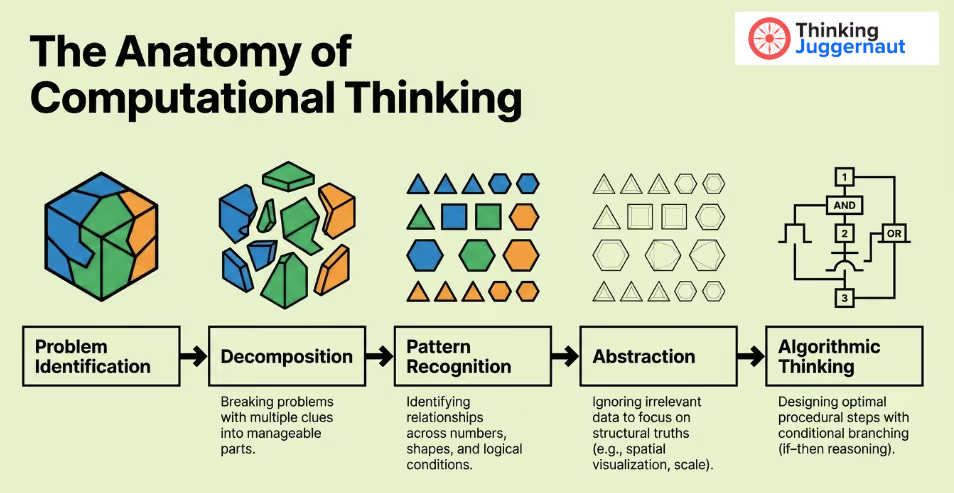
The logic is this — CT (decomposition, pattern recognition, abstraction, algorithmic thinking) is the same cognitive foundation that underlies how AI and ML systems work. Build CT first, then layer AI literacy on top.
Download the official curriculum PDF →
Two core definitions from the document:
Computational Thinking (CT): A structured approach to problem-solving that breaks larger problems into smaller, logical pieces, building precise, step-by-step solutions that either a person or a machine can follow.
Artificial Intelligence (AI): A broad collection of technologies that enable machines to carry out tasks typically associated with human intelligence — such as learning, comprehension, reasoning, problem-solving, and understanding natural language.
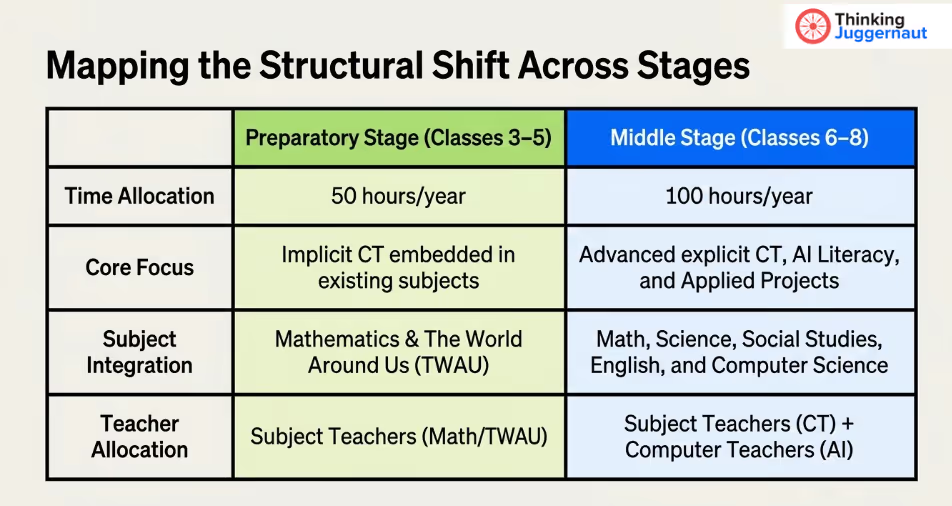
Preparatory: Classes 3–5 -- 50 hours CT embedded in Math & TWAU
Middle: Classes 6–8 -- 100 hours Advanced CT + AI Literacy + Projects
CG-1: Basic problem-solving with procedural fluency. Solve puzzles using visual representations; identify patterns in shapes, symbols, numbers
CG-2: Analytical thinking, verbal and visual reasoning. Systematically count permutations; select appropriate computation methods; connect concepts across representations
CG-3: Basic computer concepts. Parts of a computer, input/output, file management, internet safety, block-based coding (e.g. Scratch)
CG-1: CT skills — decomposition, pattern recognition, abstraction, algorithms. Programmatic thinking: iteration, symbolic representation, logical operations; arithmetic reasoning, algorithm correctness and efficiency
CG-2: Spatial and visual reasoning. Visualise, manipulate, and understand spatial relationships
CG-3: Foundational AI knowledge. Apply abstraction; demonstrate knowledge of AI tools through projects
CG-4: Ethics in AIIdentify ethical issues; apply ethical principles to AI usage decisions
CG-5: Computer proficiency. Use computers/devices for data analysis, visual representations, online research, and infographic design

CT is embedded into Mathematics and TWAU. Each class has a dedicated resource book with CT-focused questions mapped to the textbook's table of contents.
CT — Learning Outcomes
AI Syllabus — 20 Hours
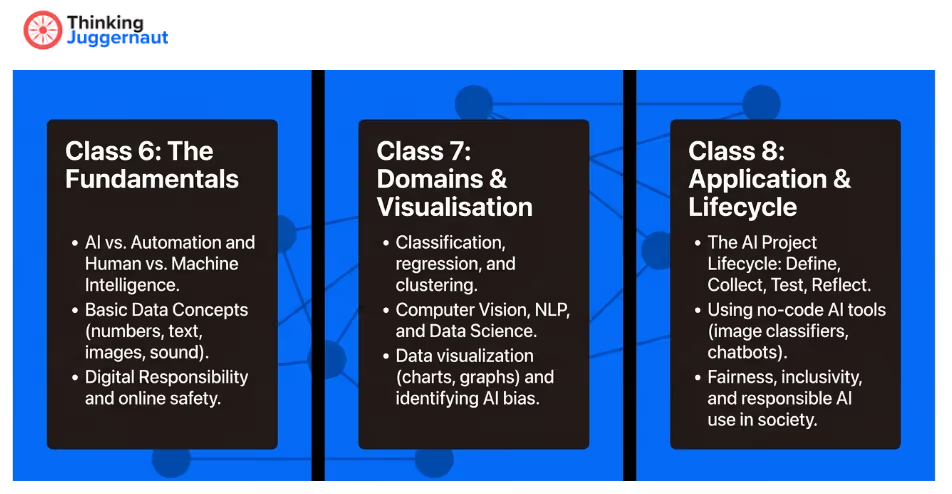
1. Introduction to AI & Everyday Examples — what AI is; AI vs automation; human vs machine intelligence; supervised, unsupervised, reinforcement learning
2. Basic Data Concepts — data types (numbers, text, images, sound); organisation and representation using tables/charts
3. Simple Pattern Recognition & Decision Making — identifying patterns in data; making decisions from observations
4. Ethics and Digital Responsibility — online safety, privacy, passwords, ethical use, digital footprints
CT — Learning Outcomes
AI Syllabus — 20 Hours
1. AI Domains — classification, regression, clustering; Computer Vision, NLP, Data Science; chatbots, image recognition, translation
2. AI in Industries — healthcare, education, transport, communication
3. Data Visualisation & Analysis — collecting structured data; bar charts, line graphs, pie charts; interpreting patterns
4. Ethics & AI Bias Awareness — what bias in AI is; responsible and fair use; digital citizenship5
CT — Learning Outcomes
AI Syllabus — 20 Hours
1. AI Project Lifecycle — Define Problem, Collect Data, Test AI Tools, Reflect and Improve; how AI learns from data
2. Deeper Dive into AI Applications — AI in environment, healthcare, automation, education; no-code AI tools (image classifiers, chatbots, data prediction apps)
3. Data and Fairness — how AI uses data; identifying bias in datasets; strategies for fairness and inclusivity
4. Ethics and Responsible AI — privacy, misinformation, social impact; responsible AI use; reflection on real-world challenges
Classes 3–5: Hands-on activities, games, puzzles; visual interpretation; breaking problems into parts; collaborative tasks and peer discussions
Classes 6–8: "Complex puzzles and riddles; AI demonstrations and hands-on experiences; group projects integrating CT & AI; independent data collection and analysis; debates on ethical AI use
Classes 3–5: Written CT tests; interactive group activities; Teacher Observation Journal
Classes 6–8: "Written tests; practical exams; thematic projects; reflective journals; group discussions; Teacher Observation Journal
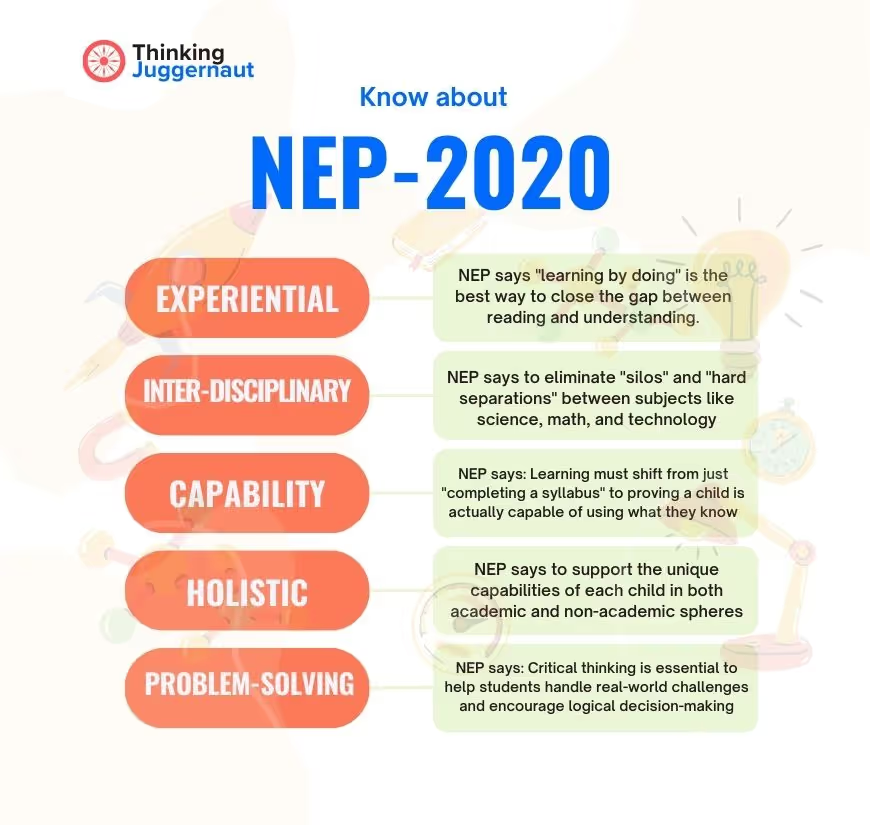
The curriculum explicitly moves away from rote assessment. Focus is on ability to apply knowledge, assess creativity, and evaluate ethical reasoning.
Download grade-wise Teacher Handbooks directly from CBSE:
Class 5 Download →
Class 6 Download →
Class 7 Download →
Class 8 Download →
Download grade-wise Student Handbooks directly from CBSE:
All resources are also listed on the official CBSE CT & AI page: cbseacademic.nic.in/ct-ai.html
The CBSE curriculum recommends workbook-based practice — class-wise, chapter-aligned, with a progression from basic CT to advanced problem-solving.
We've built exactly that.
Computational Thinking Workbooks for Classes 3–8 →
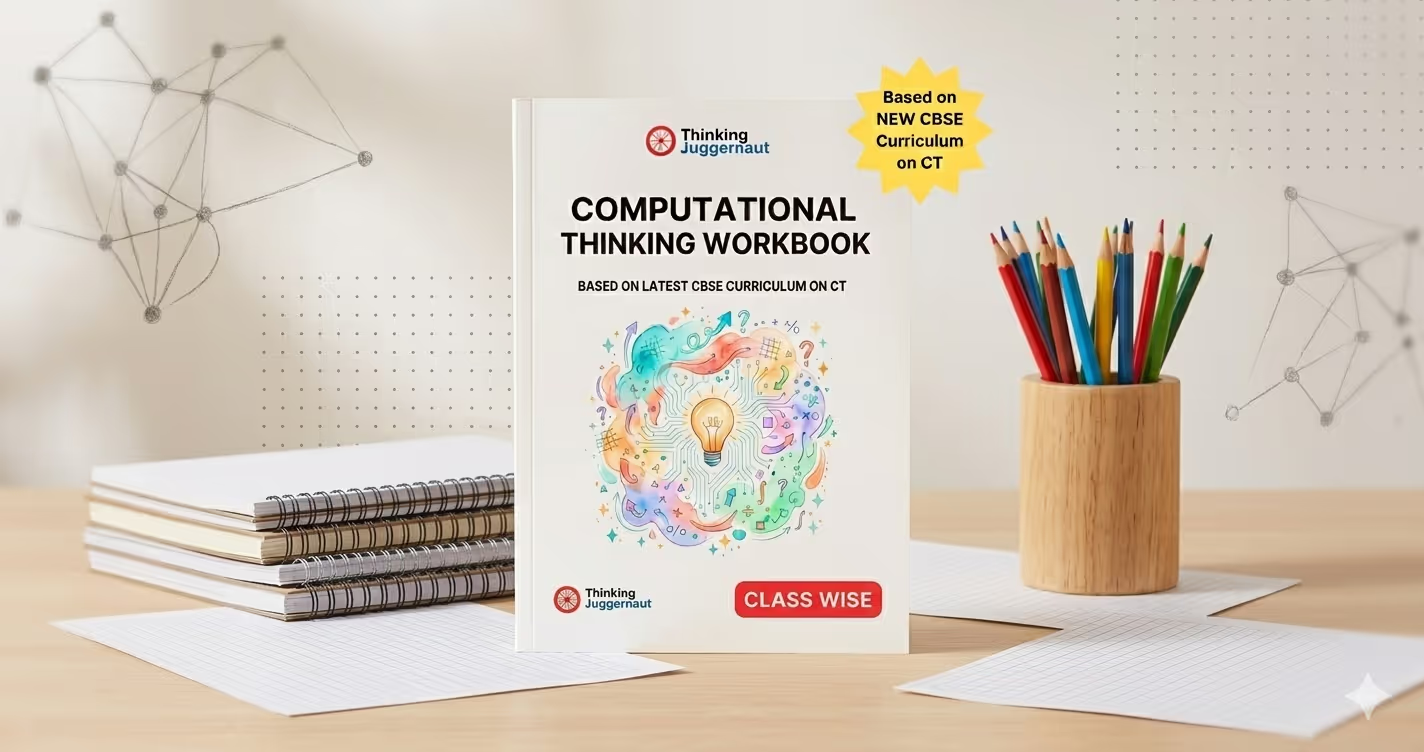
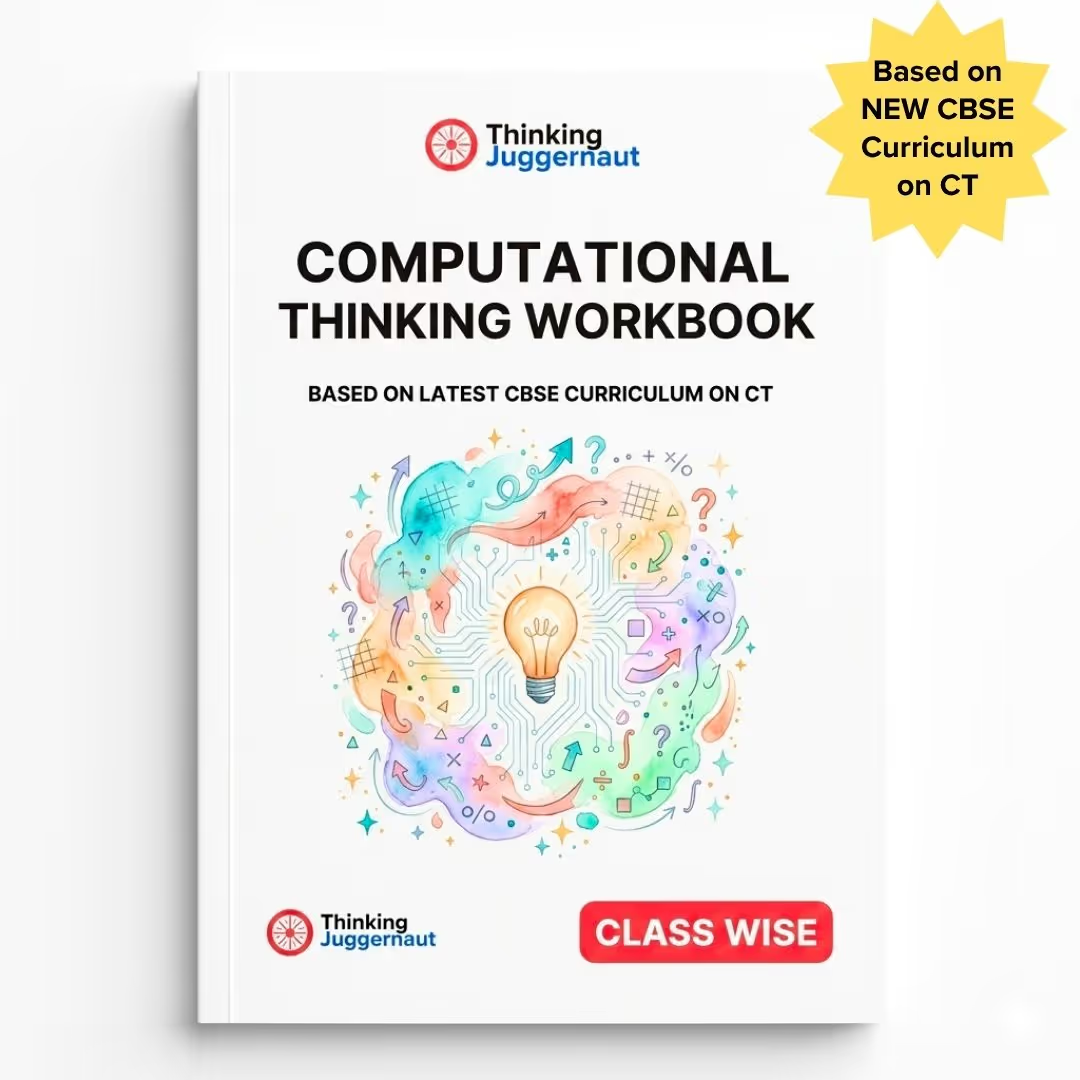
Our class-wise CT workbooks are aligned to the CBSE curriculum framework, covering decomposition, pattern recognition, abstraction, and algorithmic thinking.
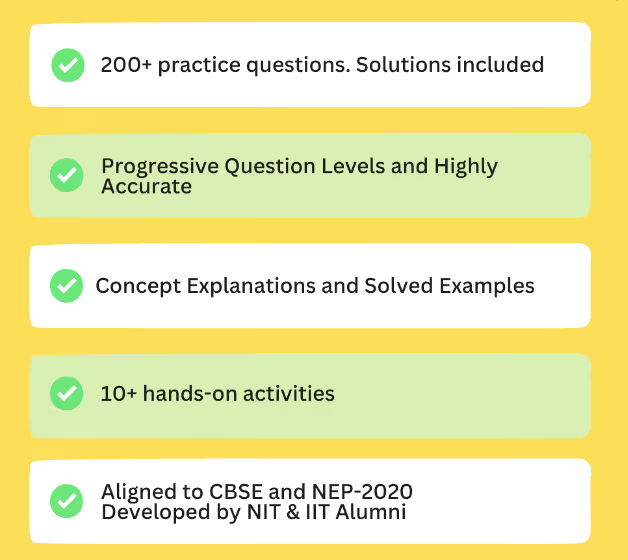
For a broader look at how CBSE's CT and AI curriculum fits the 2026–27 changes and what it means for schools and parents:
CBSE Computational Thinking & AI Curriculum — What's New in 2026–27 →
Computational Thinking
Class 3
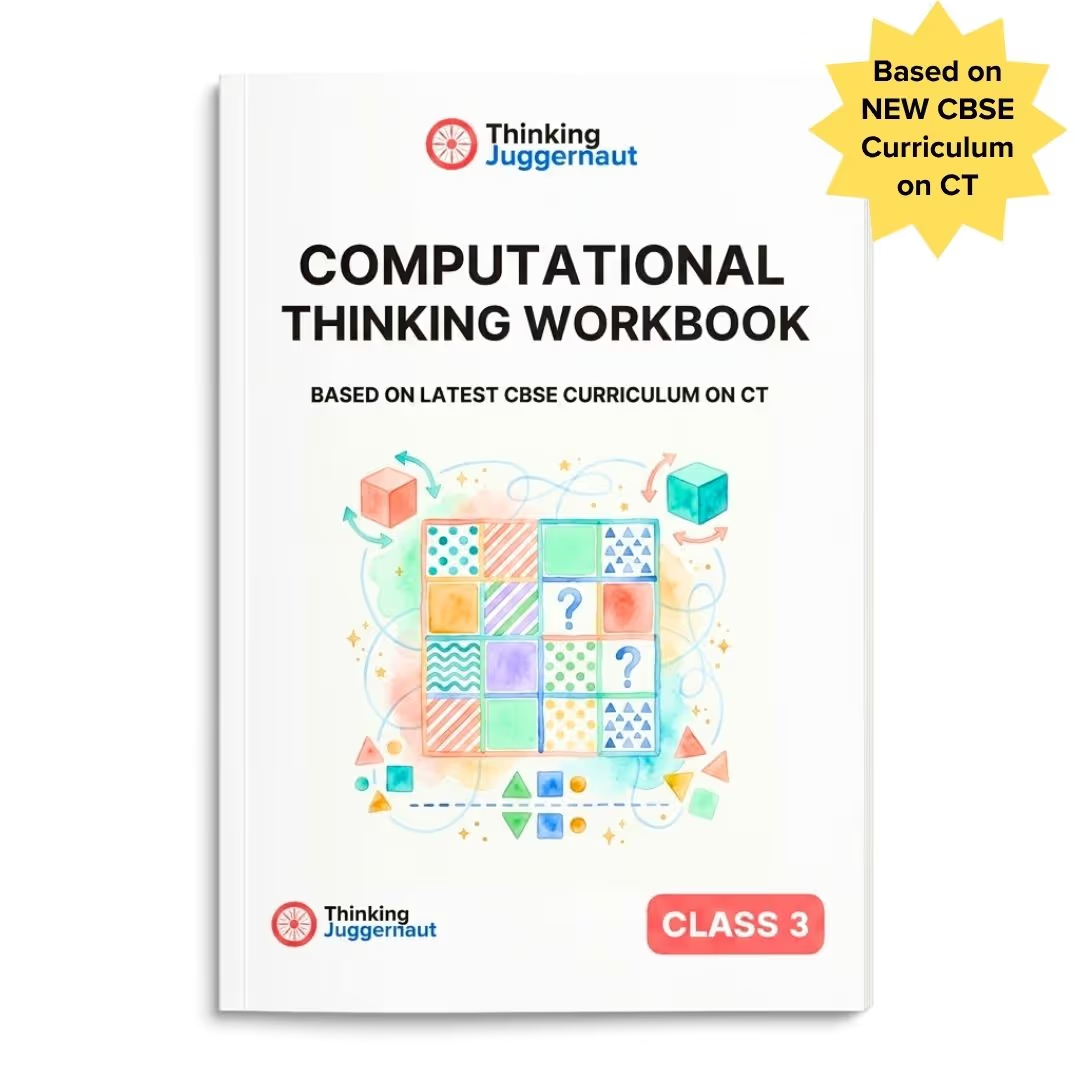
Based on New CBSE Curriculum on CT
₹499 FREE Shipping
Computational Thinking
Class 4
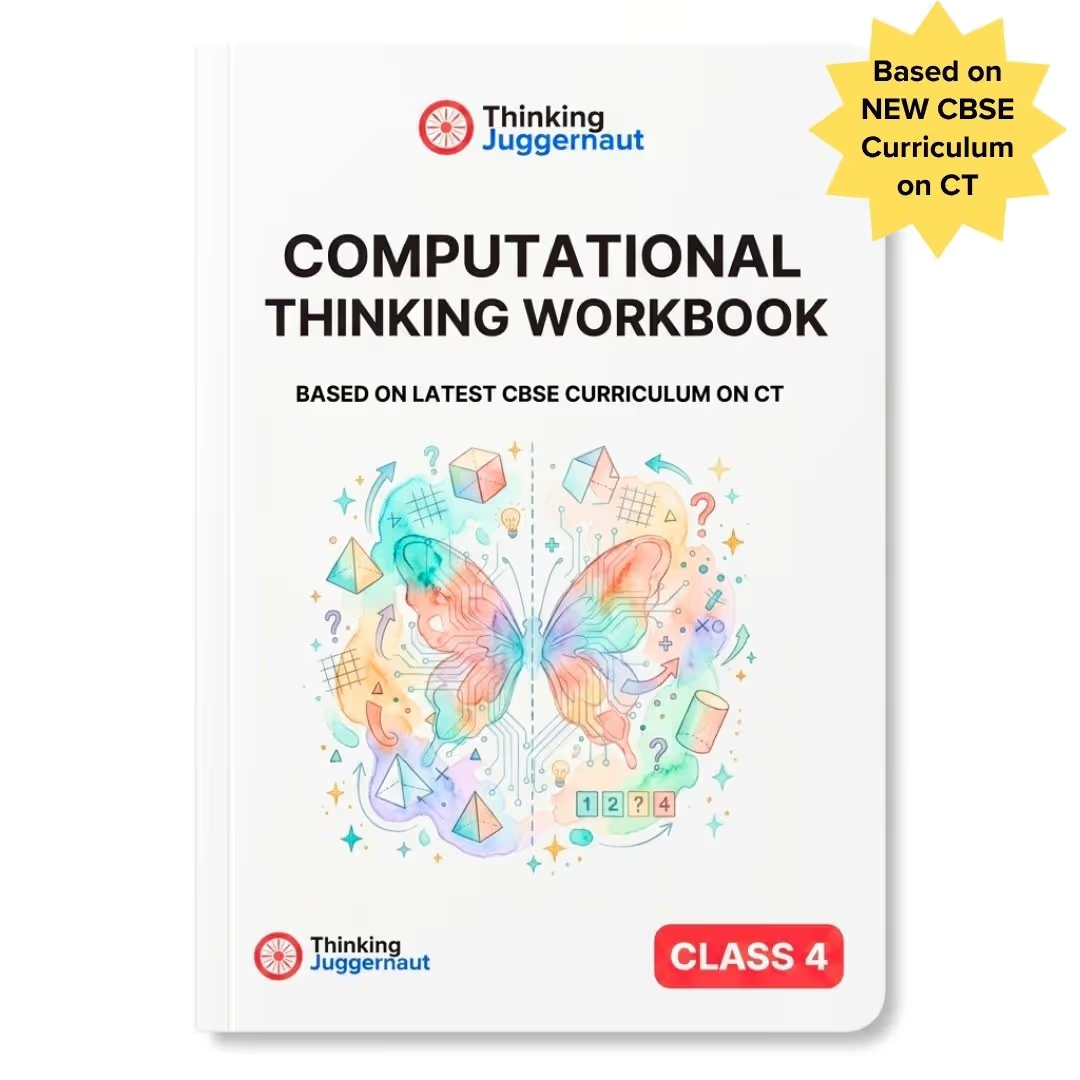
Based on New CBSE Curriculum on CT
₹499 FREE Shipping
Computational Thinking
Class 5
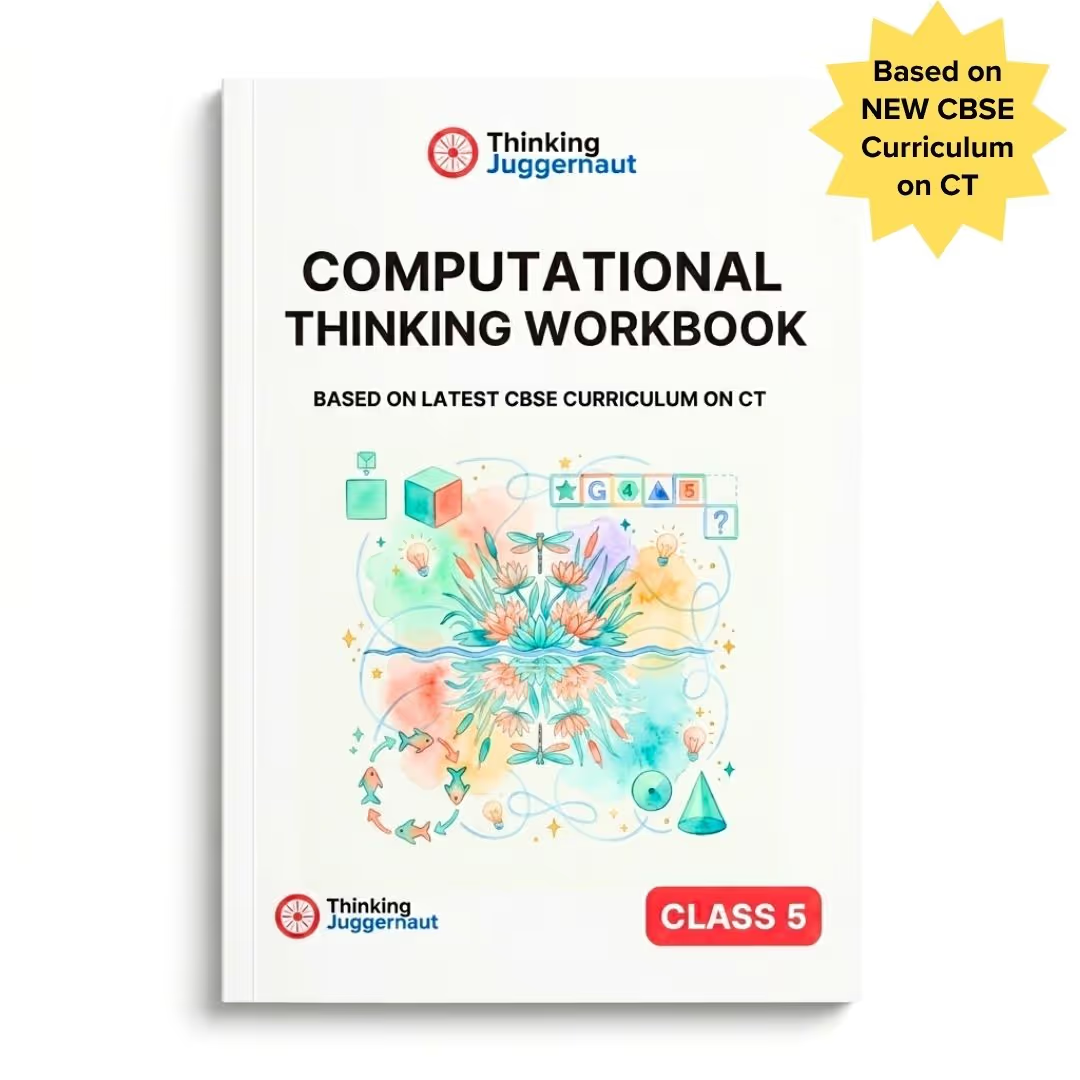
Based on New CBSE Curriculum on CT
₹499 FREE Shipping
Advanced Computational Thinking Class 6
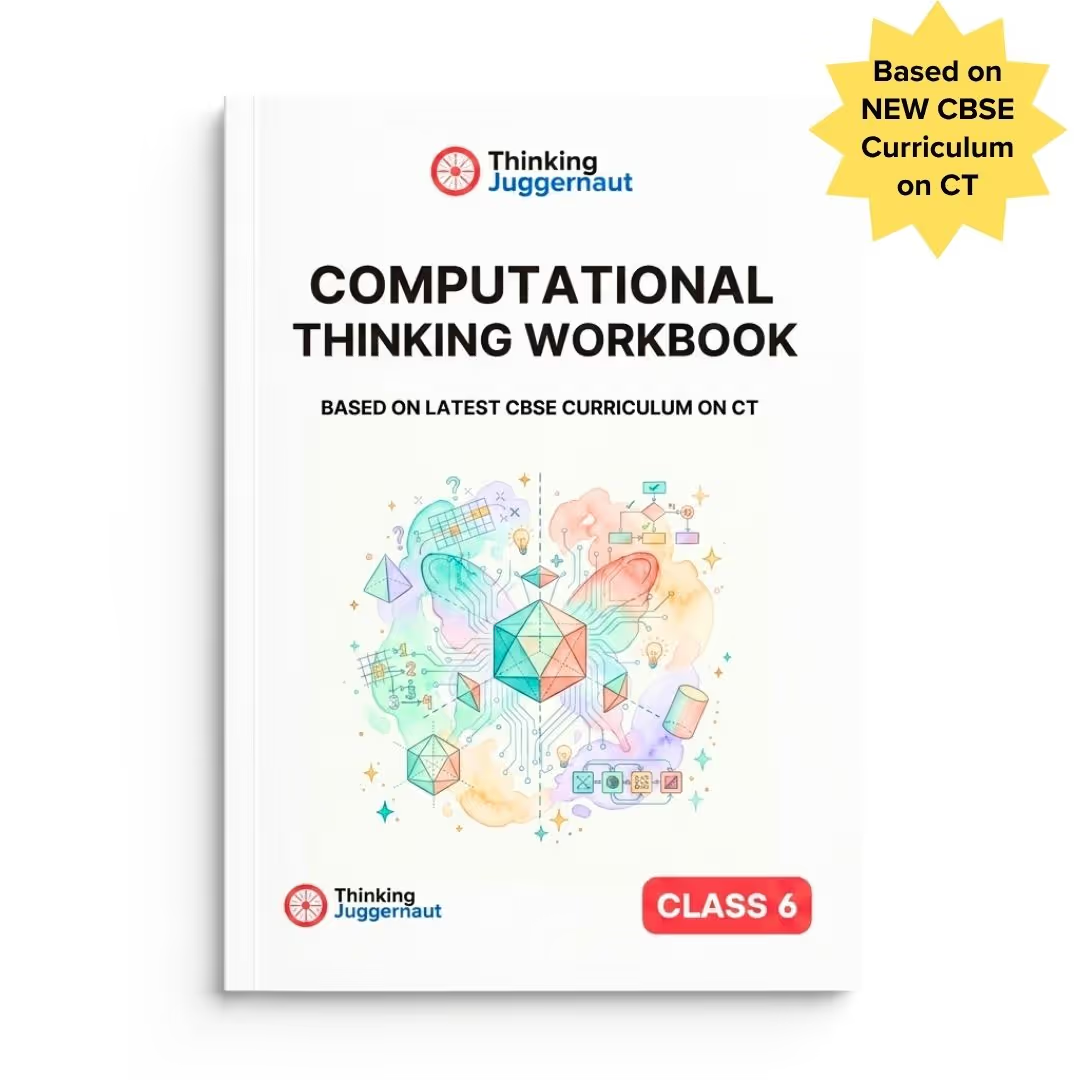
Based on New CBSE Curriculum on CT
₹499 FREE Shipping
Advanced Computational Thinking Class 7
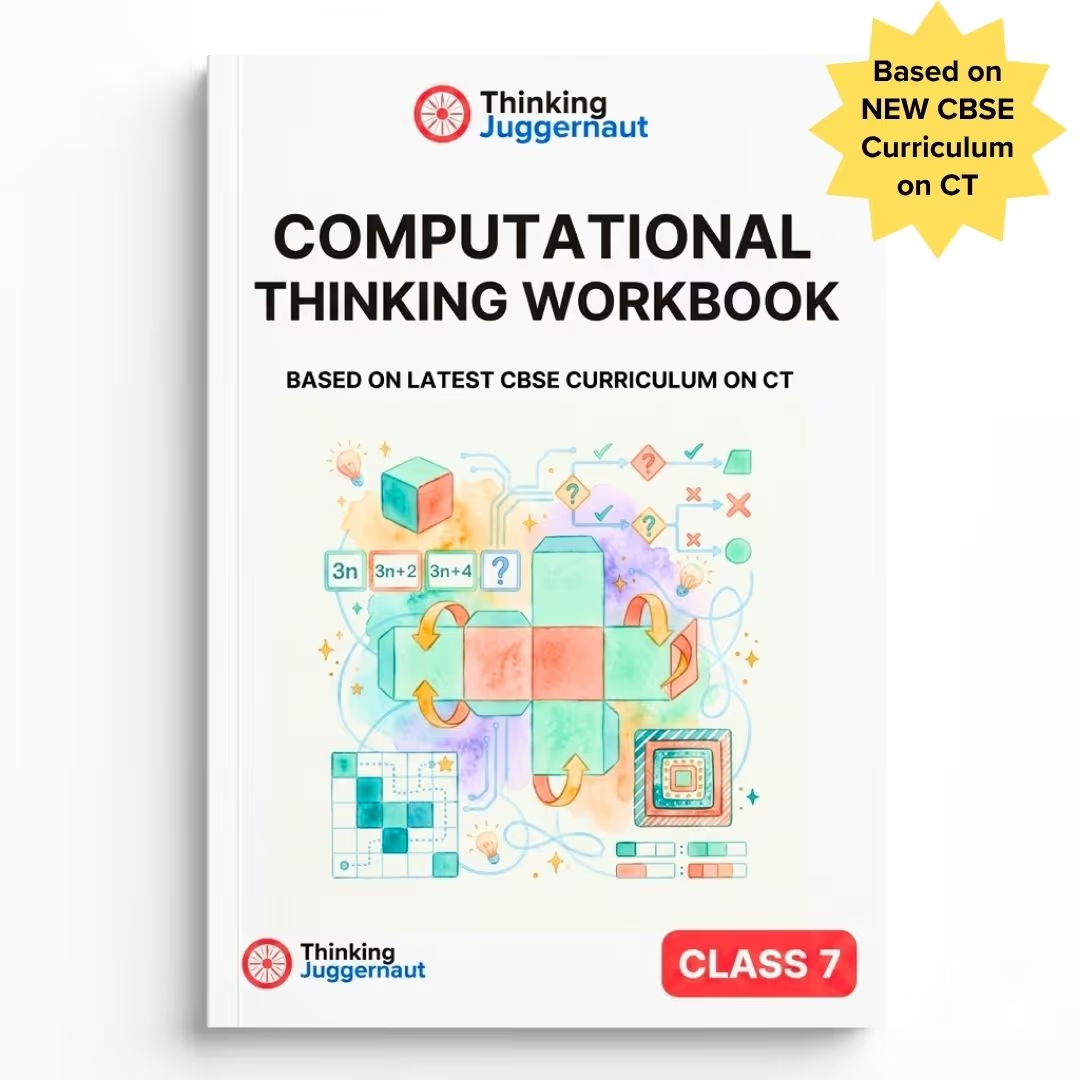
Based on New CBSE Curriculum on CT
₹499 FREE Shipping
Advanced Computational Thinking Class 8
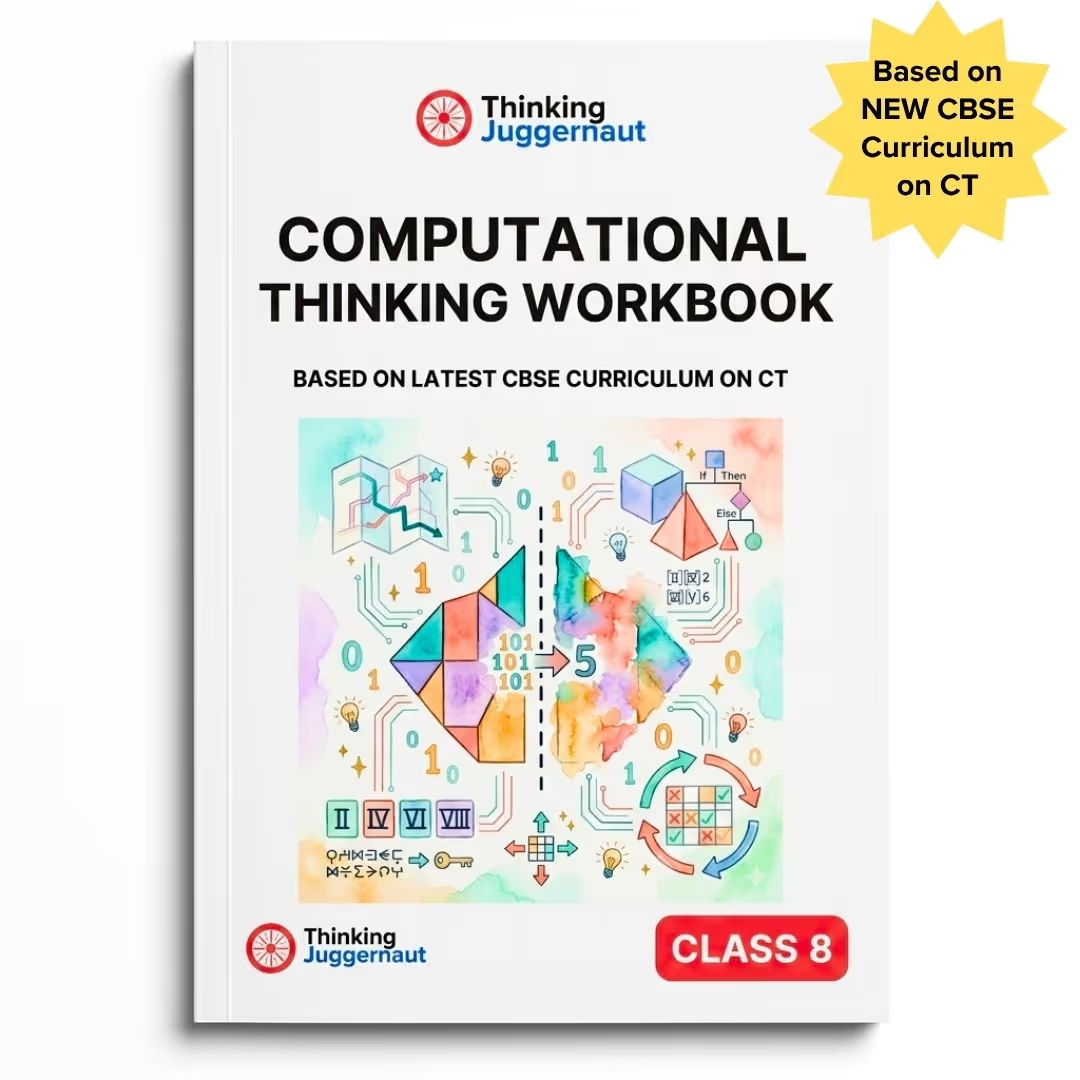
Based on New CBSE Curriculum on CT
₹499 FREE Shipping
Artificial Intelligence
Class 6
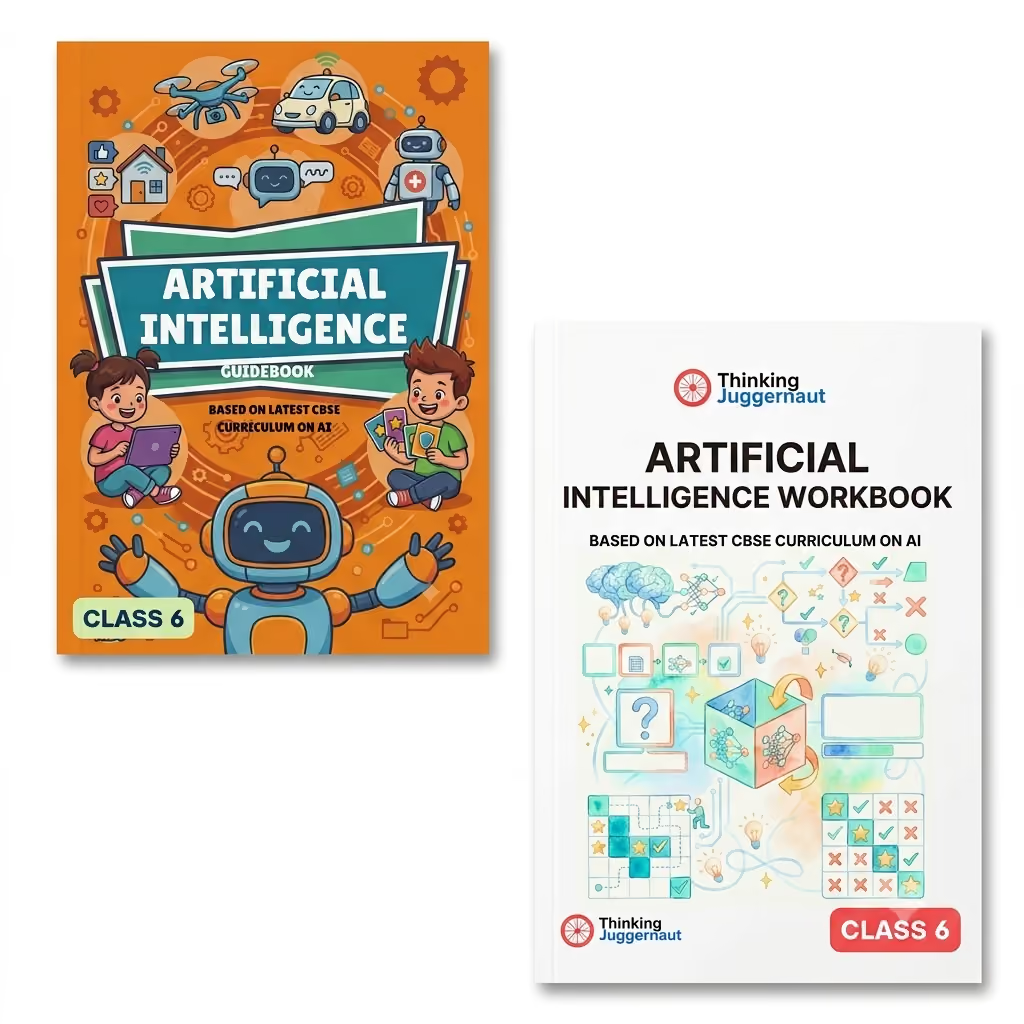
Based on New CBSE Curriculum on AI
₹599 FREE Shipping
Artificial Intelligence
Class 7
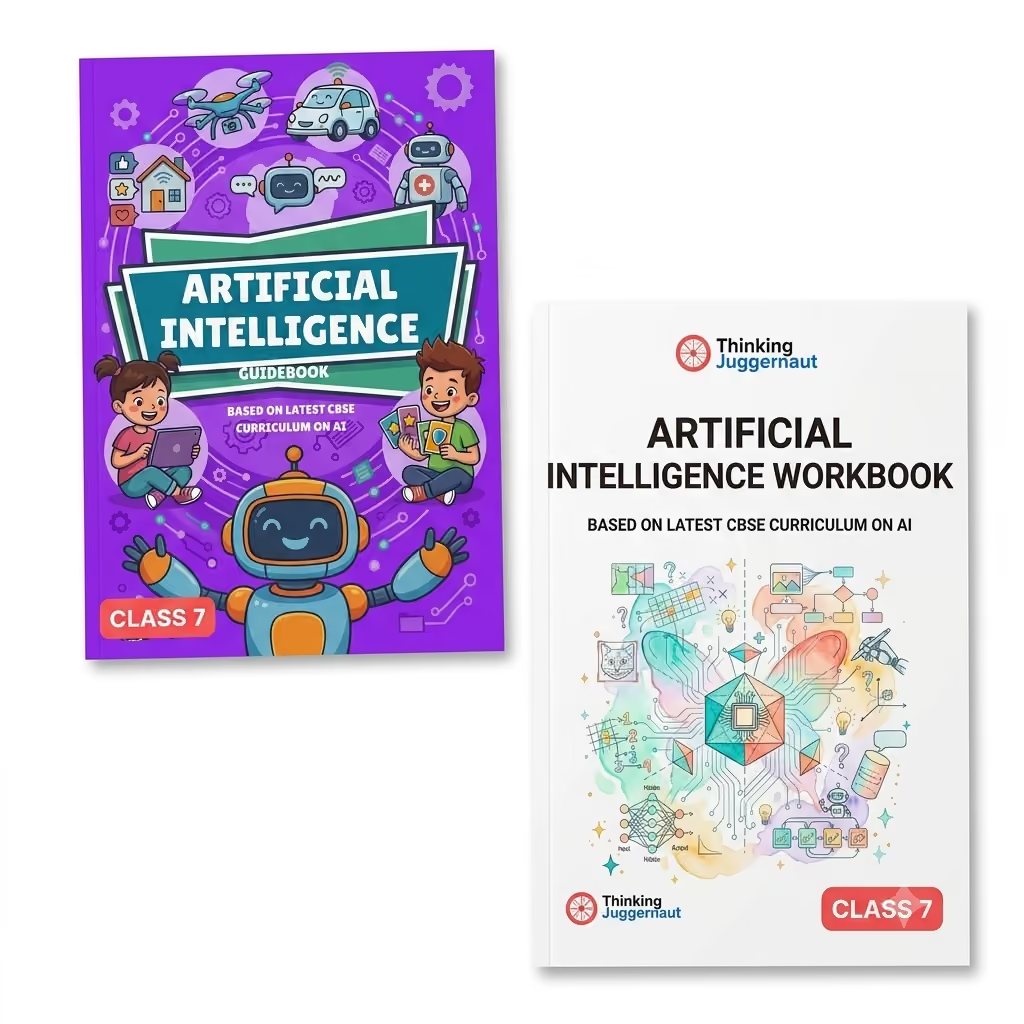
Based on New CBSE Curriculum on AI
₹599 FREE Shipping
Artificial Intelligence
Class 8
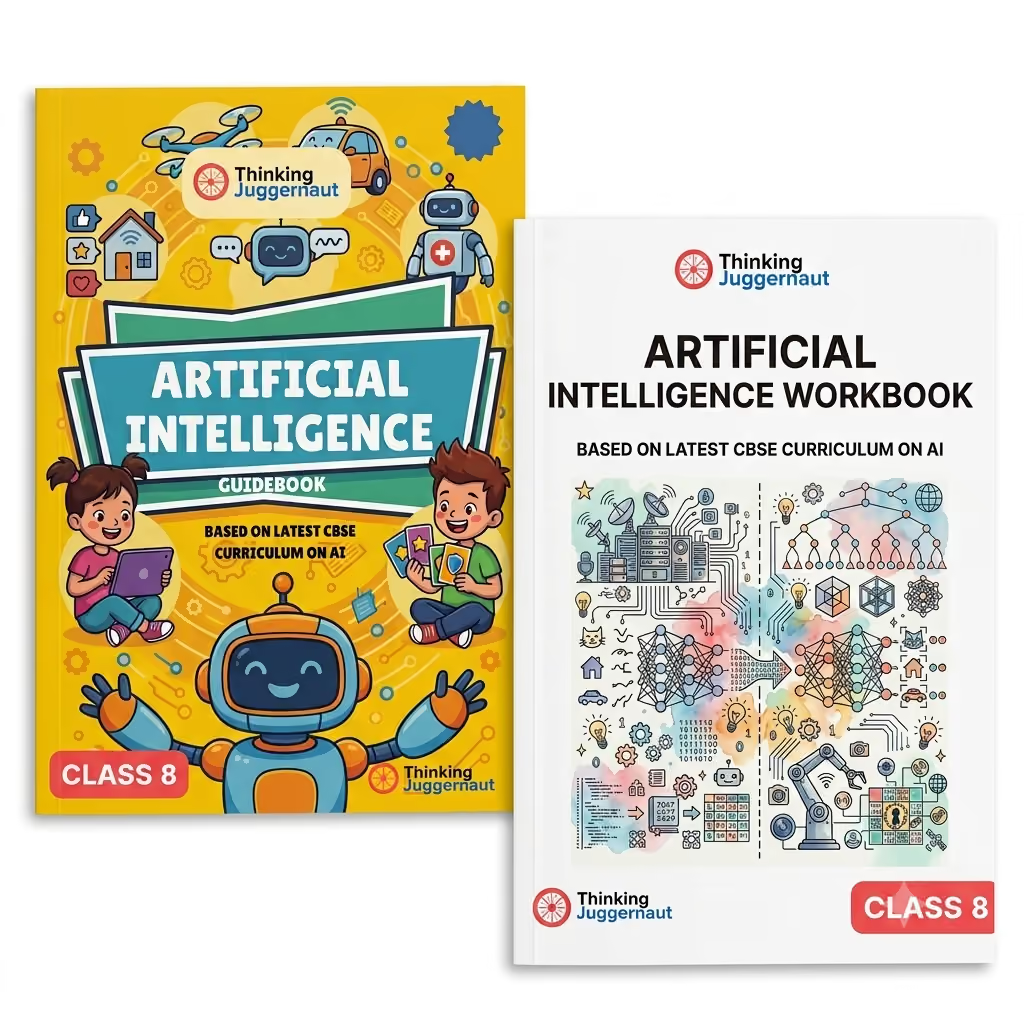
Based on New CBSE Curriculum on AI
₹599 FREE Shipping
![[background image] electronics workbench](https://cdn.prod.website-files.com/6867e17b7728d4dad1984de4/6971df3fc68f17192e35e18a_NEP%202020%20Experiential%20Learning.avif)
![[digital project] image of past client project on a magazine page](https://cdn.prod.website-files.com/6867e17b7728d4dad1984de4/69e45a828d0330ffb6ea1e34_Screenshot%202026-04-19%20at%2010.00.43%20AM.avif)
![[digital project] image of past client project on a magazine page](https://cdn.prod.website-files.com/6867e17b7728d4dad1984de4/69e4675ba1a912bed4dafb2e_Screenshot%202026-04-19%20at%2010.55.23%20AM.avif)
Almost there!
We will confirm your order on WhatsApp
Order placed!
Thank you! You will receive a WhatsApp confirmation shortly.
Latest CBSE & NEP 2020 news, updates, and hands-on classroom activity ideas — straight to your inbox.
No spam, ever. Unsubscribe anytime.
Watch your inbox for the next edition of the Thinking Juggernaut Weekly.