CBSE has introduced Computational Thinking (CT) and Artificial Intelligence (AI) as a mandatory part of the curriculum for Classes 3–8, starting 2026–27, aligned with NEP 2020 and NCF-SE 2023.






Computational Thinking
Class 3
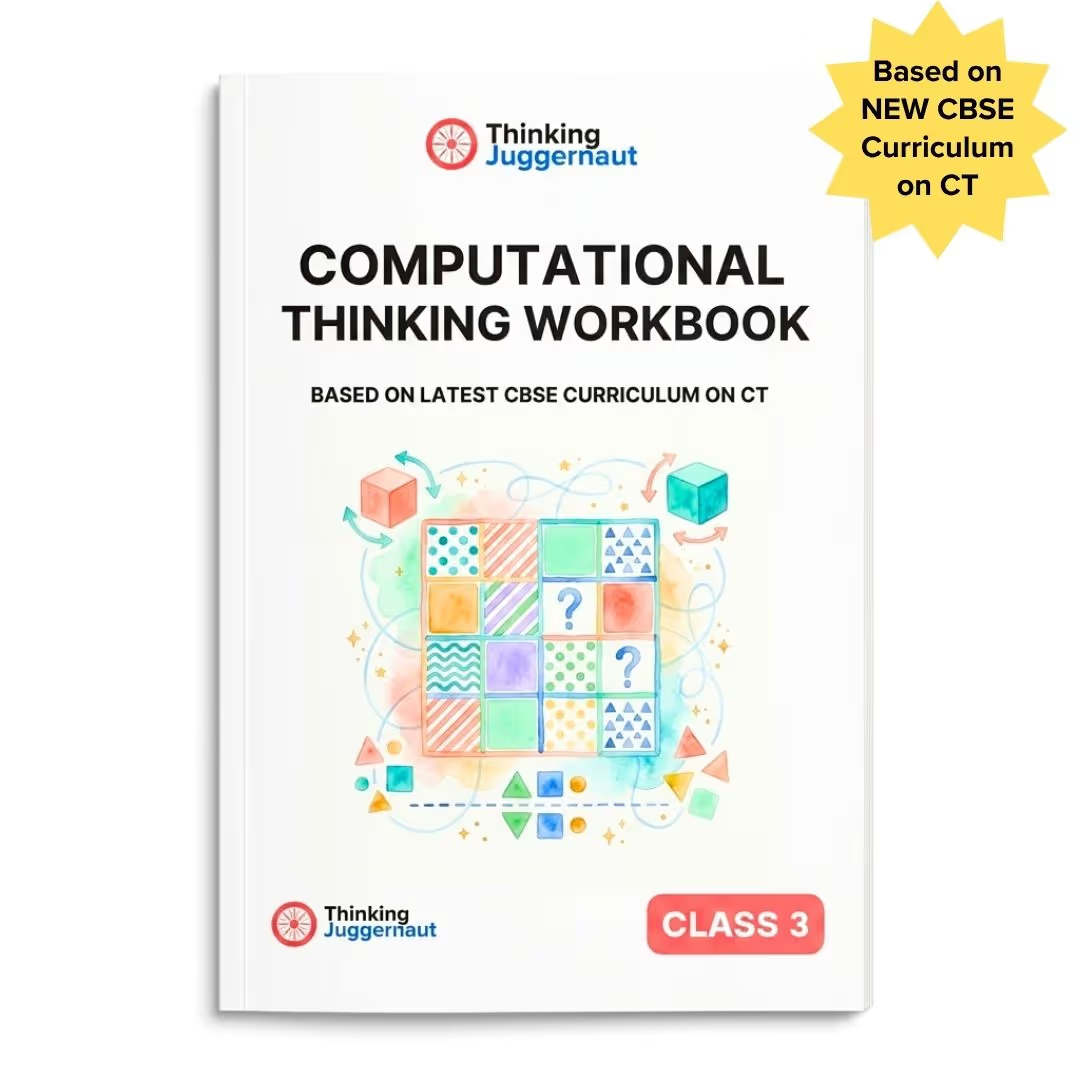
Based on New CBSE Curriculum on CT
₹499 FREE Shipping
Computational Thinking
Class 4
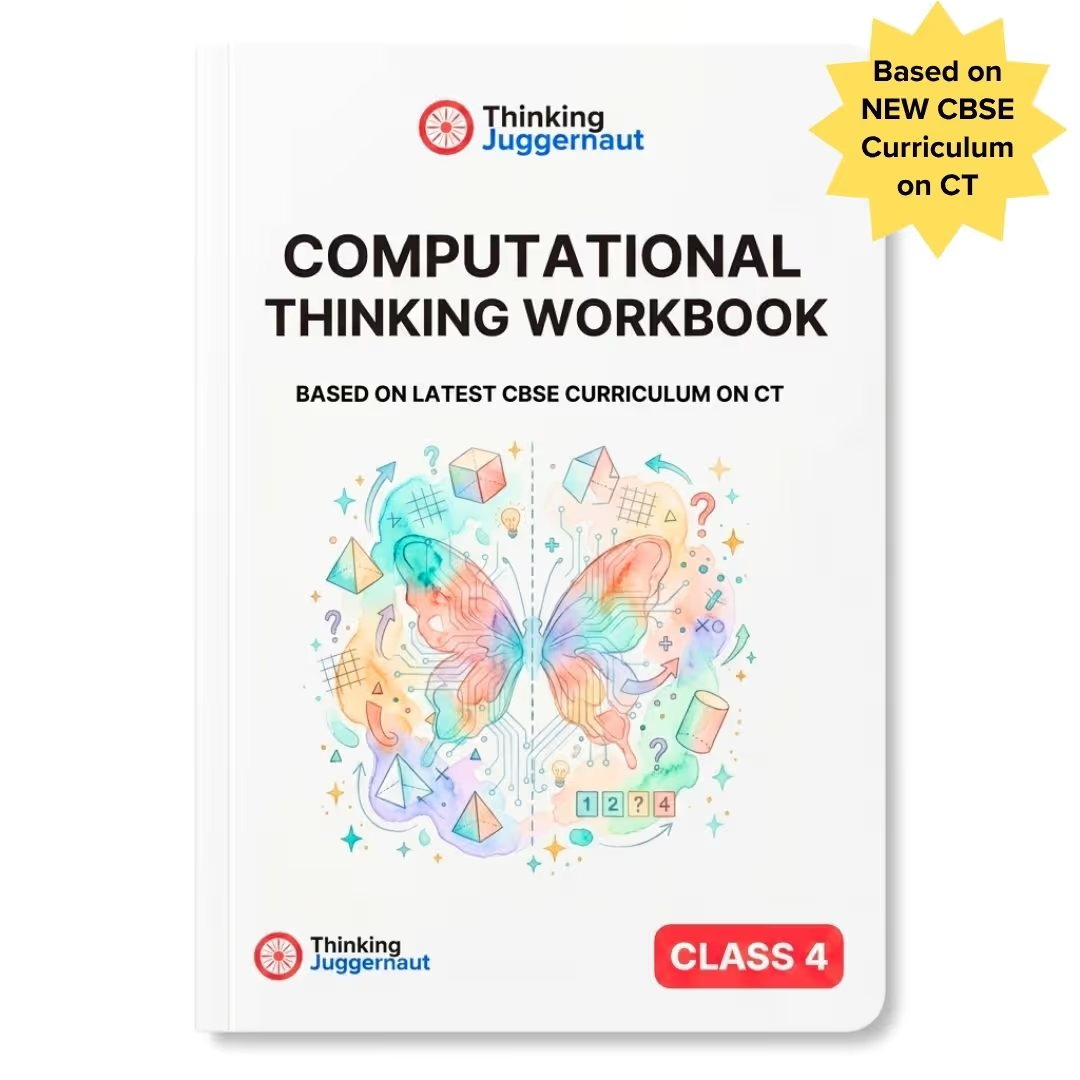
Based on New CBSE Curriculum on CT
₹499 FREE Shipping
Computational Thinking
Class 5
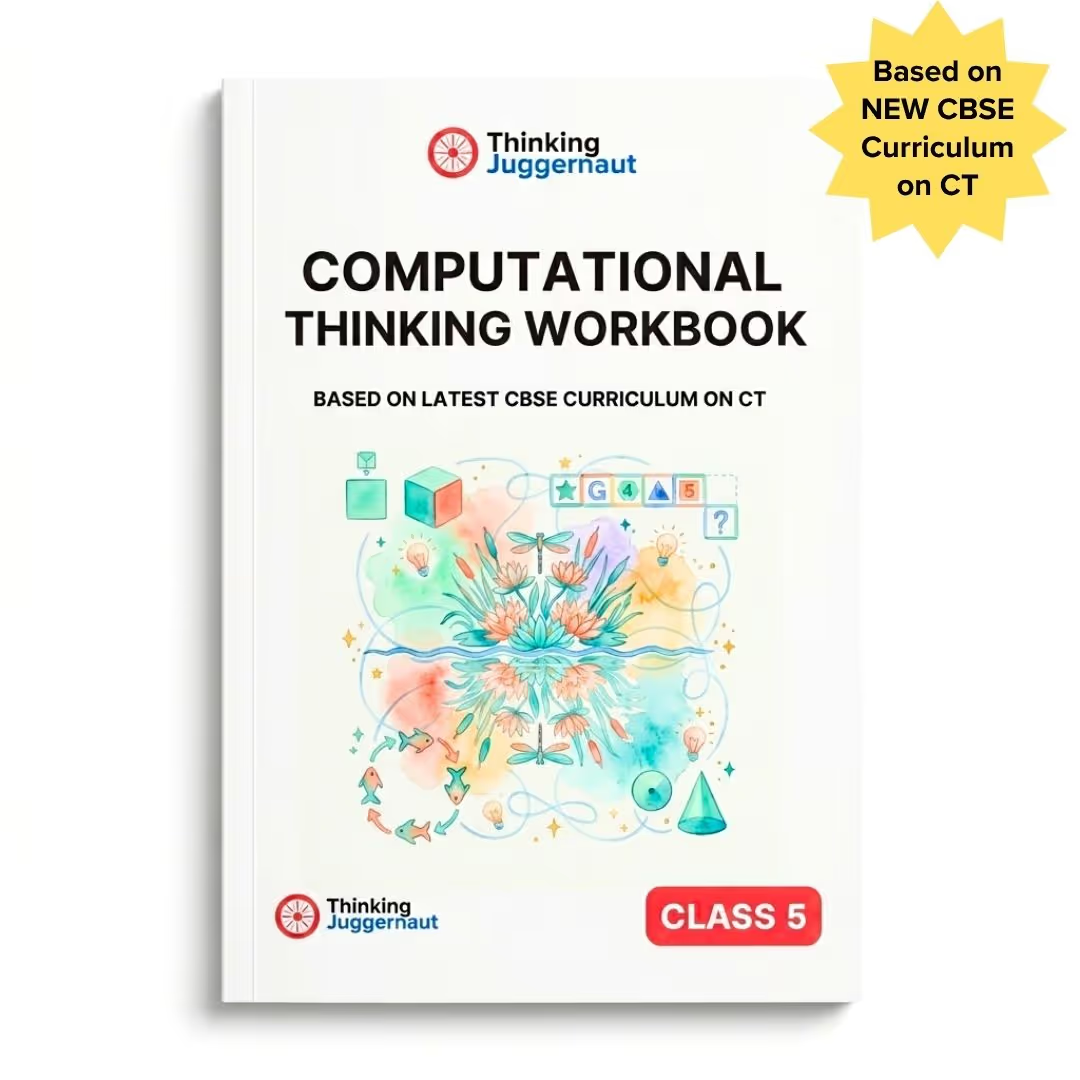
Based on New CBSE Curriculum on CT
₹499 FREE Shipping
Advanced Computational Thinking Class 6
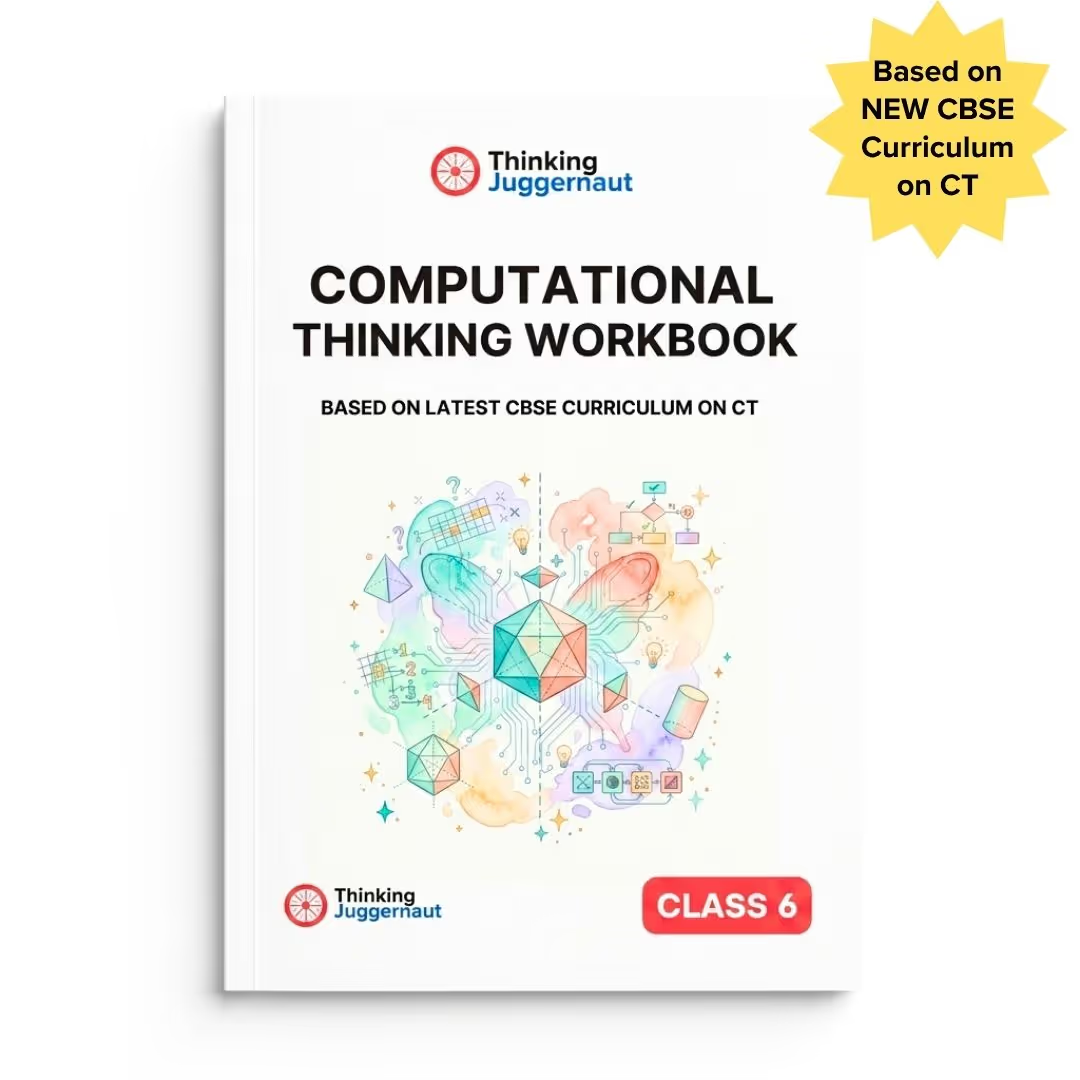
Based on New CBSE Curriculum on CT
₹499 FREE Shipping
Advanced Computational Thinking Class 7
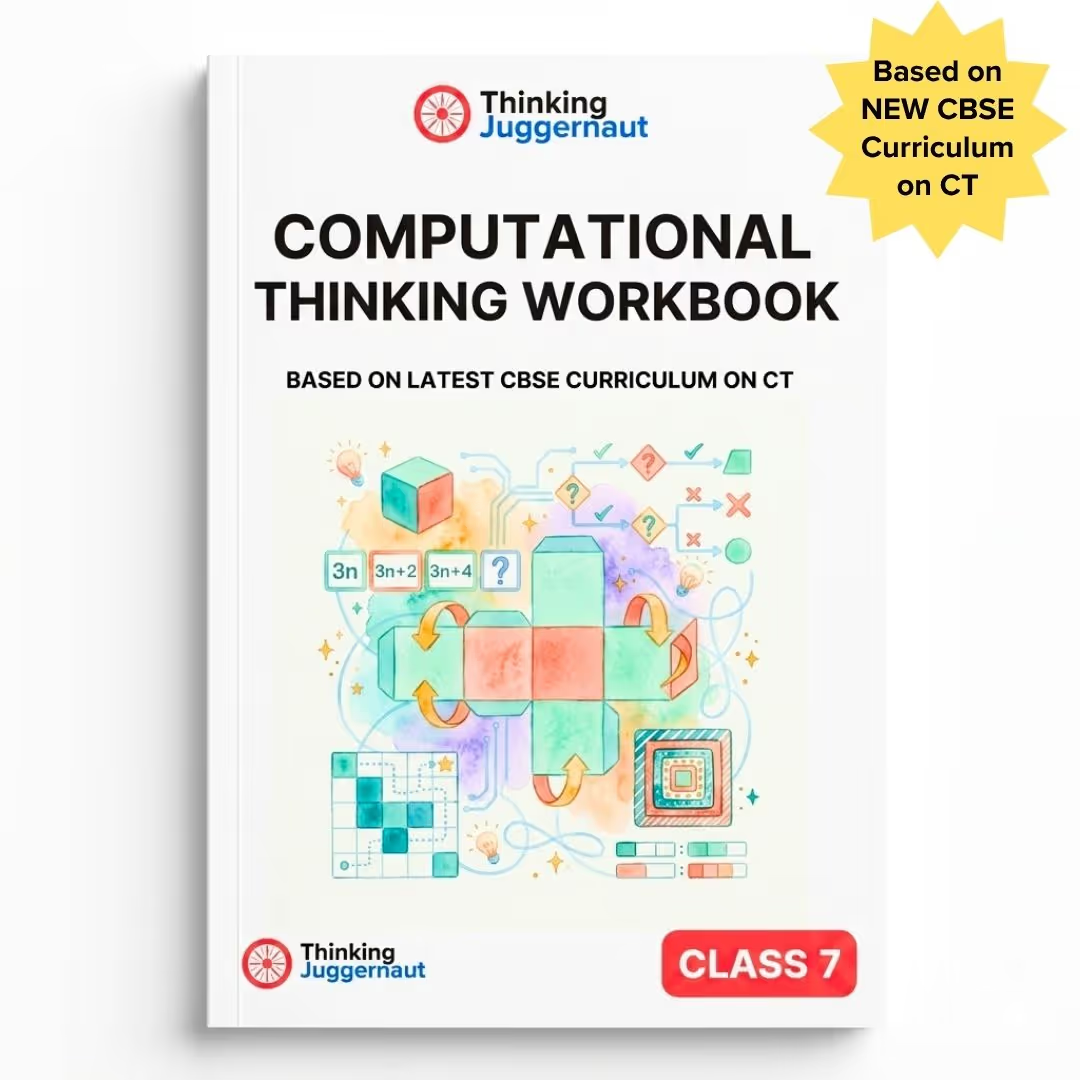
Based on New CBSE Curriculum on CT
₹499 FREE Shipping
Advanced Computational Thinking Class 8
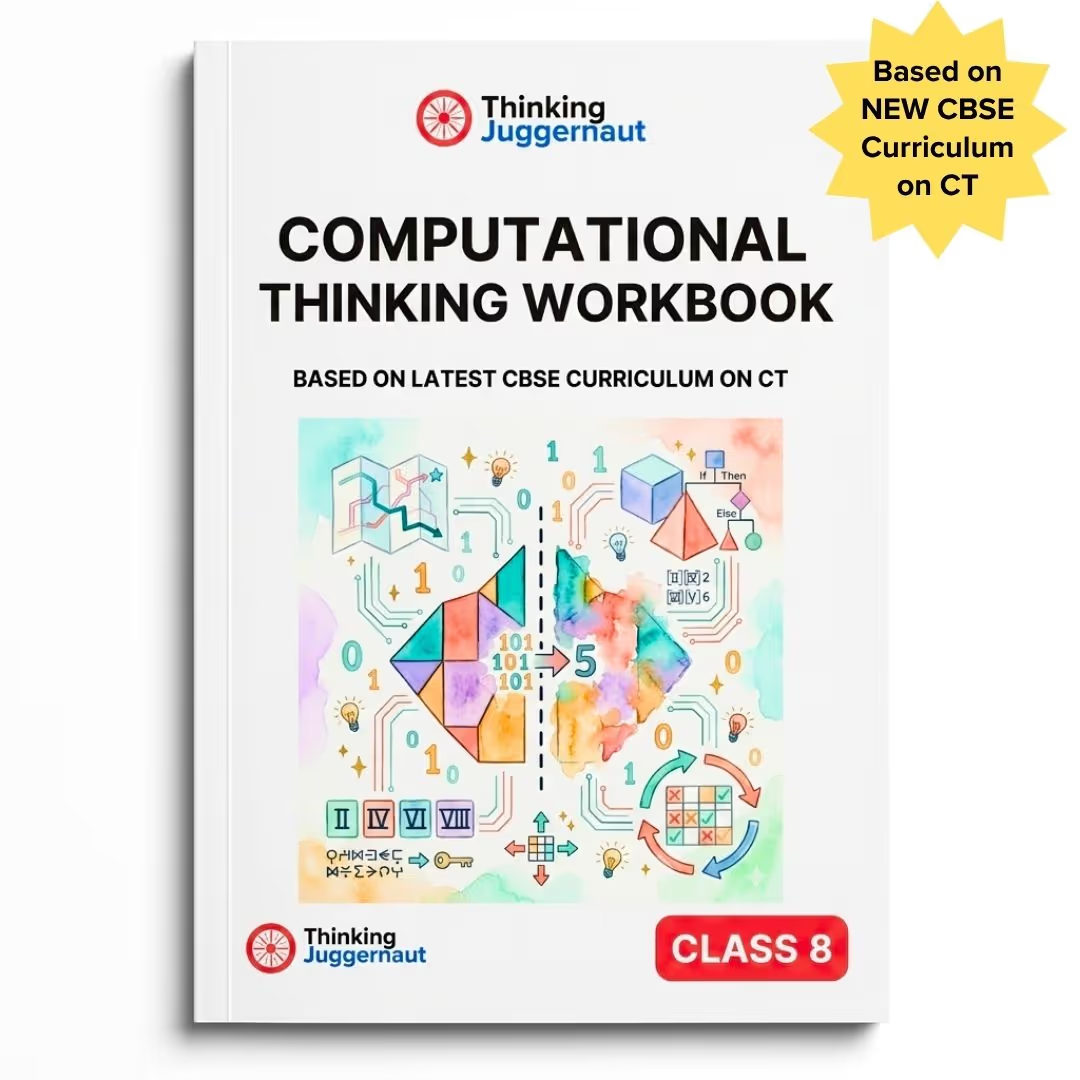
Based on New CBSE Curriculum on CT
₹499 FREE Shipping
Artificial Intelligence
Class 6
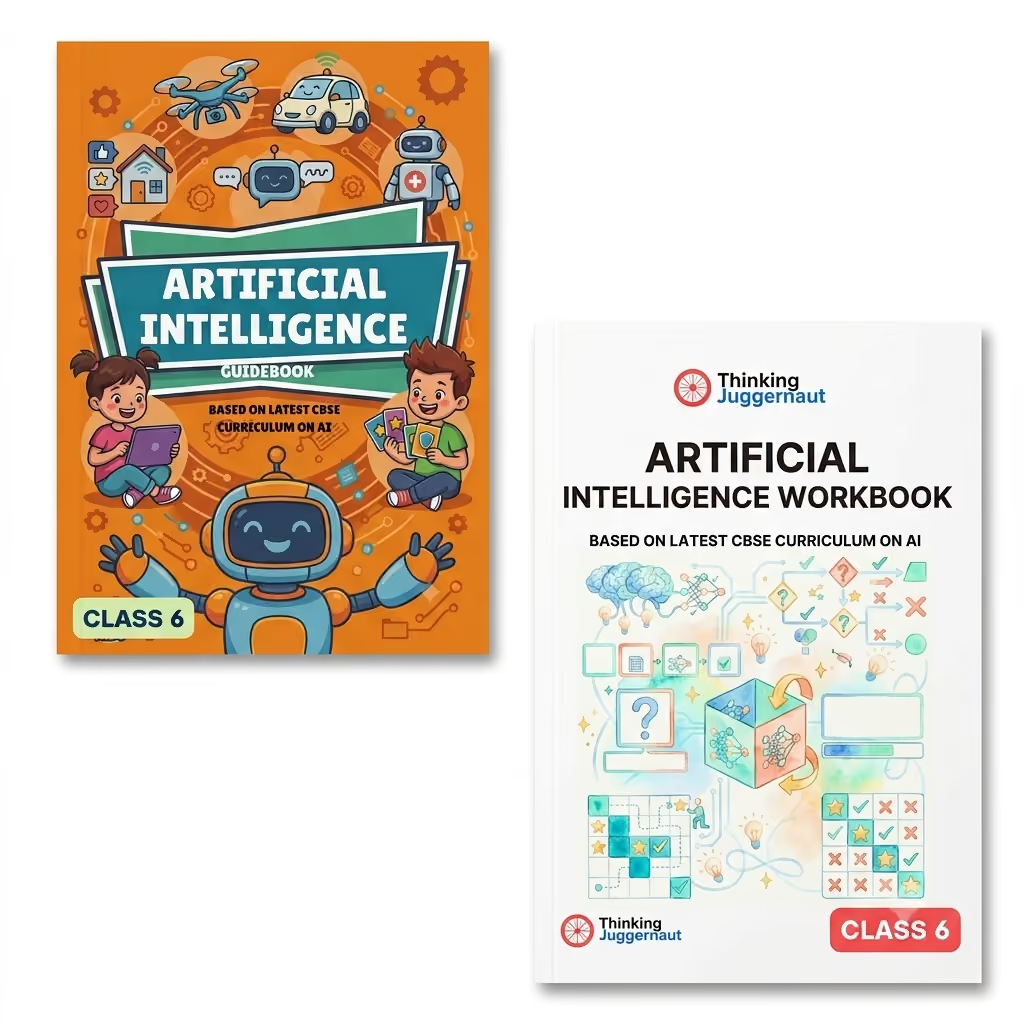
Based on New CBSE Curriculum on AI
₹599 FREE Shipping
Artificial Intelligence
Class 7
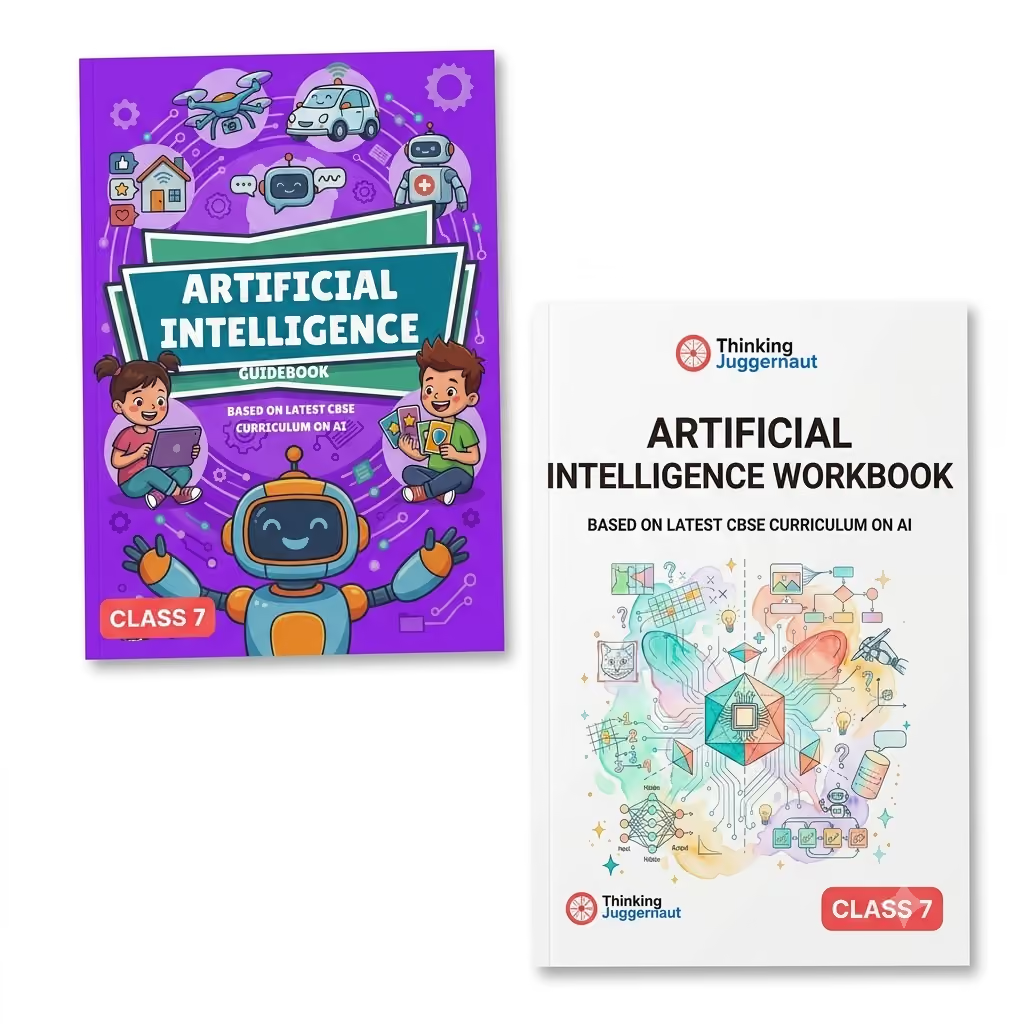
Based on New CBSE Curriculum on AI
₹599 FREE Shipping
Artificial Intelligence
Class 8
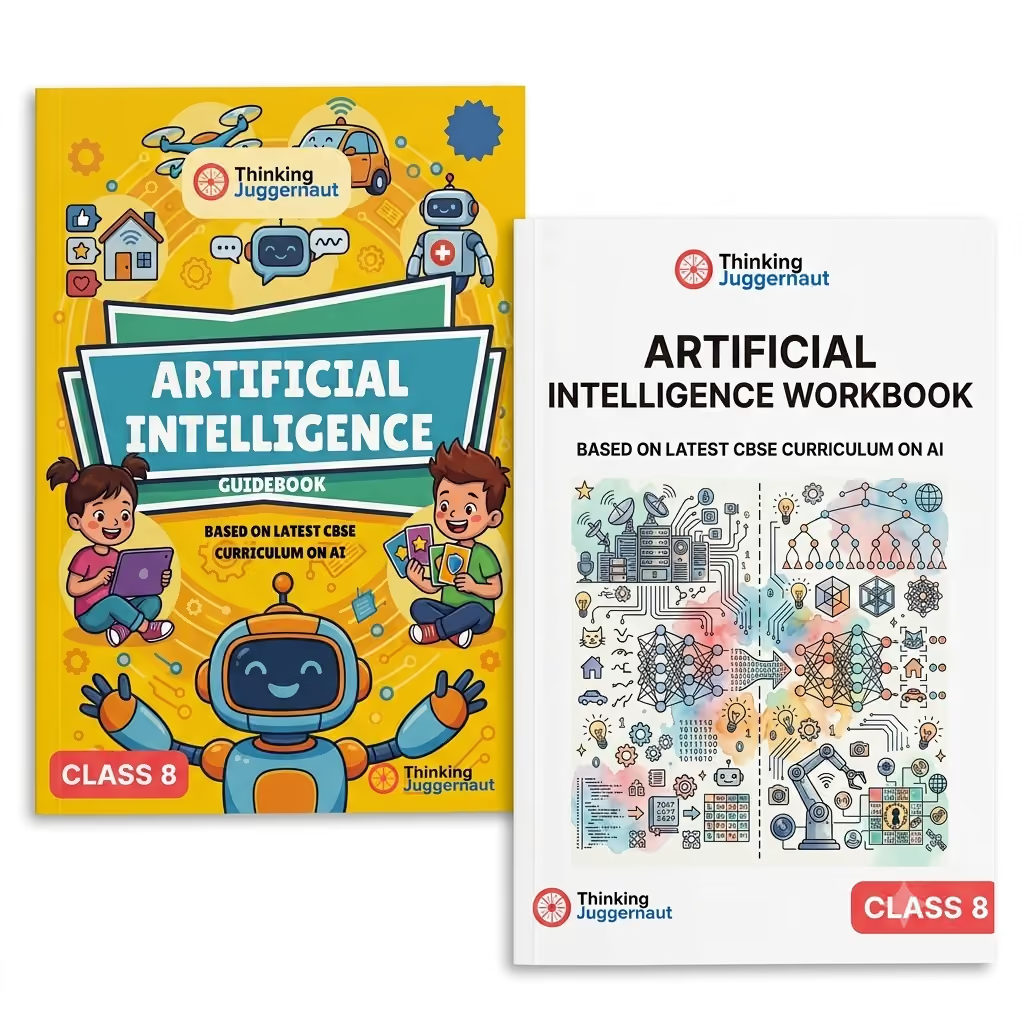
Based on New CBSE Curriculum on AI
₹599 FREE Shipping
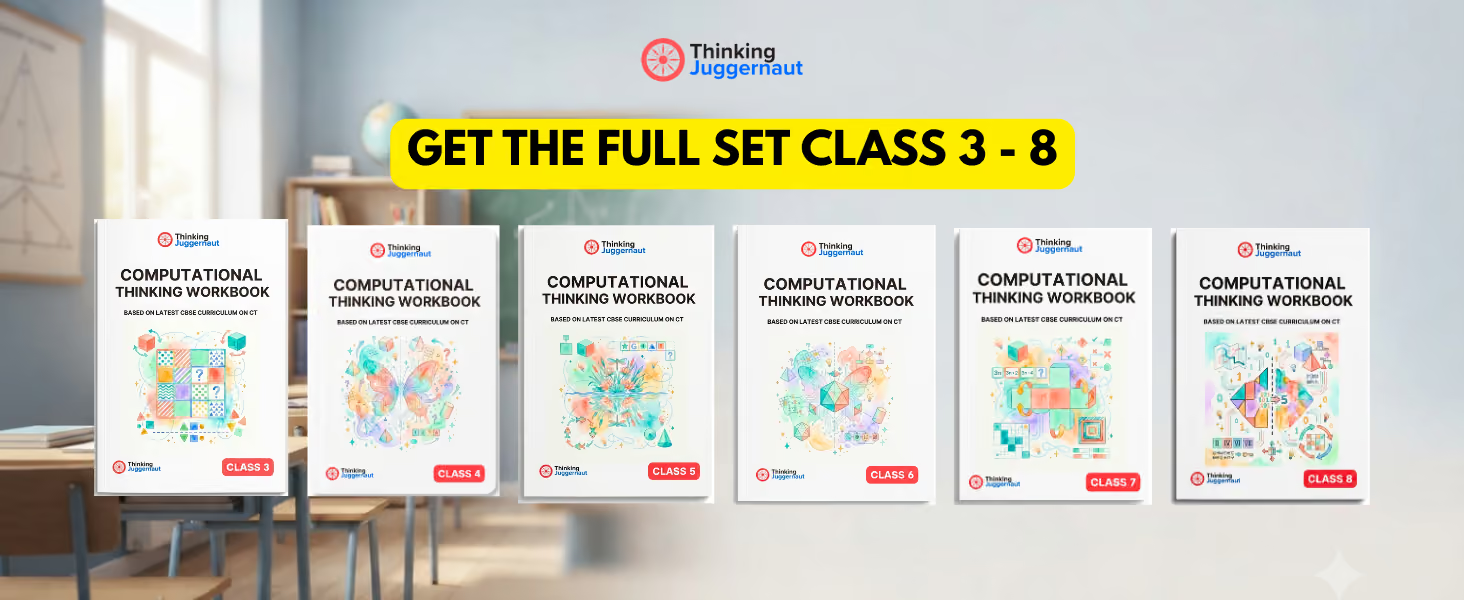
The Parent's Choice. NEP-2020 aligned hands-on kits that build real thinking and real-world problems solving skills.
Computational Thinking is a problem-solving approach built on four core skills:
Decomposition — breaking a problem into smaller parts
Pattern Recognition — spotting patterns and rules
Abstraction — focusing only on what matters
Algorithmic Thinking — designing step-by-step solutions
For Classes 3–5, CT is woven directly into Mathematics and The World Around Us (TWAU) — no separate subject, no coding.
For Classes 6–8, it moves to an advanced level: harder cross-subject problems, basic data analysis, and an introduction to AI fundamentals, including conversations around bias, privacy, and fairness.
Coding teaches a child to write instructions in a specific language. Computational Thinking teaches the child how to think before any instruction is written — the skill that decides whether the code (or the exam answer, or the real-world decision) is even correct.
CBSE has built CT directly into Maths and TWAU questions for Classes 3–5, and into core subjects for 6–8. A child doesn't need a laptop, an app, or a programming language to build this skill.
It transfers everywhere. A child who has practised decomposing a problem into conditions, or working backwards from an answer, applies that skill to a word problem, a science question, or a real-life decision — not just inside one coding environment.
The starting point. CT is introduced through everyday contexts — names, toys, festivals, class parties — built around abstraction, pattern recognition, decomposition, and simple algorithmic steps. No coding, no jargon: just puzzles, games, and hands-on activities.
Builds on Class 3 foundations with more layered problems — multi-clue puzzles, sequencing, and pattern rules that need to be worked out rather than spotted at a glance. Still fully woven into Maths and TWAU, still no coding required.
Covers the Class 5 Maths/TWAU syllabus — large numbers, fractions, angles, symmetry, data handling — through a CT lens. Each chapter has a fully solved example (like the one above) showing the exact reasoning steps, followed by 200+ graded questions.
The step up to the Middle Stage. CT now spans multiple subjects at a more advanced level, with an introduction to basic data analysis alongside decomposition, pattern recognition, abstraction, and algorithm design.
Focuses on algebraic patterns, 3D nets and cross-sections, compound transformations (multiple flips, turns, folds in sequence), and conditional logic — reasoning that carries directly into both Maths and early programming logic.
The most advanced CT workbook in the series — binary systems, optimisation problems, and conditional logic, building the structured reasoning that underlies both computer science and higher-order Maths.
A first proper introduction to Artificial Intelligence — what it is, how it differs from ordinary automation, basic concepts like pattern recognition, and an early grounding in AI ethics.
Moves into real-world AI applications and how AI is used across industries, alongside a deeper look at AI ethics and bias — connecting AI concepts to things students already see around them.
The most advanced AI handbook in the series — covering the AI project lifecycle, practical applications, fairness in AI, and responsible AI use, so students finish Class 8 as informed, ethically-aware users of AI.
No. CT is the reasoning skill that underlies coding — decomposition, pattern recognition, abstraction, and algorithmic thinking — without writing a single line of code.
This workbook series is built to cover the actual CBSE CT & AI curriculum for Classes 3–8, introduced from the 2026–27 session. It's designed as practice material aligned to what CBSE recommends
Not necessarily. Each chapter starts with a concept explanation and a fully solved example showing the reasoning step by step, so a child can work through it independently. Parents are welcome to join in, but it isn't required.
Match it to your child's current school class — the workbooks are chapter-aligned to each grade's CBSE syllabus
Founded by IIT & NIT Alumini, Thinking Juggernaut is a NEP-2020 aligned experiential learning platform that build 21st-century skills, connect subjects, and link classroom concepts to real-life challenges
Whatsapp usAlmost there!
We will confirm your order on WhatsApp
Order placed!
Thank you! You will receive a WhatsApp confirmation shortly.