CBSE Jal Pakhwada 2026: What Schools Must Do Between April 16–30
CBSE Circular Acad-22/2026 dated April 16, 2026 asks all affiliated schools to observe Jal Pakhwada from 16th to 30th April 2026 — a two-week intensive focused on water conservation awareness and action. This is part of the Ministry of Jal Shakti's ongoing Jal Shakti Abhiyan: Catch the Rain campaign, which has been running since March 2021. Schools are a formal part of the delivery mechanism. It applies to all CBSE-affiliated schools from this academic session.
CBSE Circular Acad-22/2026 dated April 16, 2026 asks all affiliated schools to observe Jal Pakhwada from 16th to 30th April 2026 — a two-week intensive focused on water conservation awareness and action.
This is part of the Ministry of Jal Shakti's ongoing Jal Shakti Abhiyan: Catch the Rain campaign, which has been running since March 2021. Schools are a formal part of the delivery mechanism.
What Schools Are Required to Do
CBSE has listed specific activities. These are suggestive, not a rigid checklist — but participation is expected.
Day 1 of the Pakhwada:
Organise a Jal Shapath (water pledge) during morning assembly, with all students, teachers, and staff participating. Repeat the pledge every day during the fortnight.
Week 1:
Hold a SMC/PTA meeting or workshop on the importance of water conservation — both in school and at home.
Post water conservation awareness messages on the school website.
Across the fortnight:
Run competitions for students: essay, debate, quiz, painting, slogan writing, model making, elocution, skit, poem.
Encourage students to design posters and pamphlets for display on school premises.
Conduct an audio-visual programme to motivate students and staff.
Review the school's piped water supply connection status under Jal Jeevan Mission.
Channel water from hand-washing units to school gardens where possible.
Teach students about waterborne diseases and safe drinking water practices.
Hold a Bal Sansad / School Cabinet meeting specifically to plan Jal Pakhwada activities.
Community outreach:
Teachers are encouraged to visit nearby villages to address local communities on water conservation.
Students and teachers together should propagate the Jal Pakhwada theme in local areas.
The Reporting Requirement
Schools must submit a daily activity report with photographs via this Google Form:
At the end of the fortnight, each school must compile a summary and identify the best activity to forward to district/state authority for uploading in the public domain.
Assign someone — a coordinator or vice principal — to handle daily submissions from Day 1. Waiting until the end of the fortnight to collect photos and reports makes this harder than it needs to be.
Why Water Education in Schools Is Not Just an Event
India is under serious water stress. The Central Ground Water Board has flagged over-exploitation of groundwater in large parts of the country. Cities like Bengaluru, Chennai, and Delhi face acute seasonal shortages. By 2030, demand for water in India is projected to be nearly double the available supply.
Schools are where habits form. A child who understands water budgets, waterborne disease, and rainwater harvesting at age 10 carries those habits home — and eventually into workplaces and communities. That is why campaigns like Jal Pakhwada are routed through the school system.
Beyond the fortnight, there are a few things schools can build in:
Water audit as a student project: Map every tap, calculate monthly consumption, identify leakage points. Practical, cross-curricular, and genuinely useful.
Rainwater harvesting orientation: Even a simple observation of how the school roof drains after rain, mapped against where that water could be stored, teaches hydrology more concretely than any textbook diagram.
Kitchen garden with greywater use: The CSL agriculture component (from the Composite Skill Lab mandate) is a natural fit here — channelling hand-wash water to school gardens is one of CBSE's own suggestions in this circular.
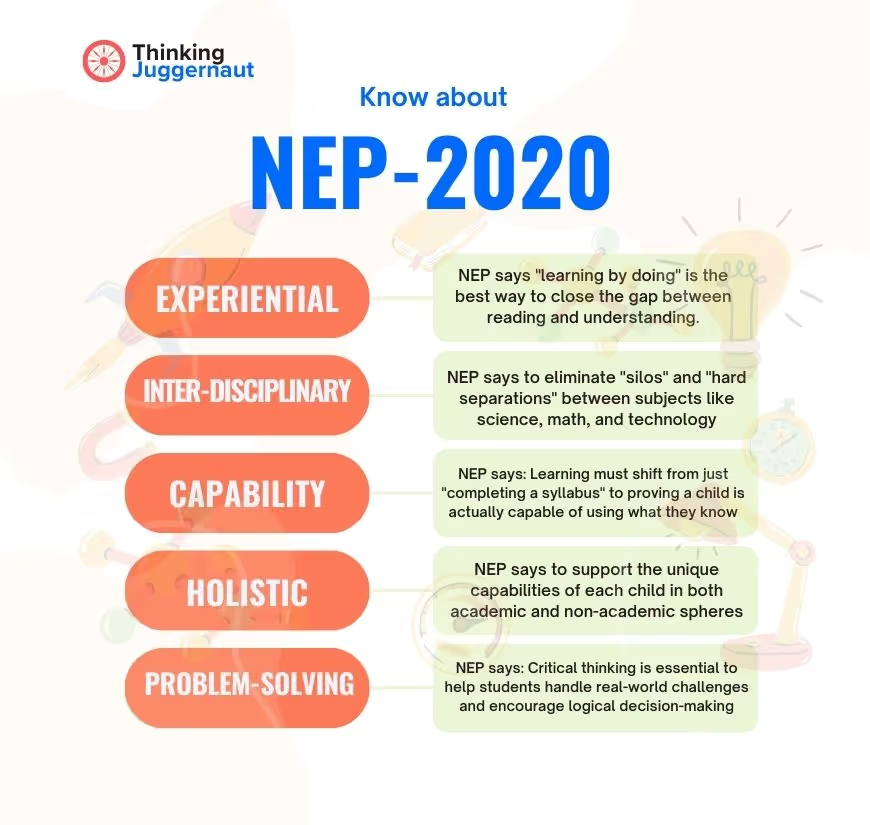
Water-themed interdisciplinary projects: Water connects Math (volume, flow rates), Science (evaporation, filtration, contamination), Social Science (river civilisations, irrigation history, groundwater law), and Geography (monsoon patterns, watershed mapping). A well-designed project covers all of it.
Quick Action List for Principals
Schedule Jal Shapath for Day 1 (April 16) assembly — set it as a recurring morning item
Brief SMC/PTA coordinator to organise Week 1 meeting or workshop
Assign a staff member for daily Google Form submission with photos
Shortlist 2–3 student competitions to run this week
Post water conservation content on school website
Check Jal Jeevan Mission piped water status for your school
Plan the end-of-fortnight summary report before April 30


![[background image] electronics workbench](https://cdn.prod.website-files.com/6867e17b7728d4dad1984de4/6971df3fc68f17192e35e18a_NEP%202020%20Experiential%20Learning.avif)
![[digital project] image of past client project on a magazine page](https://cdn.prod.website-files.com/6867e17b7728d4dad1984de4/69e45a828d0330ffb6ea1e34_Screenshot%202026-04-19%20at%2010.00.43%20AM.avif)
![[digital project] image of past client project on a magazine page](https://cdn.prod.website-files.com/6867e17b7728d4dad1984de4/69e4675ba1a912bed4dafb2e_Screenshot%202026-04-19%20at%2010.55.23%20AM.avif)