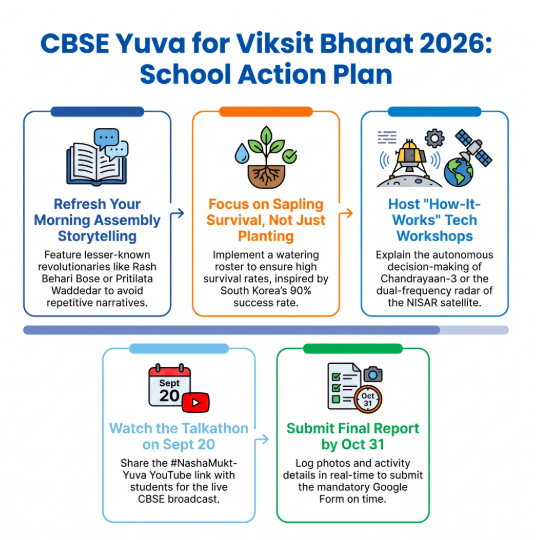
CBSE Circular Acad-60/2026, dated 16 September 2026, asks every affiliated school to run the Yuva for Viksit Bharat Programme through September and October 2026 — built around nation-building, patriotism, and Sewa (service), in the spirit of India's Viksit Bharat vision of a developed India by 2047.
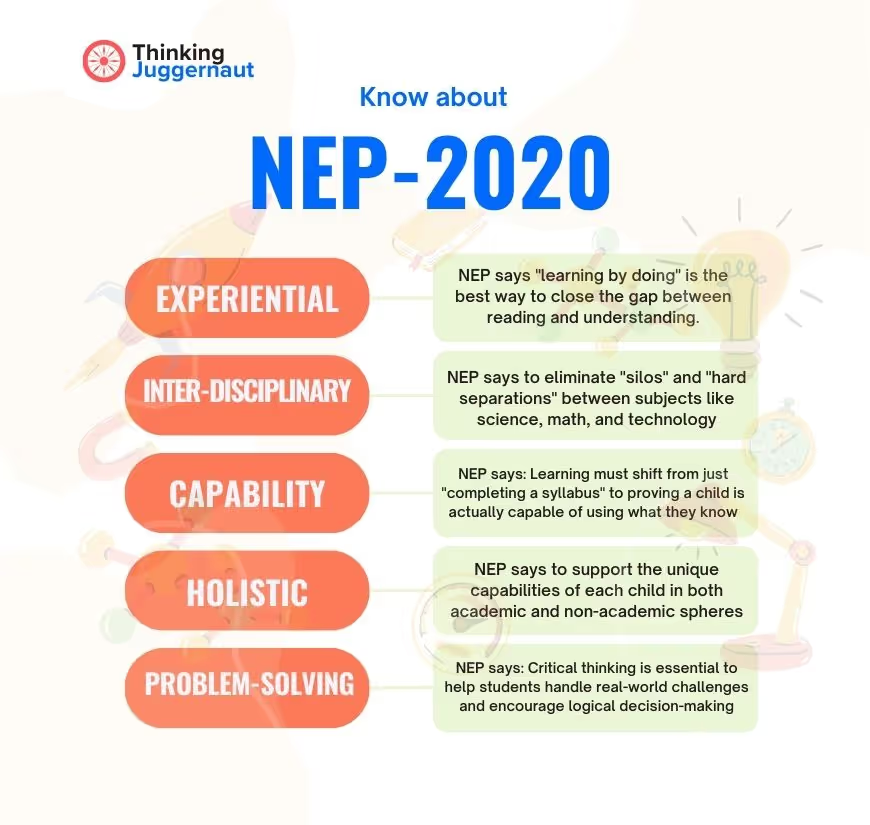
This kind of hands-on, values-first activity is exactly what NEP 2020 calls for in schools — worth keeping in mind as you plan the term ahead with kits built for CBSE classrooms.
It applies to every CBSE-affiliated school, including Kendriya Vidyalayas, Navodaya Vidyalayas, Sainik Schools, and Eklavya Model Residential Schools.
The circular lists seven suggestive activities:
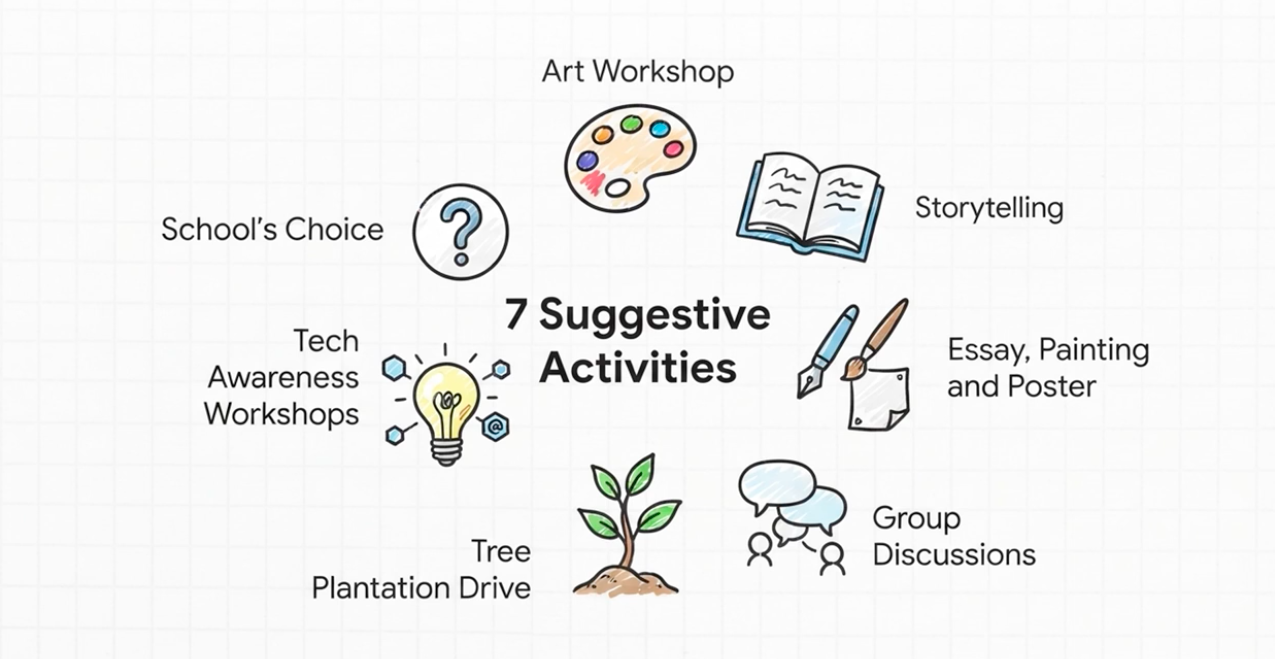
Three of these are easy to announce and hard to run well without material on hand. Here's what's actually out there for each.
Ask a student to name a freedom fighter and you'll get Bhagat Singh, Netaji, Gandhi, maybe Azad or Savarkar. Running that same shortlist through two months of morning assemblies gets over fast.
Sanjeev Sanyal's Revolutionaries: The Other Story of How India Won Its Freedom exists because of exactly this gap. Even the publisher's own description of the book concedes that only around eight names have really stayed in public memory — Savarkar, Aurobindo Ghosh, Rashbehari Bose, Bagha Jatin, Sachindra Nath Sanyal, Bhagat Singh, Chandrashekhar Azad, and Netaji. Sanyal's case is that these were part of an organised network running armed resistance for fifty years, with cells stretching from Germany and Japan to the United States — not isolated acts of individual bravery. It's topical too: Nikkhil Advani's series based on the book released on Amazon Prime Video on 11 September 2026, built around four of these lesser-known figures.
Names worth actually assigning out, so the same five don't repeat all September:
Split these across houses or classes so no two assemblies repeat a name.
Ek Ped Maa Ke Naam ("a tree in mother's name") isn't a new ask for schools. PM Modi launched it on World Environment Day, 5 June 2024, planting a peepal tree at Buddha Jayanti Park, Delhi. The Ministry of Environment, Forest and Climate Change hit its target of 80 crore saplings by 25 September 2024 — five days ahead of its own deadline. Indore alone set a world record of 11 lakh saplings in a single day. Delhi's current round has already seen 2,282 students from 44 schools plant 14,450 saplings toward the city's 70-lakh target — this isn't hypothetical for CBSE schools, it's already underway in some of them.
Numbers like these mean something only if the saplings survive. Two examples worth raising in a group discussion, since the circular asks for both tree plantation and progress discussions:
Jadav Payeng, Assam. In 1979, a 16-year-old saw a pile of snakes dead from heatstroke on a barren river sandbar and started planting bamboo. Thirty years later, with no institutional backing, the Molai forest he built alone covers 550 hectares — bigger than New York's Central Park — and is now home to Bengal tigers, elephants, and Indian rhinoceros. He received a Padma Shri in 2015.
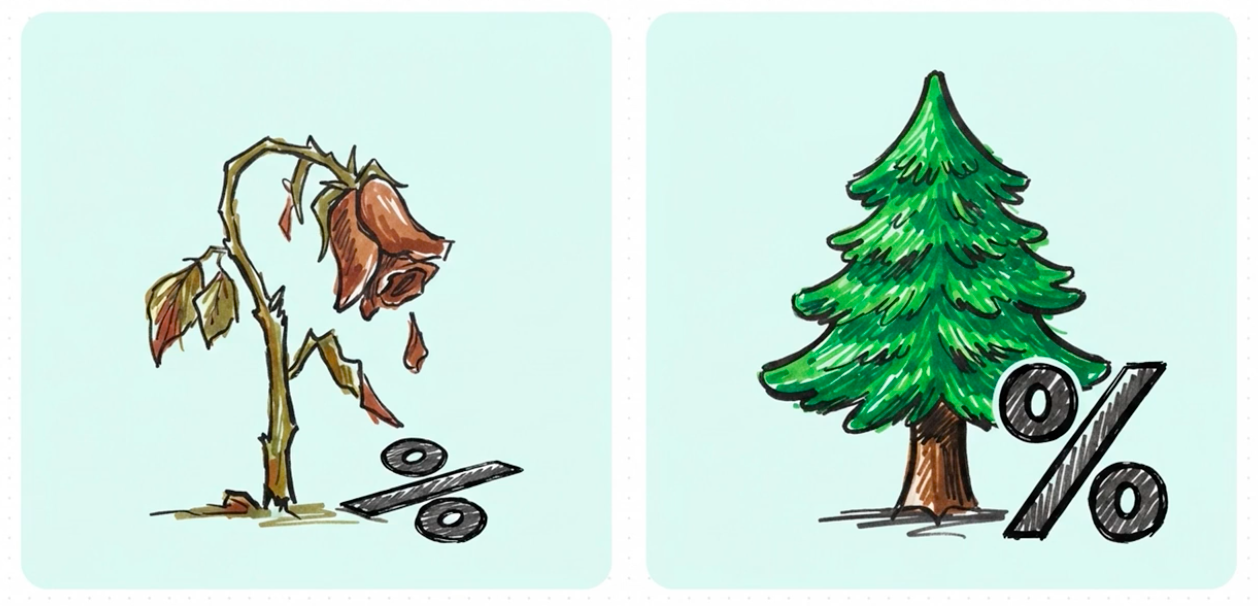
South Korea, at national scale. After the Korean War, close to 58% of the country's forest land was officially classed as "bare mountain." A government reforestation drive through the 1960s–80s planted over 10 billion trees. The detail worth discussing with students: sapling survival rates were below 50% in the 1950s and only crossed 90% once the programme shifted its focus from planting numbers to protecting and watering what was already in the ground. Forest cover went from 35% to roughly 63% of the country — the same lesson India's own horticulture departments keep repeating this year: plant, then water, then check back.
Our Interdisciplinary STEM Kit includes a soil-and-plant-growth germination lab that makes the "survival, not just planting" point concrete in class.
Most "India's space achievements" talks turn into a list of mission names and years. What holds a room of teenagers is how — the actual sequence of decisions, and what could have gone wrong.
Chandrayaan-3, August 2023. India became the fourth country to soft-land on the Moon and the first to land near its south pole. In the final descent, the lander had to cut its speed from 6,077 km/h to zero in about 90 minutes, with no way to abort and too long a communication lag for ground control to step in — every step had to work autonomously, the first time.
Aditya-L1. India's first solar observatory reached the Sun-Earth L1 point in January 2024 and has since sent back 13 terabits of data to scientists studying the Sun.
NISAR, launched 30 July 2025. A joint NASA-ISRO satellite more than a decade in the making, carrying the first-ever dual-frequency (L-band and S-band) radar on one satellite — sensitive enough to detect ground movement down to a centimetre, whether that's a glacier shifting or land sinking after an earthquake. Its 12-metre radar reflector was built in California and flown to ISRO's Bengaluru facility for assembly before the launch from Sriharikota.
Gaganyaan. ISRO's uncrewed G1 test flight — carrying the half-humanoid robot Vyommitra instead of a human crew — is targeted for the last quarter of 2026. As of a 3 September 2026 briefing, ISRO had already cleared over 8,000 of the required tests, with two more uncrewed flights planned before any Indian astronaut boards. The crewed flight after that, expected in 2027, would make India only the fourth country to independently send humans to space. Group Captain Shubhanshu Shukla's 2025 trip to the ISS on Axiom-4 — India's first crewed spaceflight experience since Rakesh Sharma in 1984 — is feeding directly into that crew-safety planning.
None of this needs to be memorised for a workshop — told as a sequence of decisions and close calls, it's what actually gets remembered a week later.
CBSE Talkathon on #NashaMuktYuva for Viksit Bharat, is scheduled for 20 September 2026 and tobe streamed live on CBSE's official YouTube channel. Circular Acad-61/2026 — worth a quick check closer.
Schools must submit a report on all activities by 31 October 2026, via the Google Form linked in the circular. Given the programme runs two full months, it's worth logging photos and details as each activity happens rather than reconstructing everything in the last week of October.
Everything above — the lesser-known freedom fighters, the tree-plantation data, and the space-mission talking points — works better as a printed handout than something a teacher scrolls back up to find mid-assembly.
We've put together a one-page reference sheet covering all three, ready to hand to whoever's running the activity. Share your email and WhatsApp number below and we'll send it across.
Almost there!
We will confirm your order on WhatsApp
Order placed!
Thank you! You will receive a WhatsApp confirmation shortly.


![[background image] electronics workbench](https://cdn.prod.website-files.com/6a92903fe4d791d3078b66cf/6aab485222606e6d41bf7b34_ct.avif)
![[digital project] image of past client project on a magazine page](https://cdn.prod.website-files.com/6a92903fe4d791d3078b66cf/6aab4856519e4c03f5d15a43_choose%20kit.avif)
![[digital project] image of past client project on a magazine page](https://cdn.prod.website-files.com/6a92903fe4d791d3078b66cf/6aab4858e663ade228551312_skill%20lab.avif)