⭐ Ready-made activites!

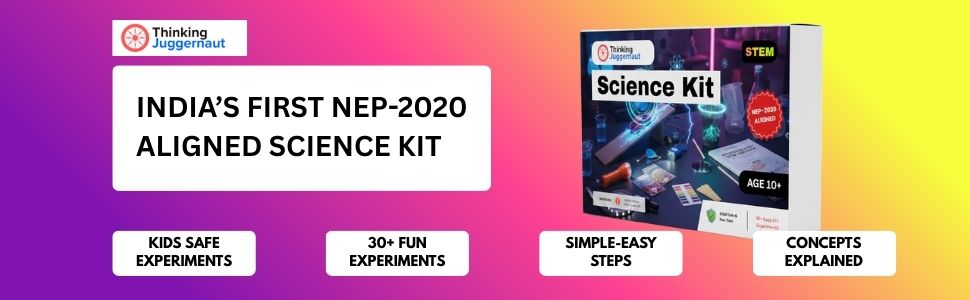
The April–June summer break in India is one of the longest uninterrupted stretches of time children get in a year. Most of it disappears into screens, late mornings, and the occasional tuition class. That is a significant missed opportunity — not because children need to keep studying, but because free time with some structure is when the most durable learning actually happens.
This guide covers 20 summer holiday activities for children aged 7 to 13 that can be done at home with minimal preparation. Activities are grouped by skill area, with a Age 7–10 version and an Age 11–13 version in each section.
None of these require a tutor, a classroom, or special equipment unless noted.
Summer is the right season for science — the heat, the rain, the insects, the afternoon shadows, and the vegetables growing on balconies are all ready-made experiments waiting to be investigated.
What it builds: Observation, time measurement, understanding of the sun's movement.
Materials: A stick or pencil, a flat surface outdoors, chalk or a marker, a watch.
Children discover that shadows move predictably and consistently — and that this principle underpinned ancient Indian timekeeping. Jantar Mantar in Jaipur is one of the world's most advanced examples of shadow-based astronomical measurement, built entirely on this principle.
What it builds: Chemistry reasoning, engineering design, environmental awareness.
Materials: Two plastic bottles, gravel, coarse sand, fine sand, activated charcoal (available at aquarium or pet stores), cotton wool, muddy water.
This is a genuine multi-variable engineering activity. Students should record observations at each stage and write a short conclusion explaining which layer did the most work — and why filtered water still cannot be considered safe for drinking without further treatment. That last point opens a meaningful discussion about water access and municipal infrastructure in Indian cities.
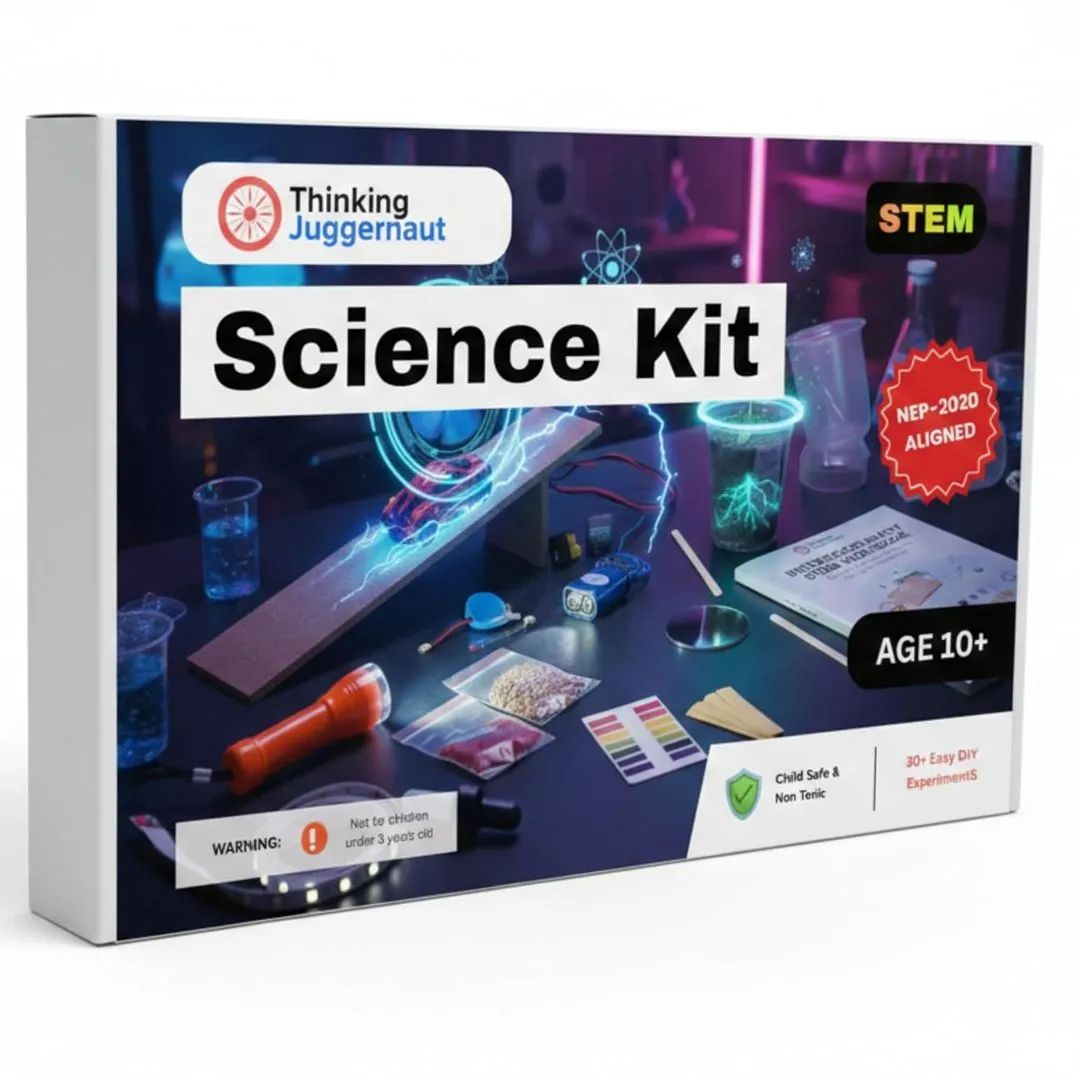
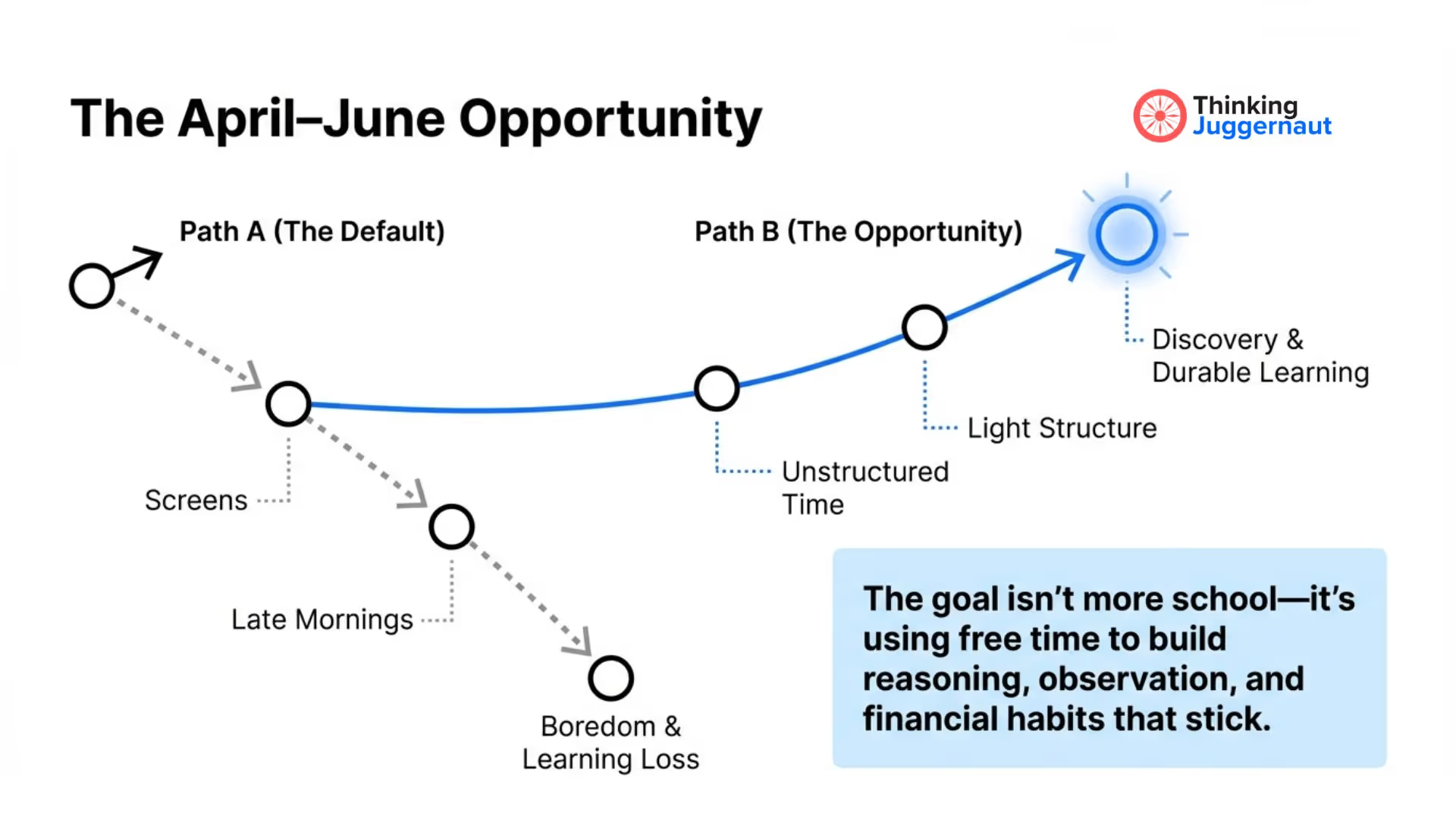
Kit option: The Thinking Juggernaut Interdisciplinary STEM Kit (Age 10+) includes pH papers, measuring cup, dropper, potting soil, seeds, and transparent cups — materials for this and 29 other guided experiments across physics, chemistry, biology, and environmental science. The 64-page workbook includes activities on soil absorption, sedimentation, and environmental science that extend this project further.
Summer is an ideal time for maths that does not feel like maths — estimation, measurement, map reading, and data collection are all mathematical activities that children engage with naturally when given the right context.
What it builds: Data handling, counting, simple graphing, pattern recognition.
The idea is simple — give your child a set of small objects in several different colours, sort by colour, count each group, and draw a bar chart on paper. One bar per colour, height matching the count. Then ask: which colour has the most? Which has the fewest? If you added 5 more of one colour, which bar would be tallest?
For age 7–8, this builds the foundation of data handling. For age 9–10, extend it: express each colour as a fraction of the total. Which colour is approximately one-quarter of all objects?
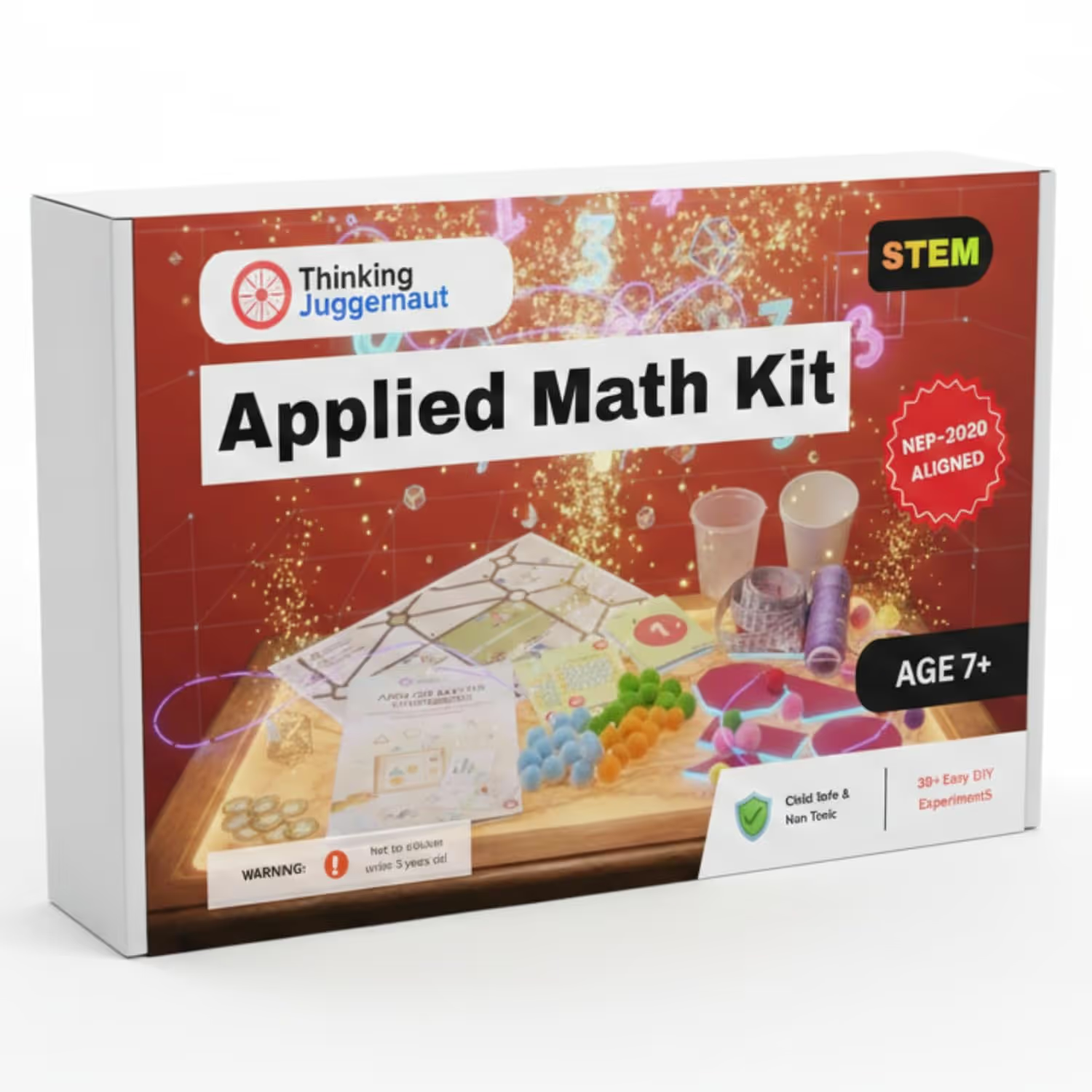
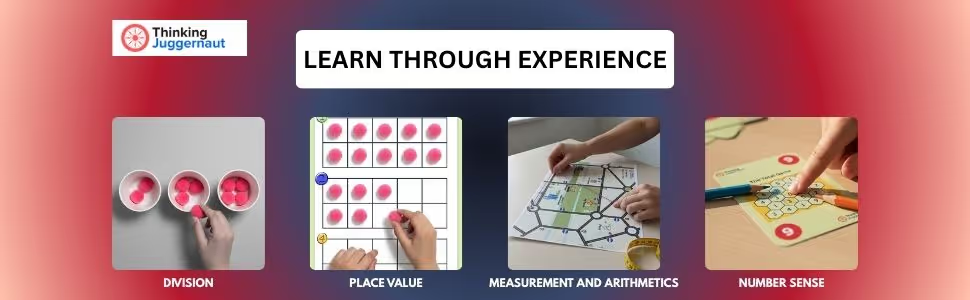
Kit option: The Applied Maths Project Kit (Age 7+) includes all the coloured sorting materials, a Rainbow Chart, math cards, measuring tape, and a My Town Activity Map — 31 activities across number sense, measurement, shapes, data handling, and spatial thinking in a 56-page workbook. All materials for this activity are included in the kit.
What it builds: Budgeting, distance calculation, comparison, decision-making under constraints.
Give your child a fixed budget — say ₹2,000 — and ask them to plan a one-day trip for the family. The plan must include:
This is a multi-step arithmetic problem disguised as a planning activity. Children who do this once understand budgeting constraints far better than those who only read about them.
Kit option: The Applied Maths Project Kit (Age 10+) includes 30 structured applied maths activities — including route optimisation, spatial reasoning, and real-world problem-solving — with a guided workbook that builds this kind of thinking systematically.
The summer break is one of the few times children have both unstructured time and regular access to money — pocket money, gifts from relatives, or small earnings. That makes it the right time to build financial habits that stick.
What it builds: Goal-setting, delayed gratification, understanding of saving as a strategy.
Help your child identify one thing they genuinely want — a book, a small toy, a game — and find out its price. Then work backward:
The power of this activity is not the saving itself — it is the experience of watching a goal become reachable through consistent small actions. That is a lesson most adults have not properly internalised.
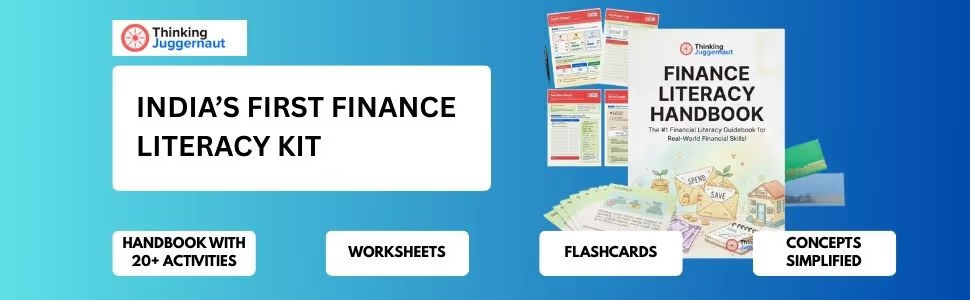
Kit option: The Finance Literacy Kit (Age 7+) includes a Save–Spend envelope system, a full-colour financial literacy handbook with 20+ hands-on activities, flashcards, and worksheets covering banking, smart shopping, budgeting, and digital payments — a complete financial literacy foundation in one box.
What it builds: Budgeting, proportional thinking, awareness of household economics.
For one week, give your child a simplified version of the household grocery budget and ask them to manage it. They plan:
Parents report this activity changes the way children talk about money almost immediately. Children who understand that ₹500 for groceries requires genuine prioritisation are far less likely to make careless requests.
Kit option: The Finance Explorer Kit (Age 10+) covers investing, loans, inflation, and smart financial decision-making — extending beyond budgeting basics toward a complete picture of how money works in the real world.
Children aged 7 to 13 are at exactly the right age to understand that products are made by people, prices are calculated — not guessed — and customers have choices. Summer, with its unstructured time, is when these lessons land best.
What it builds: Manufacturing thinking, basic costing, confidence, customer interaction.
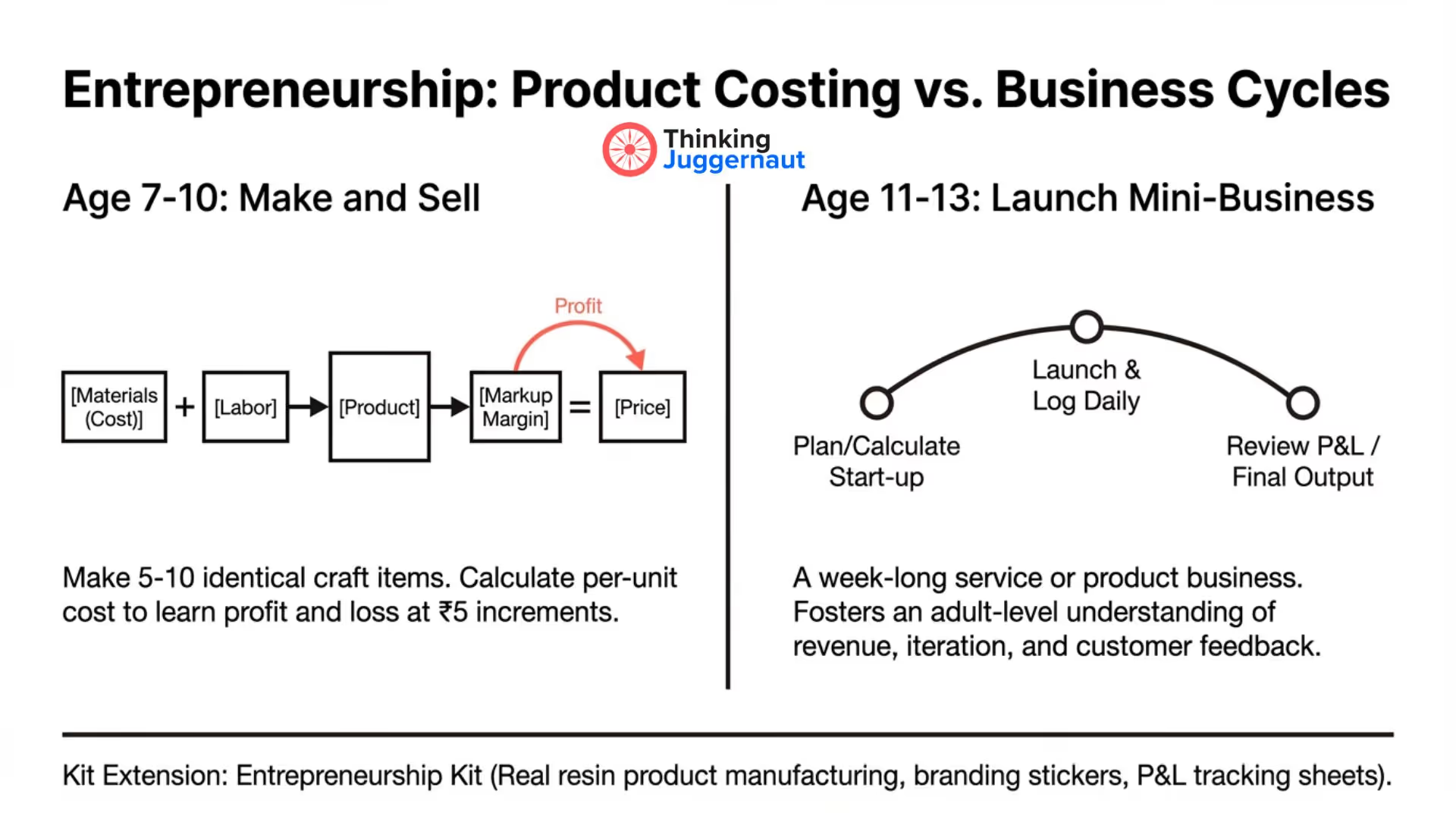
Ask your child to make 5–10 identical items using craft materials — bookmarks, greeting cards, painted pebbles, or paper flowers. Then walk through the full process:
The P&L calculation — even at ₹5 per unit — teaches children more about profit and loss than any textbook exercise.
Kit option: The Entrepreneurship Kit (Age 7+) provides a complete end-to-end manufacturing and selling experience — children make real resin products (keychains, earrings, bookmarks, coasters), brand them with logo stickers and labels, track costs and profit using a P&L sheet, and collect customer feedback. The Entrepreneurship Handbook guides the full process step by step.
What it builds: Business planning, financial calculation, marketing, reflection.
This is a week-long project. Ask your child to design and run a simple business over the summer — a service (plant-watering for neighbours, tutoring a younger child, selling lemonade or chai) or a product (handmade items, printed bookmarks, packaged snacks).
The project has clear stages:
Children who complete this activity once have a working understanding of revenue, cost, profit, customer feedback, and iteration that most adults acquire only through years of work experience.
Kit option: The Entrepreneurship Kit (Age 10+) is built around running a real mini tea business — children learn product naming, packaging, cost calculation, pricing, marketing, and P&L tracking through a complete experience guided by the Entrepreneurship Handbook.

What it builds: Observation, descriptive writing, patience, scientific curiosity.
Give your child a blank notebook and one task: spend 15 minutes every morning on the balcony or in the garden, and record what they notice. They can draw, write, or both. Prompts to get started:
After two weeks, review the journal together. Ask: what surprised you? What changed over time? This builds observational habits that are genuinely rare and genuinely useful.
What it builds: Reading comprehension, critical thinking, written expression.
Set a target of two books over the summer — one fiction, one non-fiction. After each book, your child writes a short review (one page) that answers:
The review format builds structured writing and critical thinking simultaneously. Children who can articulate why they found something interesting — not just that they found it interesting — are developing genuine analytical skills.
If you want to give your child a structured set of activities without sourcing materials separately, Thinking Juggernaut offers NEP-2020 aligned hands-on kits for all the skill areas above.
All kits include guided workbooks or handbooks and are designed for independent use at home.
Designed by IIT & NIT Alumni · NEP-2020 aligned · Trusted by parents across India
Explore Kits
Free Resources
Related Reading
Almost there!
We will confirm your order on WhatsApp
Order placed!
Thank you! You will receive a WhatsApp confirmation shortly.