Master ratio and proportion with this worksheet for Class 7 with direct proportion, inverse proportion, compound ratios, and real-world applications. Includes solved examples and step-by-step methods to build problem-solving confidence.
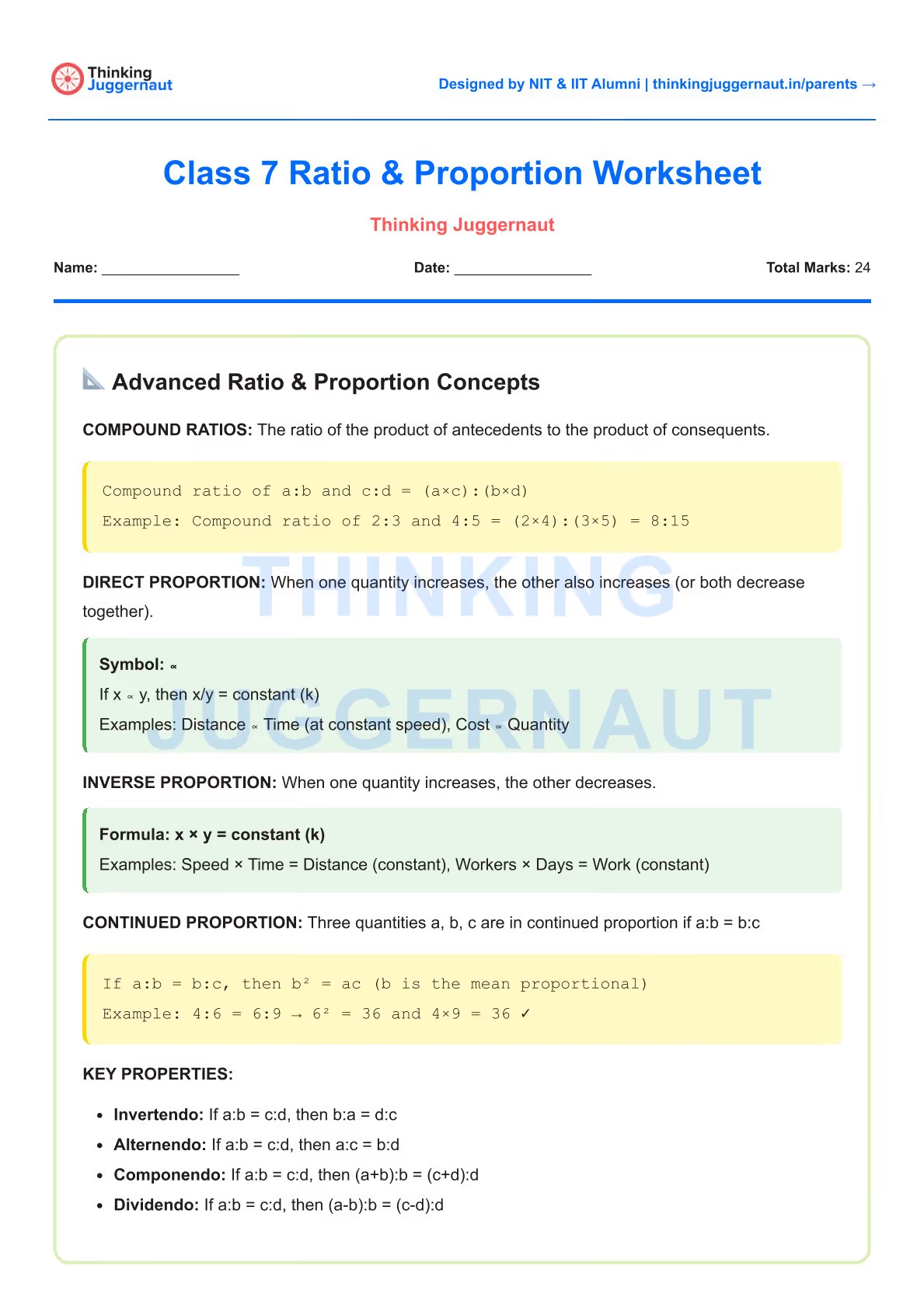
A ratio compares two quantities of the same kind. A proportion tells us that two ratios are equal. At Class 7, we go beyond basic ratios into direct and inverse proportion, compound ratios, and continued proportion. These concepts appear everywhere — from recipes and speed calculations to work problems and mixture questions. The key skill at this level is identifying which type of proportion applies before setting up the equation.
Direct Proportion: When one quantity increases, the other increases at the same rate. Cost and quantity are directly proportional — double the quantity, double the cost.
Inverse Proportion: When one quantity increases, the other decreases. Workers and time are inversely proportional — more workers means less time to finish the same job. The relationship is captured by the formula: first quantity × second quantity = constant.
Compound Ratio: Found by multiplying two or more ratios together. The compound ratio of a:b and c:d is (a×c):(b×d).
Continued Proportion: Three numbers a, b, c are in continued proportion when a:b = b:c. This means b² = a×c, and b is called the mean proportional.
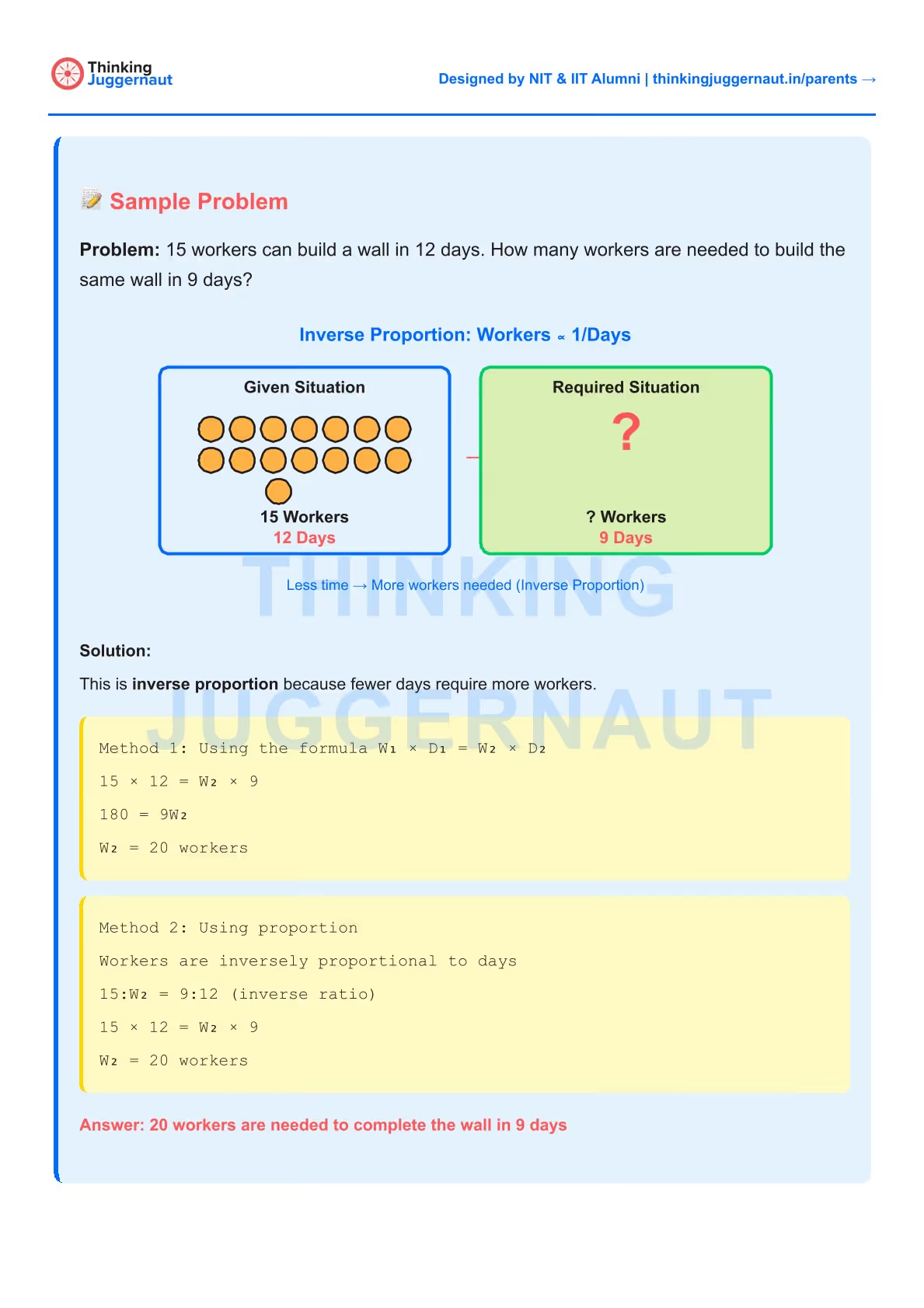
15 workers can build a wall in 12 days. How many workers are needed to finish the same wall in 9 days?
First, identify the type of proportion. Fewer days means more workers are needed, so this is inverse proportion. For inverse proportion, the product stays constant: Workers × Days = constant.
Set up the equation: 15 × 12 = Workers × 9. This gives 180 = 9 × Workers. Dividing both sides by 9: Workers = 20.
Answer: 20 workers are needed to complete the wall in 9 days.
The most common error is confusing direct and inverse proportion. Ask yourself: if one quantity doubles, does the other double too or halve? If it doubles, it is direct. If it halves, it is inverse.
For inverse proportion, do not use the formula x₁/y₁ = x₂/y₂. Instead, use x₁ × y₁ = x₂ × y₂. Using the wrong formula gives the opposite answer.
Always simplify ratios to their lowest form. Writing 12:18 instead of 2:3 is incomplete and can cause confusion in further calculations.
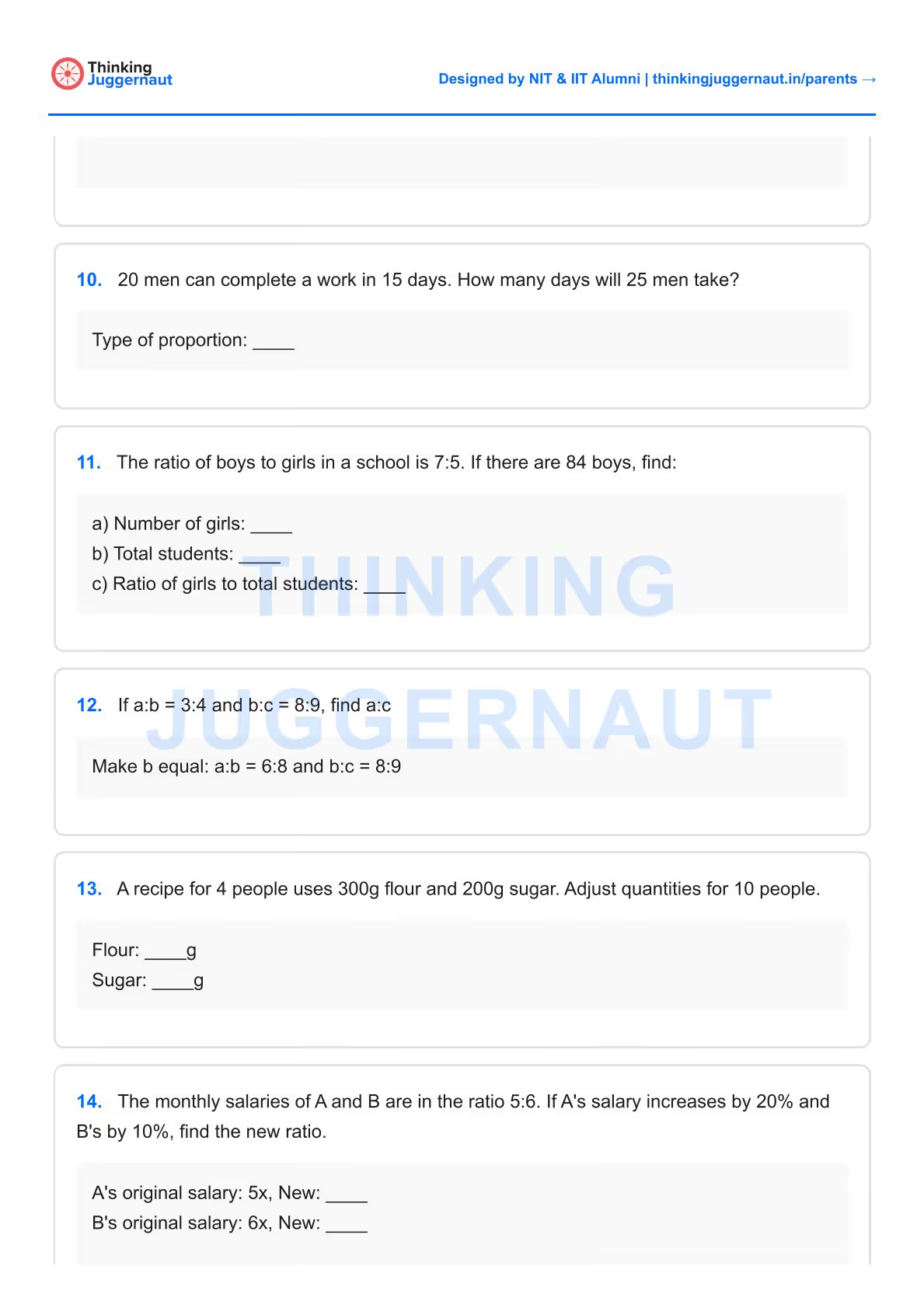
When combining two ratios like a:b and b:c into a single ratio a:b:c, make the middle term equal in both ratios first. Skipping this step leads to wrong answers.
Order matters in a ratio. 3:5 is not the same as 5:3. Always keep track of which quantity comes first.
When combining ratios to form a compound ratio, multiply — do not add. The compound ratio of 2:3 and 4:5 is 8:15, not 6:8.
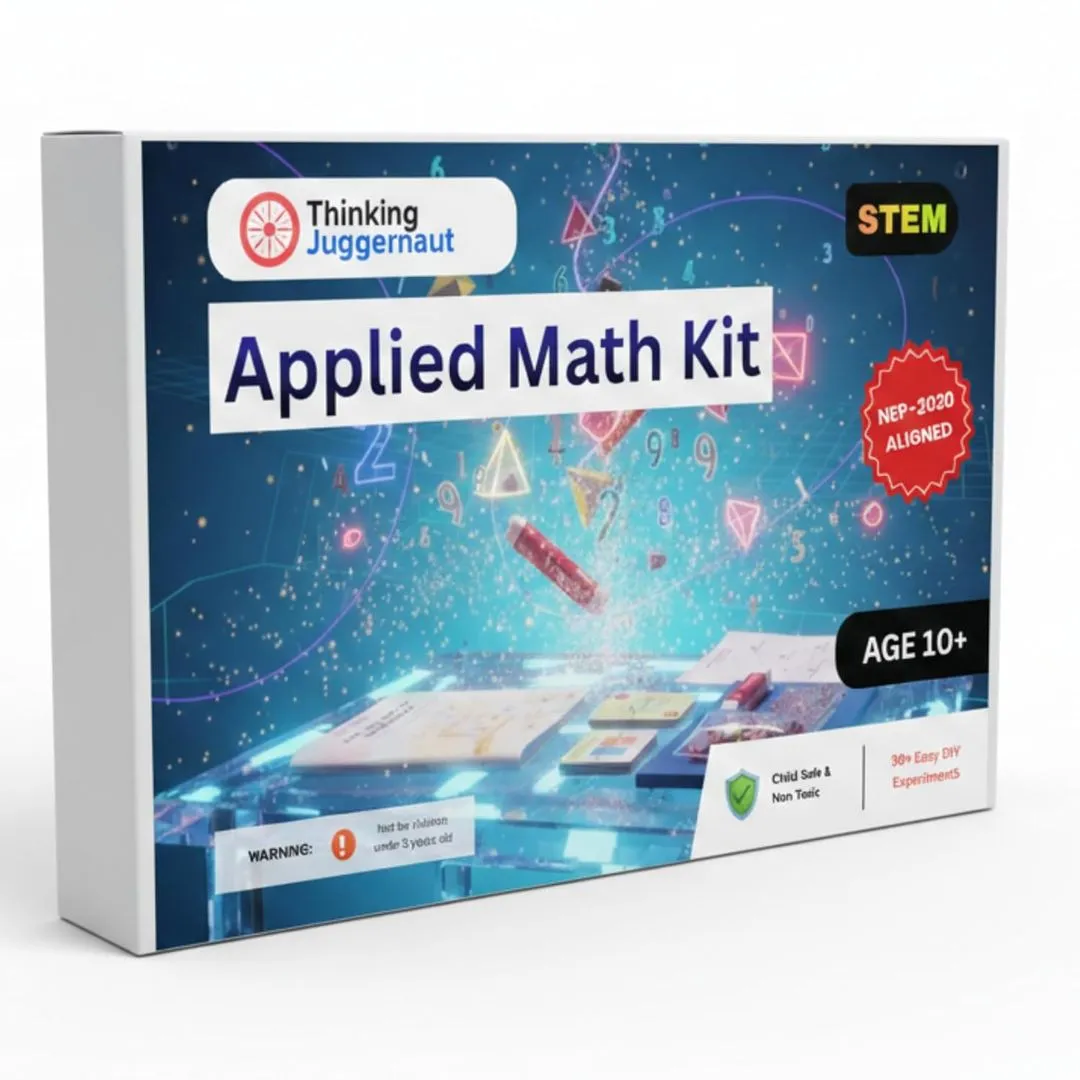
Worksheets build practice. The Applied Maths Project Kit builds understanding — 30 real-world math activities covering the same concepts your child is practising here, from multiplication and grouping to measurement and data.

Designed by IIT & NIT Alumni · NEP-2020 aligned · Trusted by parents across India
Class 7 Algebra
Class 7 Algebraic Expressions
Class 7 Data Handling
Class 7 Fractions and Decimals
Class 7 Geometric Twins
Class 7 Geometry
Class 7 Integers
Class 7 Ratio and Proportion
Not in Class 7?
Visit our Main Math Worksheet Hub to explore all printable worksheets from Class 2 to Class 8.
Almost there!
We will confirm your order on WhatsApp
Order placed!
Thank you! You will receive a WhatsApp confirmation shortly.