
Master fractions and decimals with this worksheet for Class 7 with addition, subtraction, multiplication, division, and conversions. Includes solved examples and real-world problems to help your child handle complex calculations with confidence.
Fractions and decimals are two ways of representing parts of a whole. At Class 7, we move beyond basic operations into multi-step problems that combine both.
We convert between fractions and decimals, work with mixed numbers, find the LCD for unlike fractions, and apply these skills to real-world scenarios like recipes, measurements, shopping, and speed calculations. The ability to switch fluently between fractions and decimals is essential at this level.
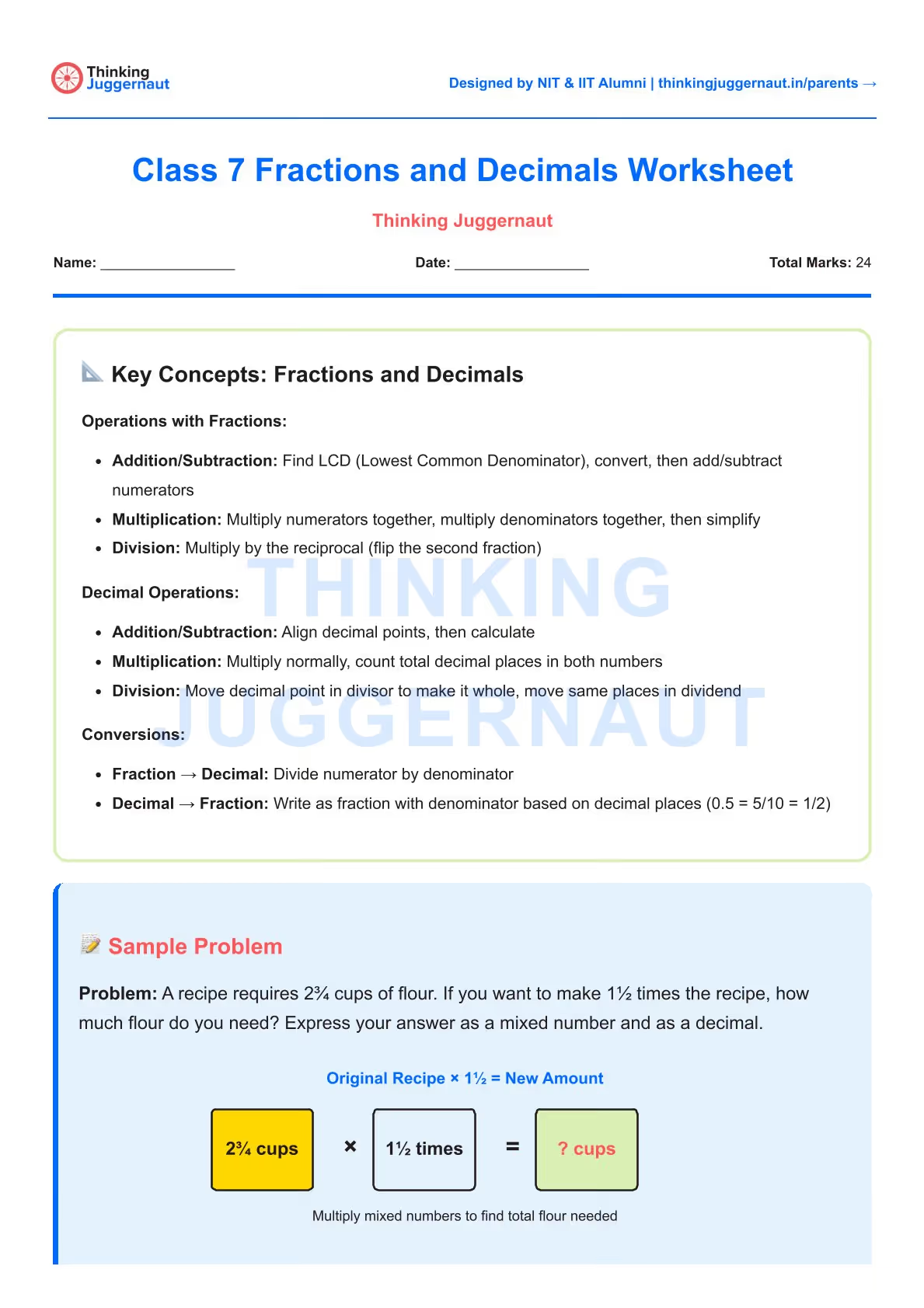
Addition and Subtraction of Fractions: Find the Lowest Common Denominator (LCD), convert both fractions, then add or subtract the numerators. The denominator stays the same.
Multiplication of Fractions: Multiply the numerators together and the denominators together, then simplify the result.
Division of Fractions: Flip the second fraction (take its reciprocal) and multiply. So a/b ÷ c/d becomes a/b × d/c.
Decimal Operations: For addition and subtraction, align the decimal points before calculating. For multiplication, multiply as whole numbers then place the decimal point based on the total number of decimal places in both numbers.
Fraction to Decimal: Divide the numerator by the denominator.
Decimal to Fraction: Write the decimal as a fraction with the appropriate denominator based on decimal places — for example, 0.375 becomes 375/1000 — then simplify.
A recipe needs 2¾ cups of flour. You want to make 1½ times the recipe. How much flour do you need?
Convert the mixed numbers to improper fractions. 2¾ becomes 11/4 and 1½ becomes 3/2.
Multiply the fractions: 11/4 × 3/2 = 33/8.
Convert back to a mixed number: 33 ÷ 8 = 4 remainder 1, so the answer is 4⅛ cups.
Convert to decimal for verification: 33 ÷ 8 = 4.125 cups.
Answer: 4⅛ cups or 4.125 cups of flour are needed.
Always convert mixed numbers to improper fractions before multiplying or dividing. Trying to work directly with mixed numbers leads to errors almost every time.
When dividing fractions, do not divide the numerators and denominators separately. Flip the second fraction and multiply. This is the single most misunderstood operation at this level.
For addition and subtraction of unlike fractions, finding the LCD is the critical first step. Using the wrong common denominator makes the entire calculation incorrect.
When multiplying decimals, count the total decimal places in both numbers carefully. Placing the decimal point in the wrong position changes the answer by a factor of 10 or more.
Always simplify fractions to their lowest form after calculating. Leaving 8/12 instead of writing 2/3 is incomplete.
Memorise common fraction-to-decimal conversions: 1/2 = 0.5, 1/4 = 0.25, 3/4 = 0.75, 1/5 = 0.2, 1/8 = 0.125. These come up repeatedly and knowing them instantly saves time.
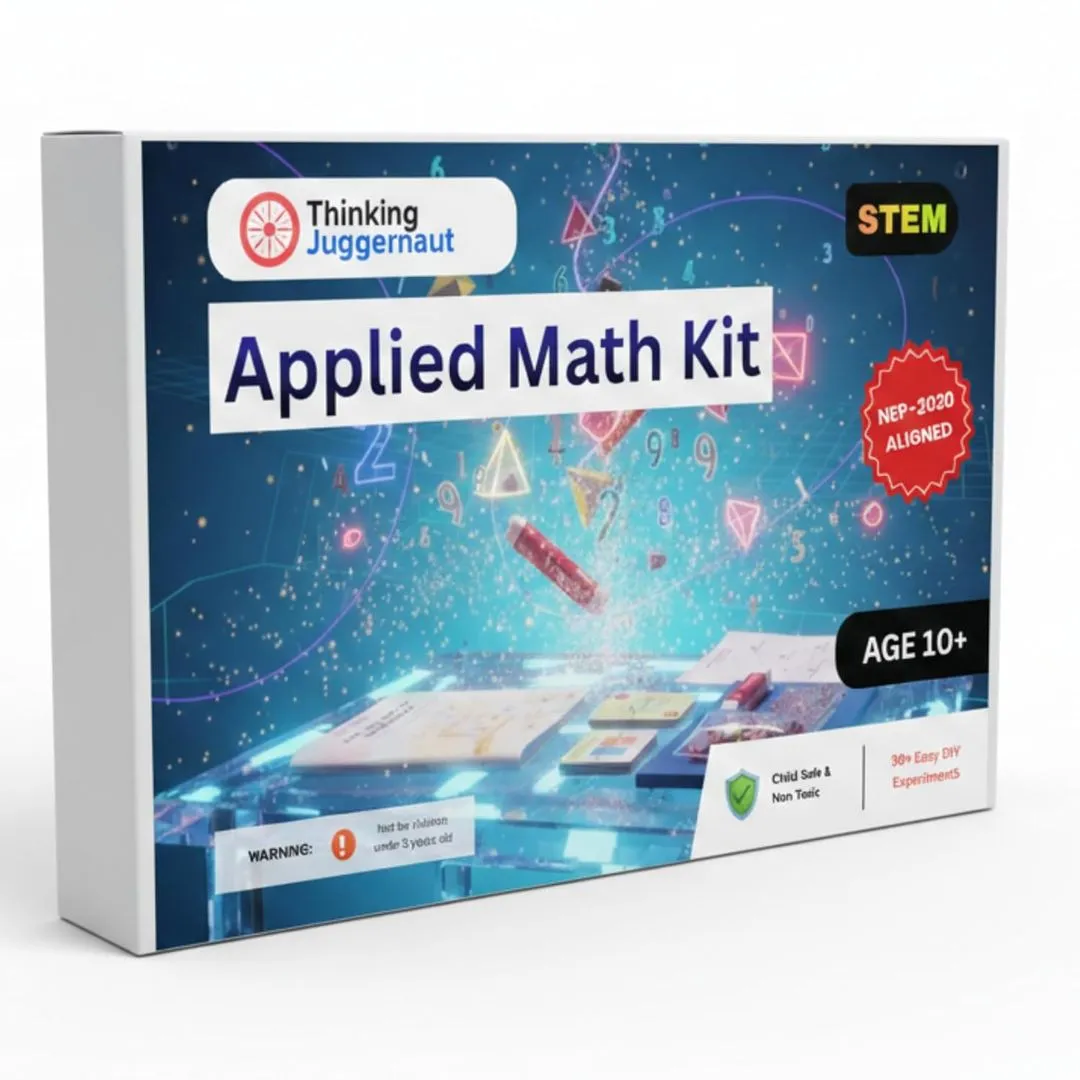
Worksheets build practice. The Applied Maths Project Kit builds understanding — 30 real-world math activities covering the same concepts your child is practising here, from multiplication and grouping to measurement and data.

Designed by IIT & NIT Alumni · NEP-2020 aligned · Trusted by parents across India
Class 7 Algebra
Class 7 Algebraic Expressions
Class 7 Data Handling
Class 7 Fractions and Decimals
Class 7 Geometric Twins
Class 7 Geometry
Class 7 Integers
Class 7 Ratio and Proportion
Not in Class 7?
Visit our Main Math Worksheet Hub to explore all printable worksheets from Class 2 to Class 8.
Almost there!
We will confirm your order on WhatsApp
Order placed!
Thank you! You will receive a WhatsApp confirmation shortly.