Master linear equations and algebraic identities with this worksheet for Class 7: Step-by-step solving methods, bracket expansion, and real-world word problems. Includes practice questions to help your child solve equations and apply identities with confidence.
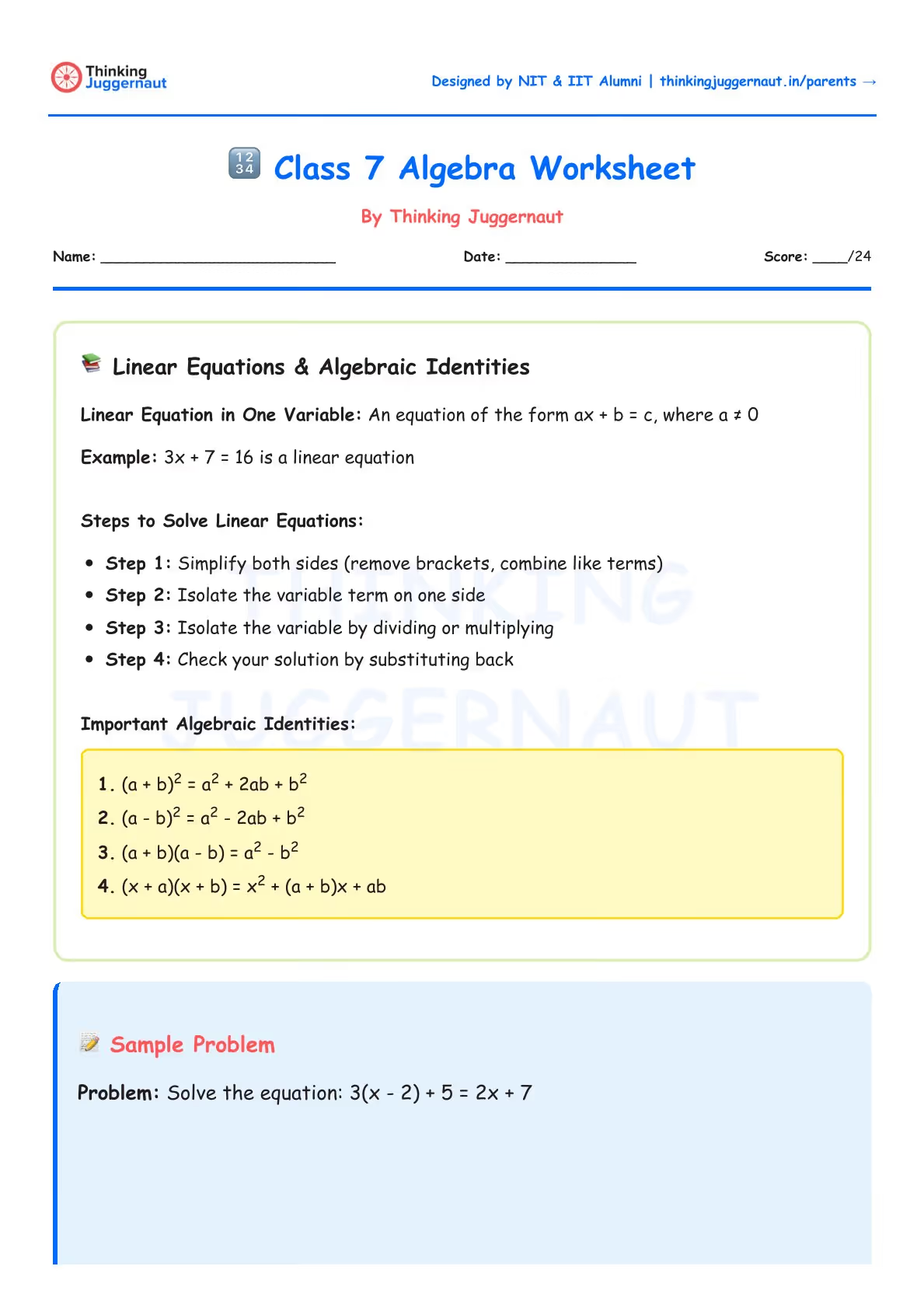
Algebra is the branch of mathematics where we use letters to represent unknown numbers and write rules as equations. At Class 7, the two pillars are linear equations in one variable and algebraic identities.
Linear equations ask us to find the unknown value that makes both sides of the equation equal. Identities are special equations that are always true regardless of the values of the variables — they are shortcuts for expanding and simplifying expressions without doing the full multiplication each time.
A linear equation has the form ax + b = c, where x is the unknown. The method is always the same: simplify both sides, move all variable terms to one side and all numbers to the other, then isolate the variable. The final step is always to substitute the answer back into the original equation to verify it.
(a + b)² = a² + 2ab + b²
(a − b)² = a² − 2ab + b²
(a + b)(a − b) = a² − b²
(x + a)(x + b) = x² + (a + b)x + ab
These four identities eliminate the need to multiply out brackets every time. Memorising them saves significant time and reduces calculation errors.
Solve: 3(x − 2) + 5 = 2x + 7
Expand the bracket: 3 × x = 3x, 3 × (−2) = −6. The equation becomes 3x − 6 + 5 = 2x + 7.
Simplify the left side: −6 + 5 = −1. Now we have 3x − 1 = 2x + 7.
Move the variable terms to the left and constants to the right: 3x − 2x = 7 + 1. This gives x = 8.
Verify by substituting x = 8 back into both sides. LHS = 3(8 − 2) + 5 = 3(6) + 5 = 23. RHS = 2(8) + 7 = 23. Both sides are equal, so the solution is correct.
Answer: x = 8.
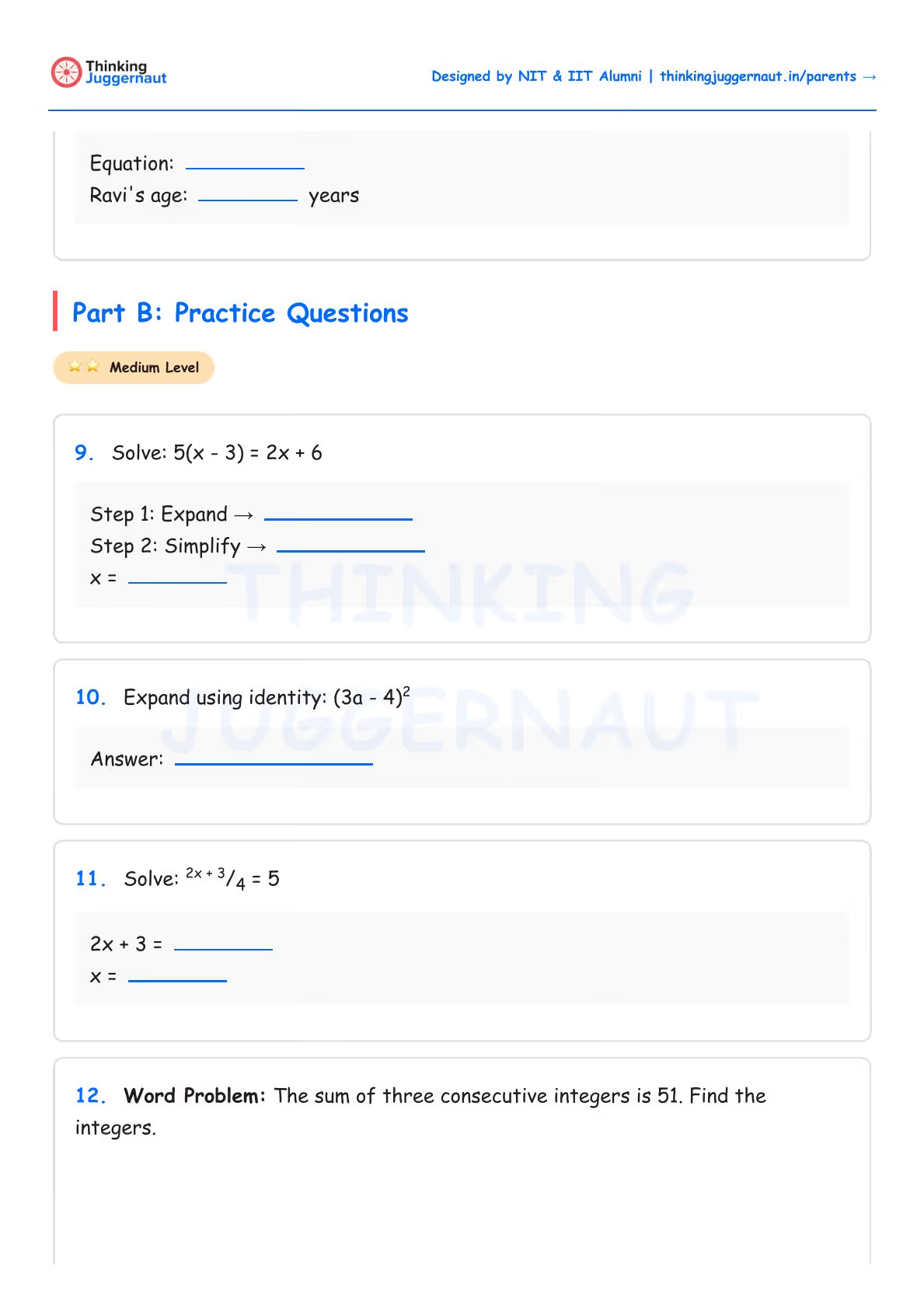
Always verify your answer by substituting it back into the original equation. If LHS equals RHS, the answer is correct. Skipping this step means you have no way of knowing whether a calculation error crept in.
The identity (a − b)² is not the same as a² − b². The middle term 2ab is missing if you confuse these two. This is one of the most common errors when working with identities and it changes the entire expansion.
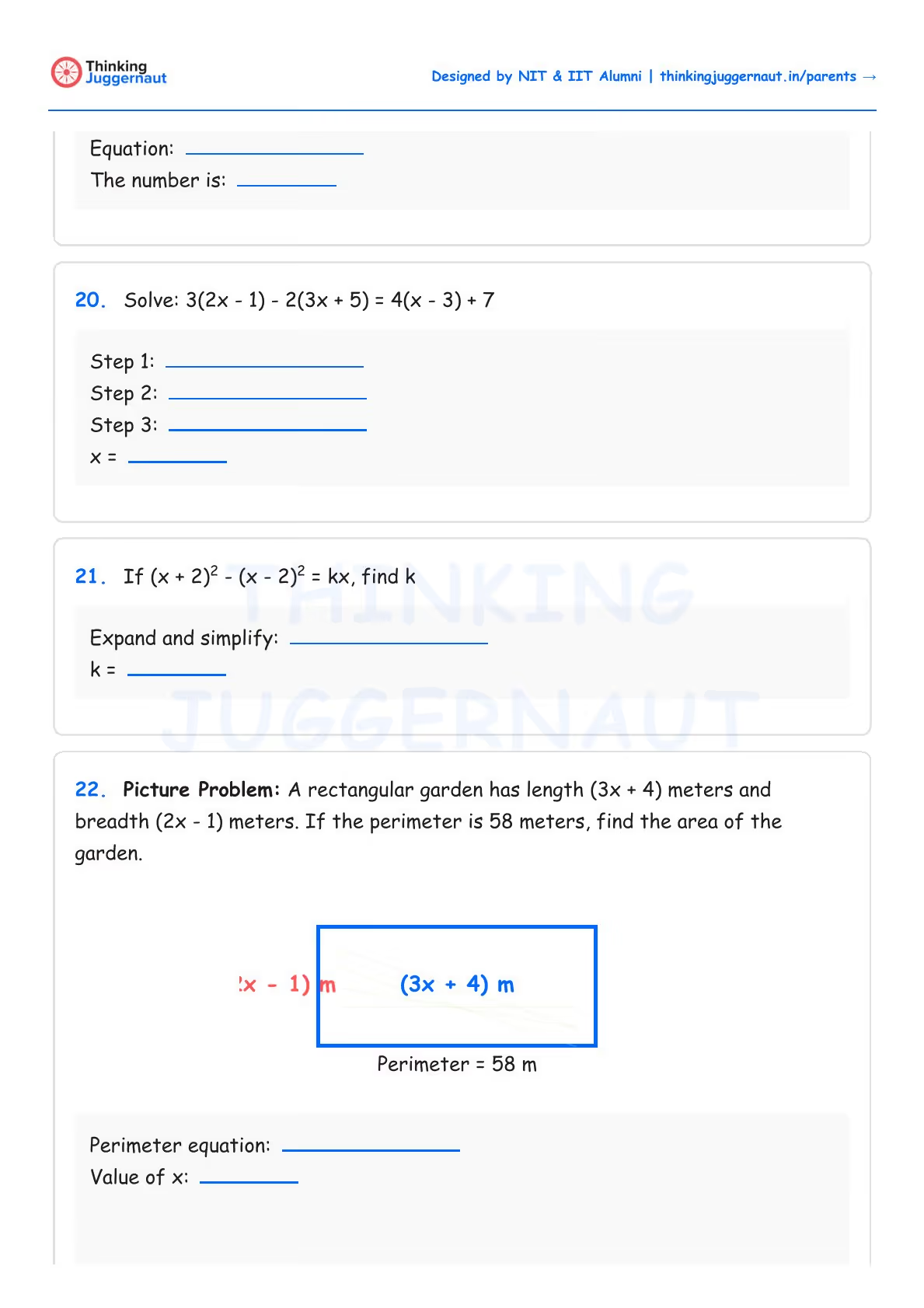
When a negative sign sits before a bracket, every term inside changes sign. So −2(3x − 5) becomes −6x + 10. Forgetting to flip the sign of the second term is a persistent mistake.
For word problems, write the equation before solving anything. Translating the situation into an equation first prevents confusion and makes the solution systematic.
When equations contain fractions, cross-multiply to clear the denominators before solving. Trying to work with fractions on both sides of an equation at the same time leads to avoidable errors.
For geometry problems, always draw a labelled diagram. Writing the expressions on the sides before setting up the equation makes the problem much clearer and reduces mistakes.
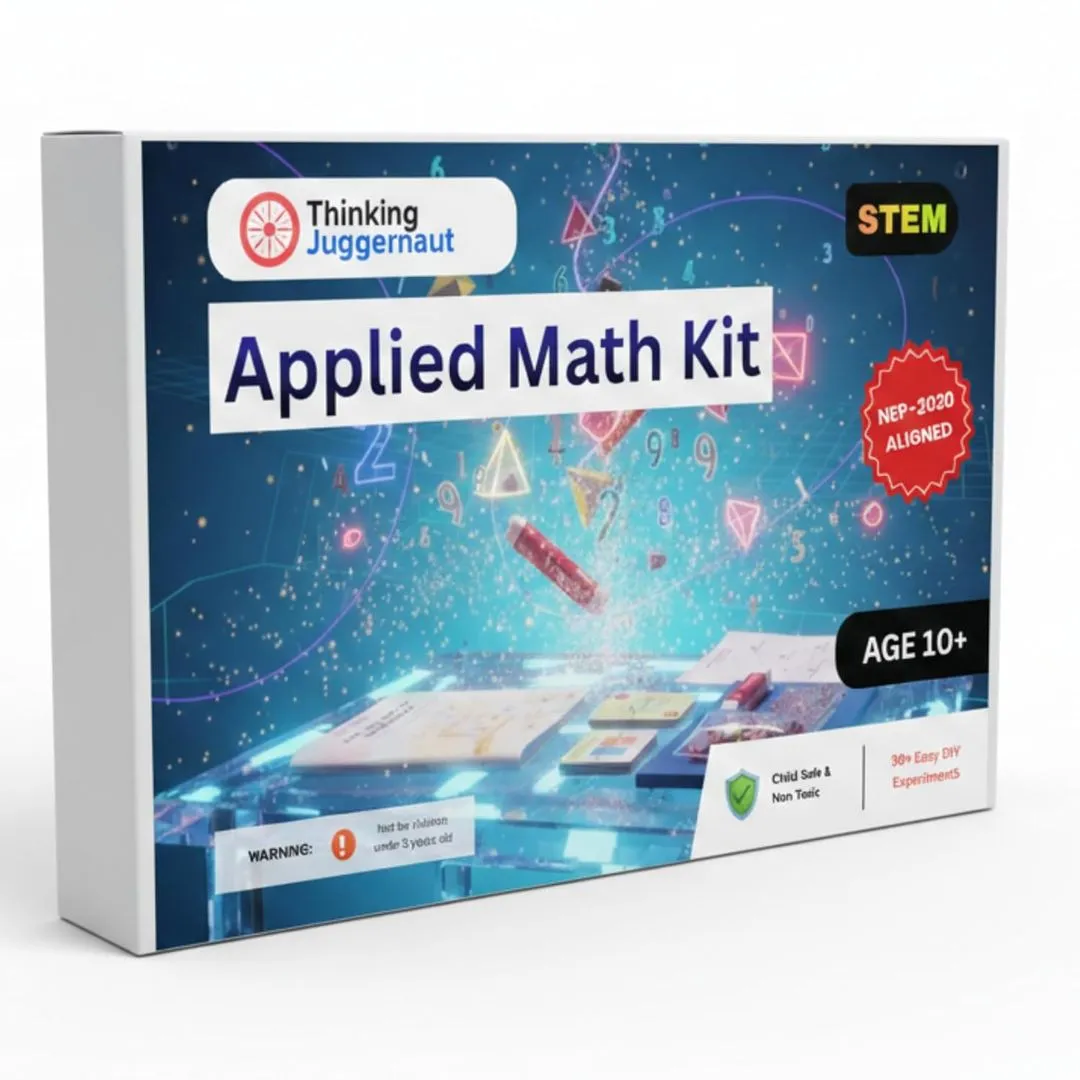
Worksheets build practice. The Applied Maths Project Kit builds understanding — 30 real-world math activities covering the same concepts your child is practising here, from multiplication and grouping to measurement and data.
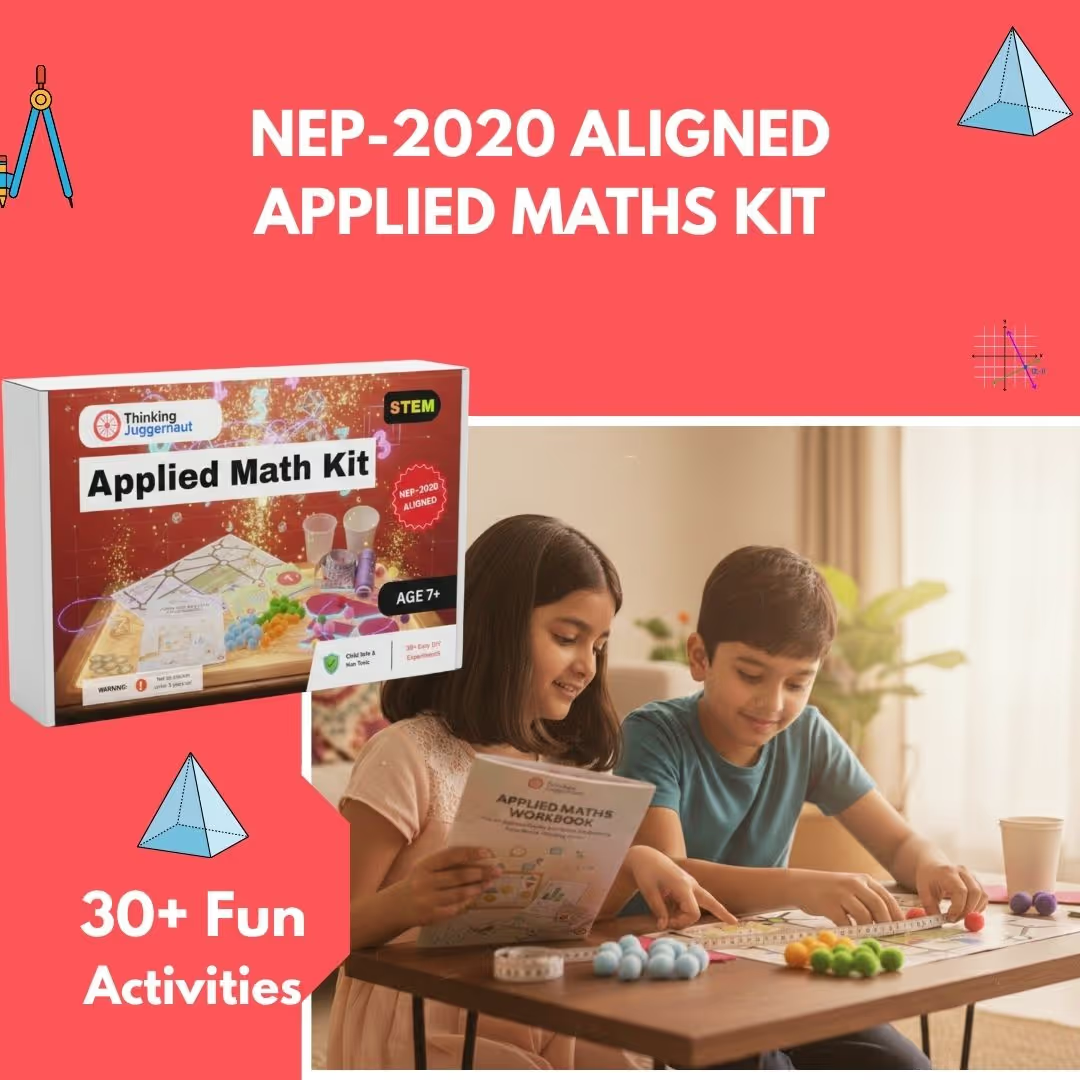
Designed by IIT & NIT Alumni · NEP-2020 aligned · Trusted by parents across India
Class 7 Algebra
Class 7 Algebraic Expressions
Class 7 Data Handling
Class 7 Fractions and Decimals
Class 7 Geometric Twins
Class 7 Geometry
Class 7 Integers
Class 7 Ratio and Proportion
Not in Class 7?
Visit our Main Math Worksheet Hub to explore all printable worksheets from Class 2 to Class 8.
Almost there!
We will confirm your order on WhatsApp
Order placed!
Thank you! You will receive a WhatsApp confirmation shortly.