Download free Class 6 percentage worksheets with answers. Includes conversions between fractions, decimals and percentages, finding percentages of numbers, discount problems, and percentage increase/decrease word problems across three difficulty levels. This is a printable PDF with answer key and assessment rubrics included.
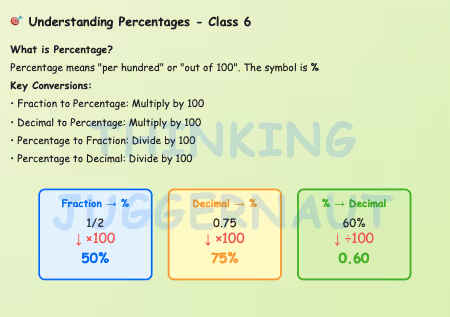
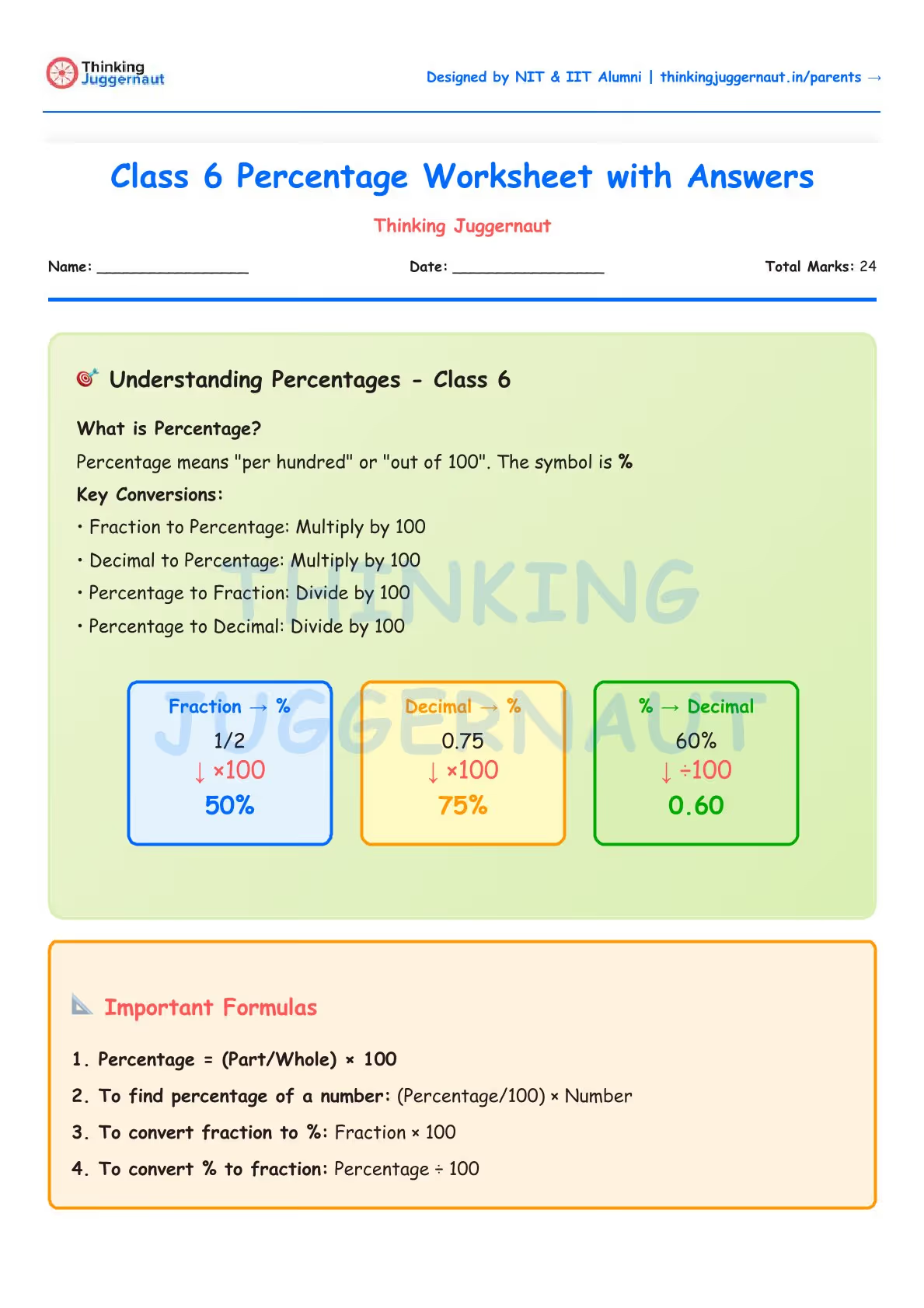
Understanding Percentages - Class 6
What is Percentage?
Percentage means "per hundred" or "out of 100". The symbol is %.
Key Conversions:
Fraction to Percentage: Multiply by 100
Decimal to Percentage: Multiply by 100
Percentage to Fraction: Divide by 100
Percentage to Decimal: Divide by 100
Important Formulas:
Percentage = (Part/Whole) × 100
To find percentage of a number: (Percentage/100) × Number
To convert fraction to %: Fraction × 100
To convert % to fraction: Percentage ÷ 100
Solved Examples: Step by Step
Example 1: Convert 3/5 to percentage
Solution:
3/5 = (3/5) × 100 = 0.6 × 100 = 60%
Answer: 60%
Example 2: Find 25% of 80
Solution:
25% of 80 = (25/100) × 80 = 0.25 × 80 = 20
Answer: 20
Sample Problems
Convert 1/5 to percentage.
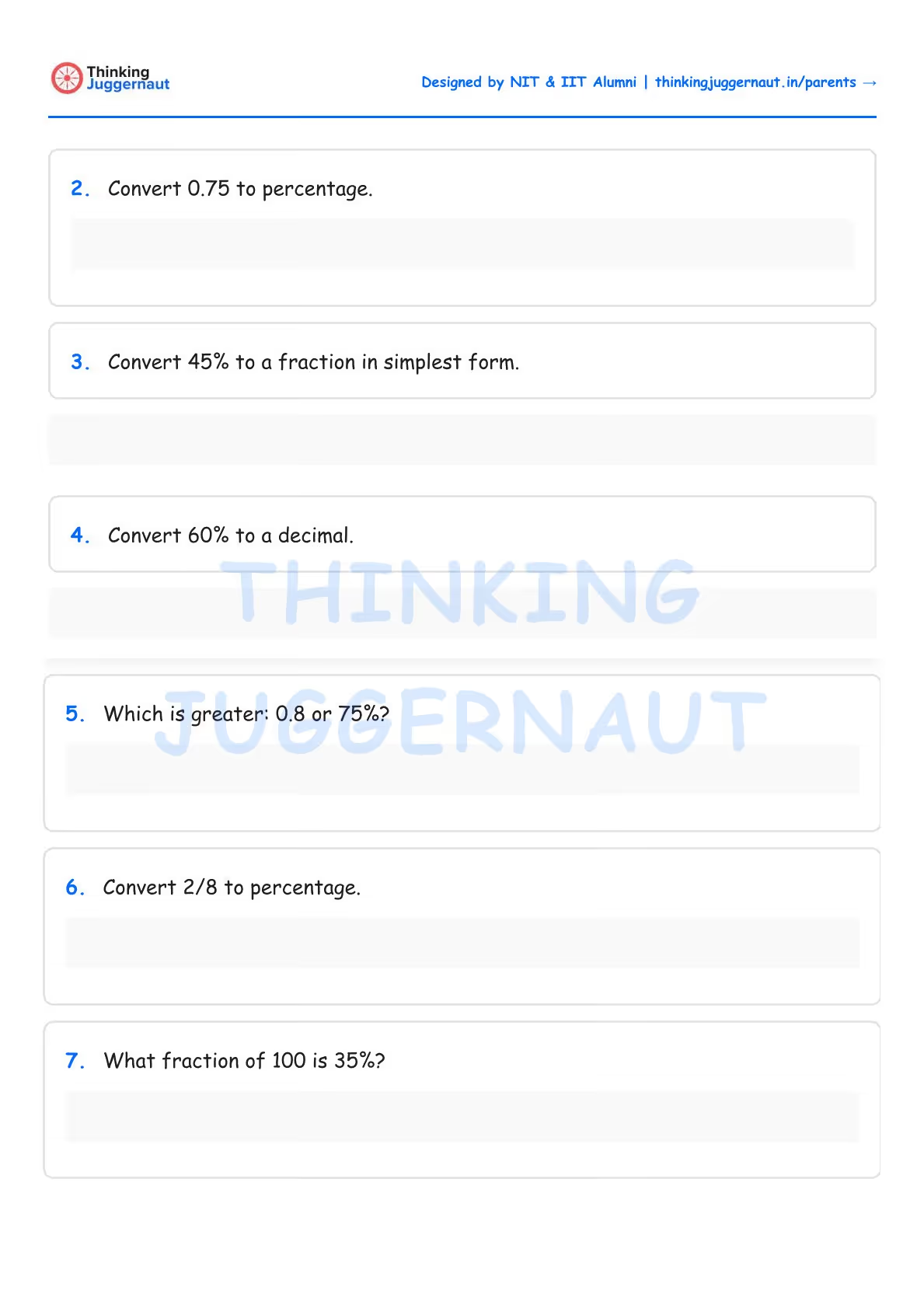
Convert 0.75 to percentage.
Convert 45% to a fraction in simplest form.
Which is greater: 0.8 or 75%?
Find 20% of 150.
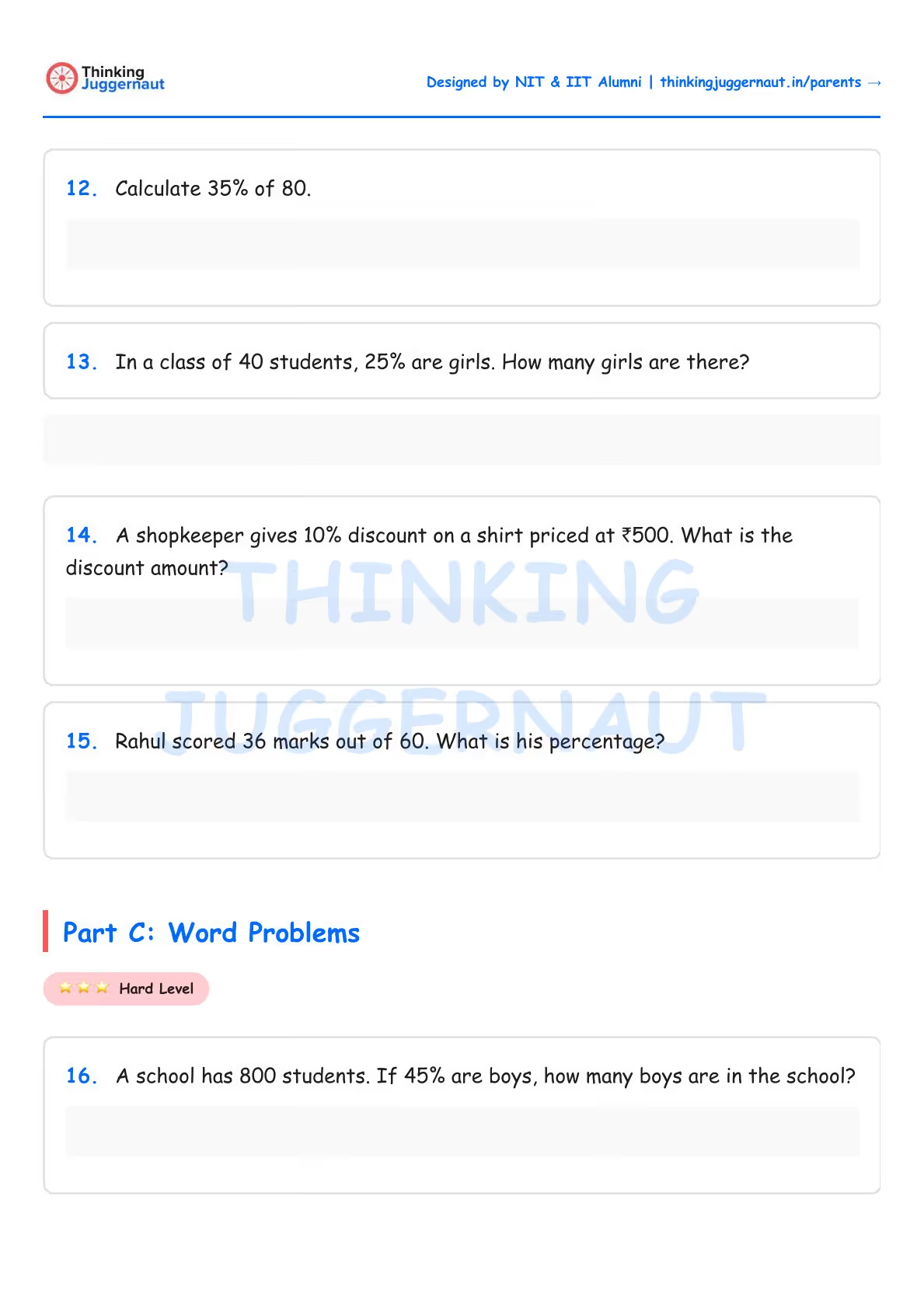
In a class of 40 students, 25% are girls. How many girls are there?
A shopkeeper gives 10% discount on a shirt priced at ₹500. What is the discount amount?
The price of a bicycle is ₹4500. If the price increases by 20%, what will be the new price?
A school's student population increased from 400 to 500. What is the percentage increase?
Common Mistakes & Tips
Common Mistakes to Avoid:
Decimal-Percentage Confusion: Students often forget whether to multiply or divide by 100. Remember: to get percentage (larger number), multiply; to get decimal (smaller number), divide.
Not Simplifying Fractions: When converting percentages to fractions, always simplify to lowest terms (45% = 45/100 = 9/20, not just 45/100).
Wrong Base for Percentage Increase: When calculating percentage increase, always divide by the original amount, not the new amount.
Top 5 Pro-Tips:
Master the Conversion Triangle: Create a triangle with Fraction-Decimal-Percentage. Practice converting between all three forms fluently.
Use Shortcuts for Common Percentages: 10% = divide by 10; 5% = half of 10%; 25% = divide by 4; 50% = divide by 2.
Double-Check Percentage Increase/Decrease: Formula is always (Change/Original) × 100. The original value goes in the denominator.
Verify with Estimation: Before calculating 23% of 200, estimate: it should be slightly less than 25% (which is 50), so around 46.
Work Backwards to Check: After finding 30% of 150 = 45, verify by checking if 45/150 × 100 gives you 30%.
Assessing Learning: Scoring Guide
Total Questions: 24 | Total Marks: 24
Score: 20 – 24 (Excellent! ⭐⭐⭐)
What This Means: You've mastered percentage conversions and can solve complex word problems involving discounts, increases, and multi-step calculations.
Next Steps: Challenge yourself with profit-loss problems, compound percentage changes, and Class 7-8 level problems. Practice calculating sales tax, tips, and commission in real-life scenarios.
Score: 15 – 19 (Very Good! ⭐⭐)
What This Means: You handle basic conversions well but need practice with percentage increase/decrease and complex word problems.
Next Steps: Focus on Part C (Hard Level) problems. Practice percentage change problems daily. Create a formula sheet for percentage increase = (Increase/Original) × 100. Work on 3-4 word problems daily for a week.
Score: 10 – 14 (Good Effort! ⭐)
What This Means: You understand conversions but struggle with applying percentages to real-world situations and finding percentages of numbers.
Next Steps: Strengthen your conversion skills first—practice 10 conversion problems daily. Then move to simple "find X% of Y" problems. Use the formula sheet consistently. Review the difference between finding a percentage vs. finding percentage of a number.
Score: 0 – 9 (Keep Trying!)
What This Means: Conversions and formulas need more practice. The concepts are still developing.
Next Steps: Start with Part A only. Master decimal-to-percentage and fraction-to-percentage conversions first (practice 15 daily). Use visual aids like hundred grids. Once you score 7/8 on Part A consistently for 3 days, move to Part B. Work with a tutor or teacher on understanding the formulas.
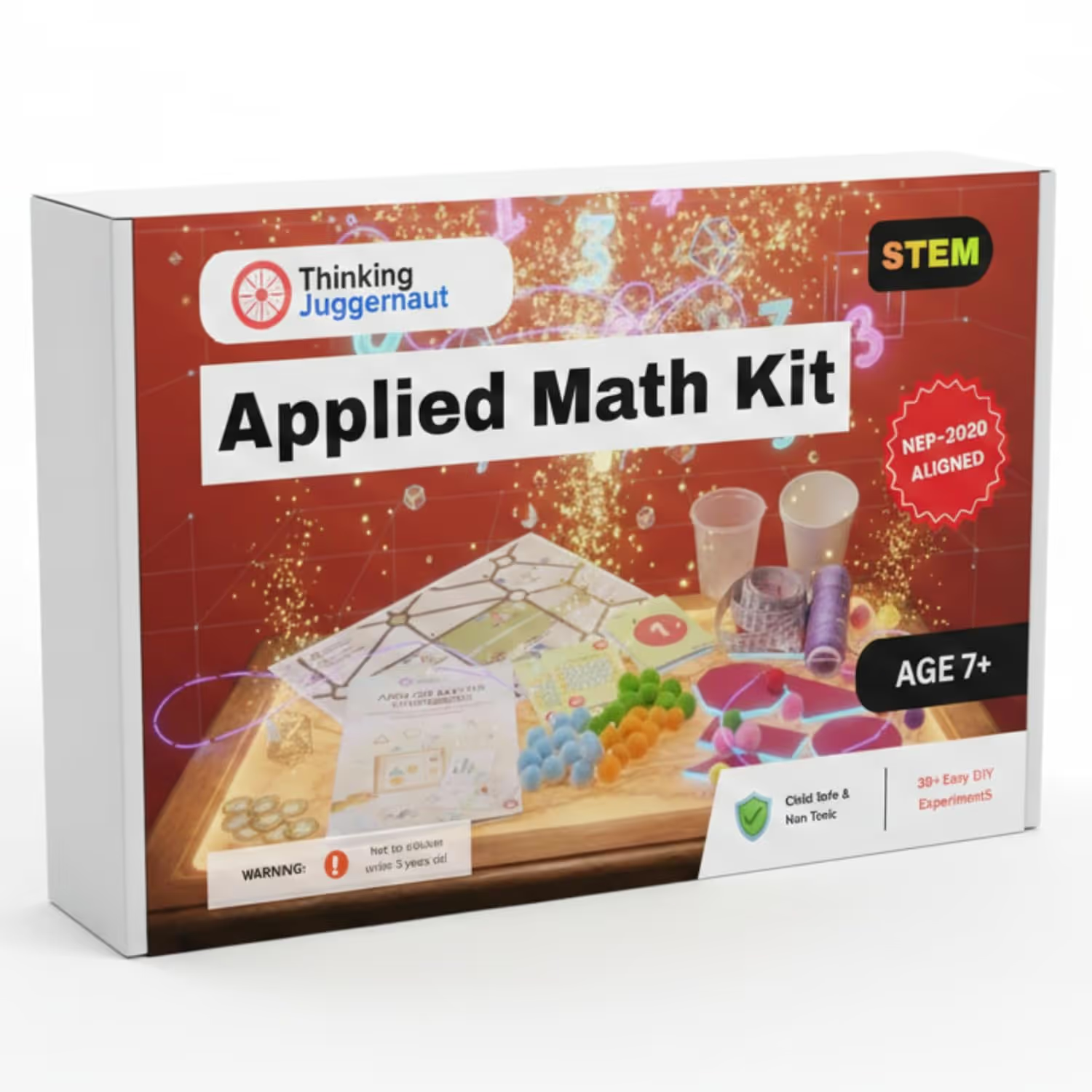
Ready to Make Maths Hands-On?
Worksheets build practice. The Applied Maths Project Kit builds understanding covering the same concepts your child is practising here. A hands-on math kit inspired by NEP 2020’s vision of learning mathematics as thinking, connecting, and applying, not just solving equations.