Complete integers worksheet for Class 6 with 24 questions covering positive and negative numbers, number line operations, temperature problems, and real-world applications. Includes detailed answer key and progress guide.
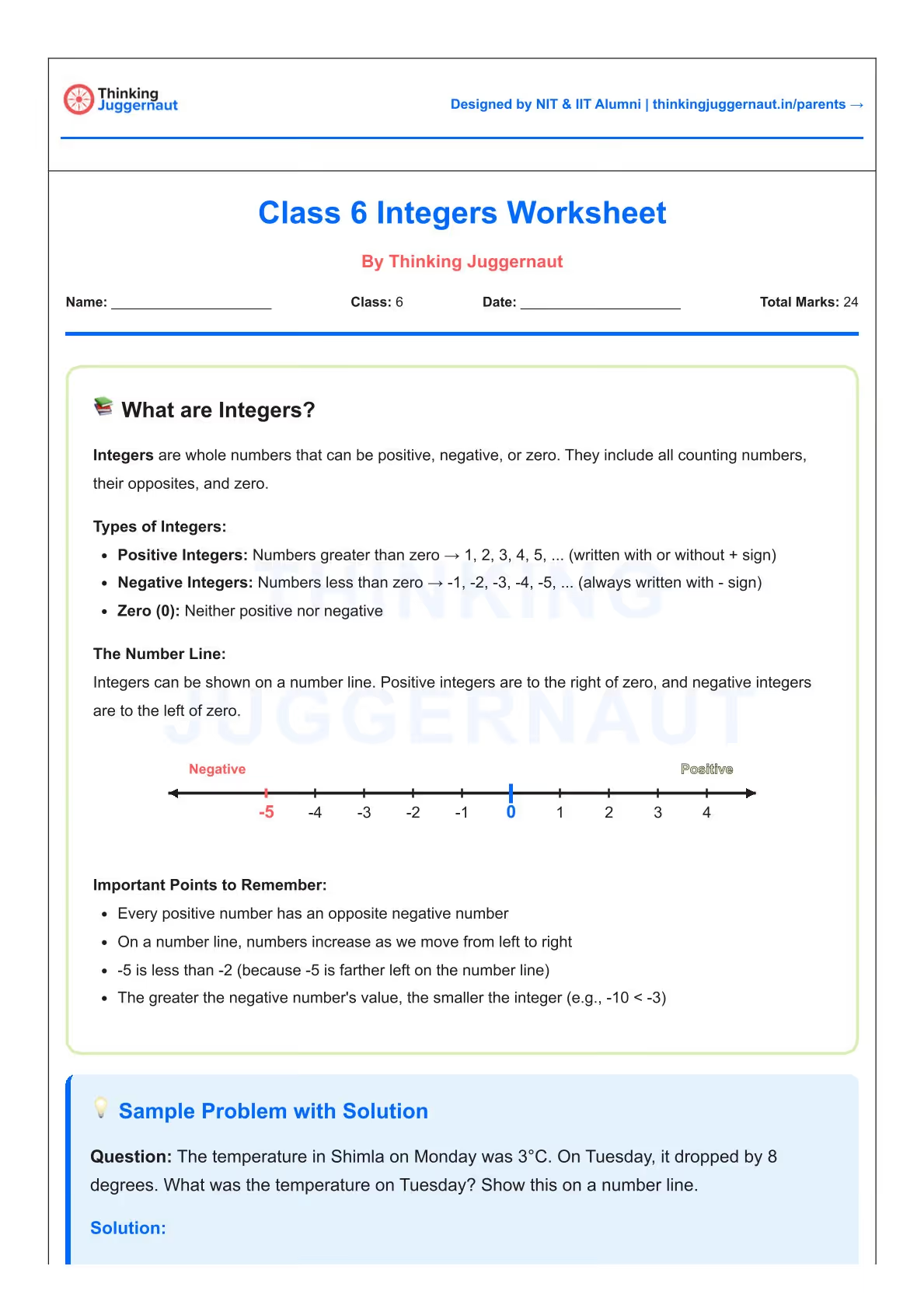
Integers are whole numbers that can be positive, negative, or zero. They include all counting numbers, their opposites, and zero.
Positive Integers: Numbers greater than zero → 1, 2, 3, 4, 5, ... (written with or without + sign)
Negative Integers: Numbers less than zero → -1, -2, -3, -4, -5, ... (always written with - sign)
Zero (0): Neither positive nor negative
Integers can be shown on a number line. Positive integers are to the right of zero, and negative integers are to the left of zero.
Every positive number has an opposite negative number
On a number line, numbers increase as we move from left to right
-5 is less than -2 (because -5 is farther left on the number line)
The greater the negative number's value, the smaller the integer (e.g., -10 < -3)
Question: The temperature in Shimla on Monday was 3°C. On Tuesday, it dropped by 8 degrees. What was the temperature on Tuesday? Show this on a number line.
Solution:
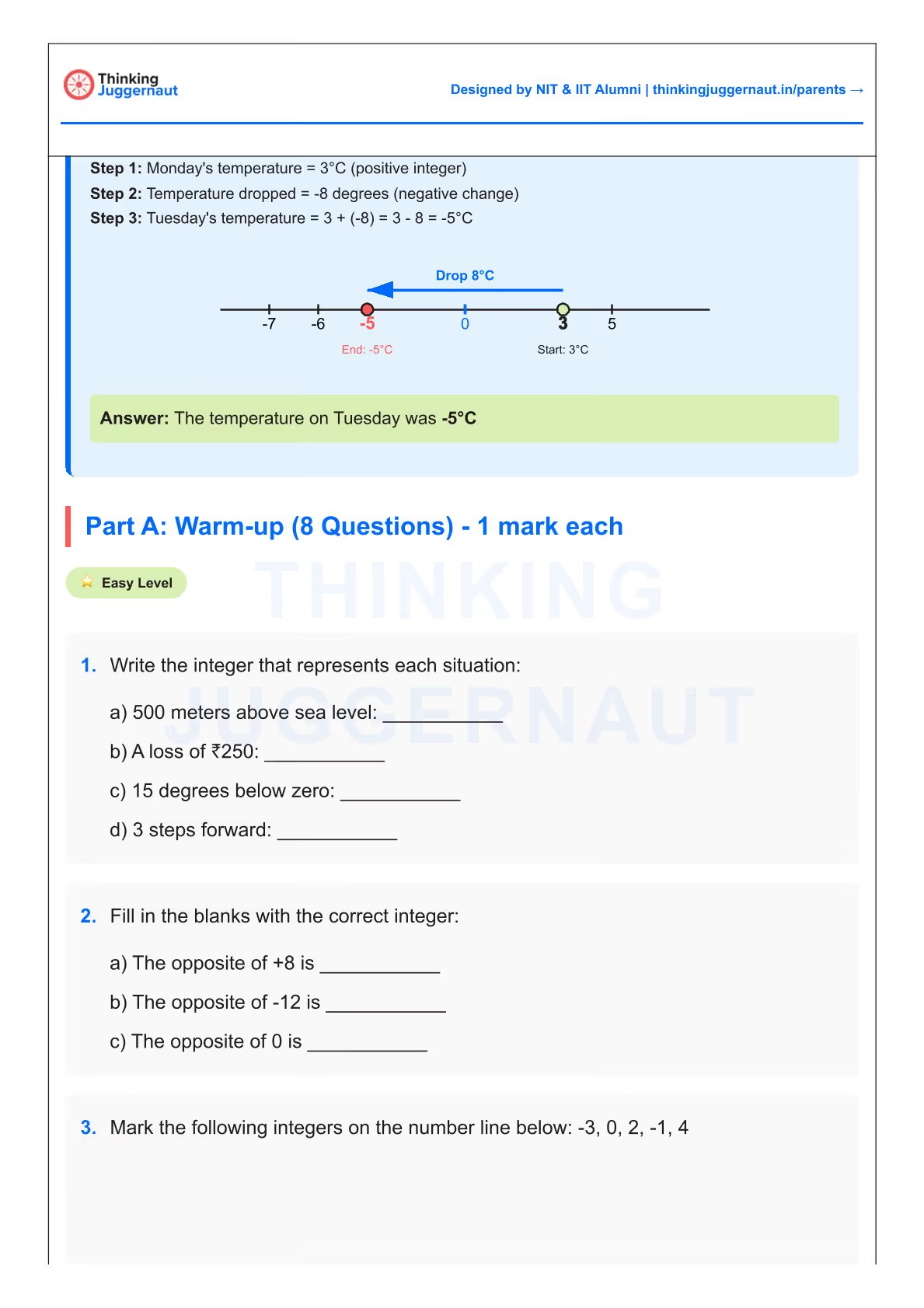
Step 1: Monday's temperature = 3°C (positive integer)
Step 2: Temperature dropped = -8 degrees (negative change)
Step 3: Tuesday's temperature = 3 + (-8) = 3 - 8 = -5°C
Answer: The temperature on Tuesday was -5°C
Write the integer that represents: 500 meters above sea level, a loss of ₹250, 15 degrees below zero
Fill in the blanks: The opposite of +8 is ____, the opposite of -12 is ____
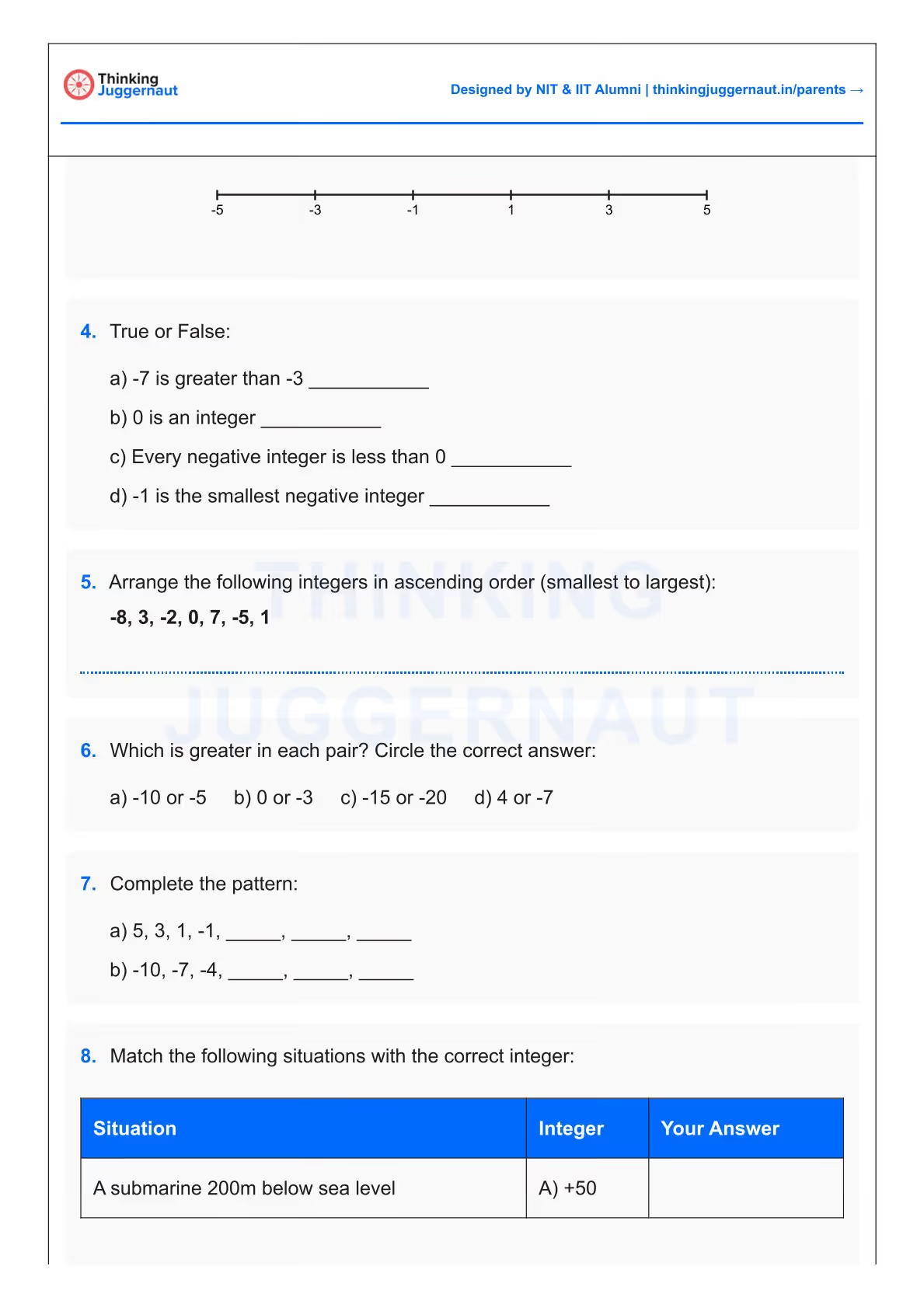
Arrange the following integers in ascending order: -8, 3, -2, 0, 7, -5, 1
The temperature at 6 AM was -2°C. By noon, it increased by 7 degrees. What was the temperature at noon?
A diver is at 15 meters below sea level. He descends 8 more meters. At what depth is he now?
A bird is flying 20 meters above ground level (+20). It sees food and dives down 35 meters. Where is the bird now relative to ground level?
20-24 marks: Excellent! You have a strong understanding of integers! You're ready to move on to operations with integers. Practice a few challenging word problems daily to stay sharp.
15-19 marks: Very Good! You understand most concepts well. Review the questions you got wrong, especially in Part C. Practice number line problems and real-life applications for 15 minutes daily.
10-14 marks: Good Start! You have the basics but need more practice. Focus on understanding negative numbers on the number line, comparing integers, and solving 10 simple word problems about temperature and money daily.
Below 10 marks: Keep Trying! Don't worry! Integers are tricky at first. Practice with a number line from -10 to +10 daily. Focus on placing integers and finding opposites. Work on comparing two integers and solve 5 real-life word problems daily.
Number Line Practice: Create your own number line and mark 5 different integers daily
Real-Life Connection: Notice integers around you - thermometers, lift buttons, bank statements
Opposite Numbers: Every day, write 5 pairs of opposite integers (e.g., 7 and -7)
Comparison Trick: On a number line, the number on the RIGHT is ALWAYS greater
Word Problem Strategy: Read carefully, identify the starting point, then track increases (+) and decreases (-)
Temperature Problems: Remember - "increase" means move right, "decrease" means move left on number line
Money Problems: Earning/Receiving = Add (+), Spending = Subtract (-)
Confusing which negative number is greater (-5 vs -2)
Forgetting that zero is neither positive nor negative
Not using the number line to visualize problems
Mixing up "above" and "below" in elevation problems
Not tracking cumulative changes in multi-step problems
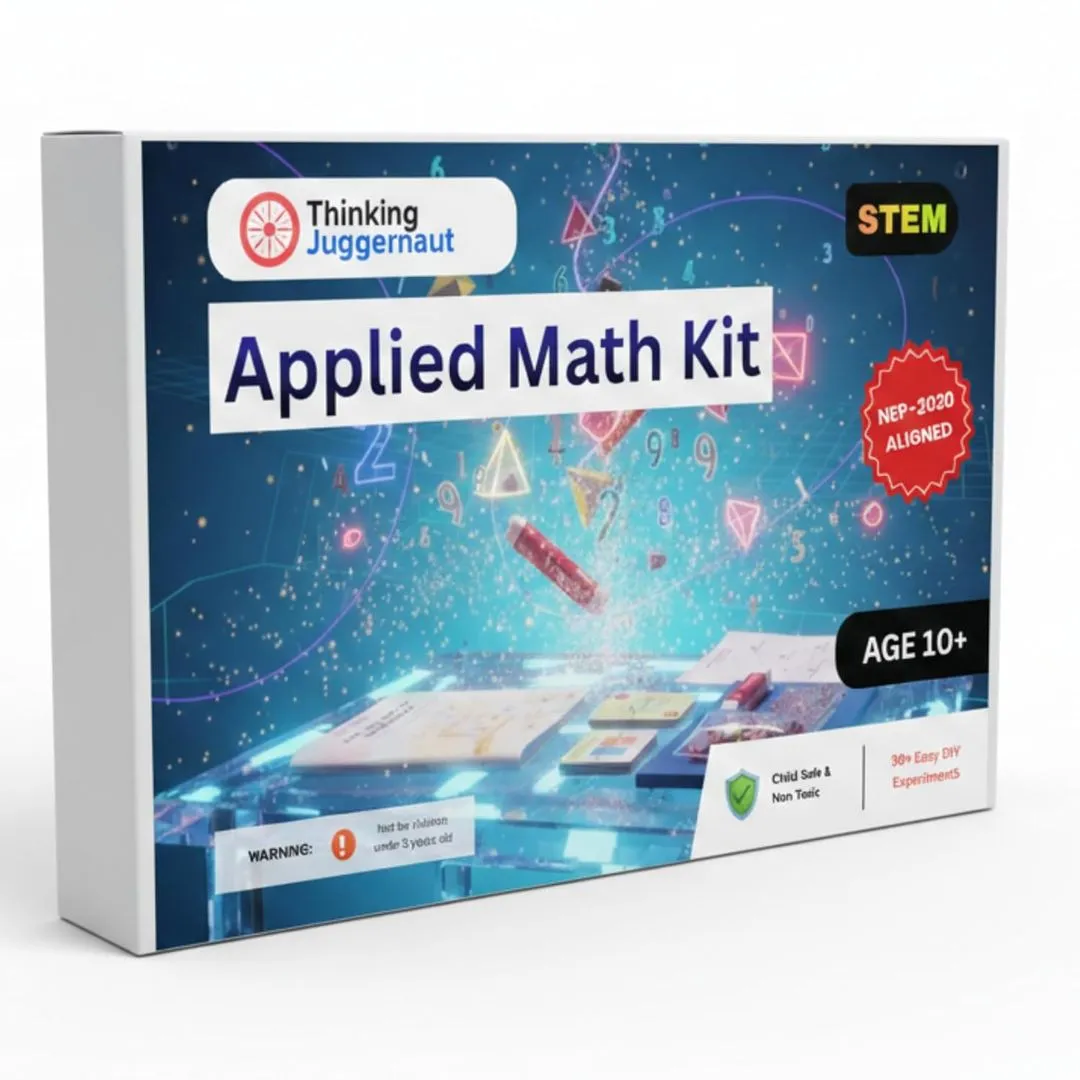
Worksheets build practice. The Applied Maths Project Kit builds understanding — 30 real-world math activities covering the same concepts your child is practising here, from multiplication and grouping to measurement and data.
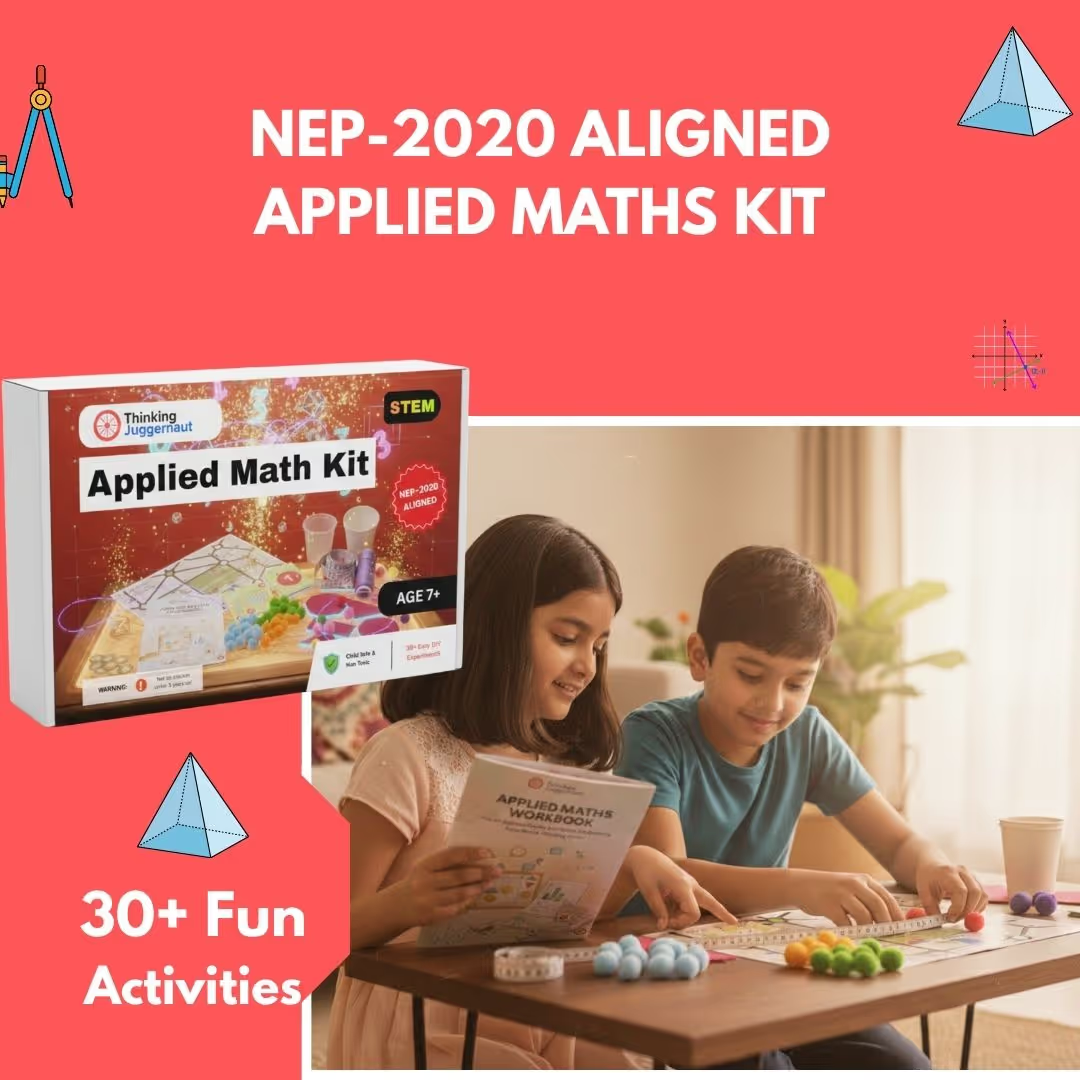
Designed by IIT & NIT Alumni · NEP-2020 aligned · Trusted by parents across India
Class 6 Percentage
Class 6 Fractions and Decimals
Class 6 Algebra
Class 6 Data Handling
Class 6 Geometry
Class 6 Integers
Class 6 Integer Subtraction Drill
Class 6 Ratio and Proportion
Not in Class 6?
Visit our Main Math Worksheet Hub to explore all printable worksheets from Class 2 to Class 8.
Almost there!
We will confirm your order on WhatsApp
Order placed!
Thank you! You will receive a WhatsApp confirmation shortly.