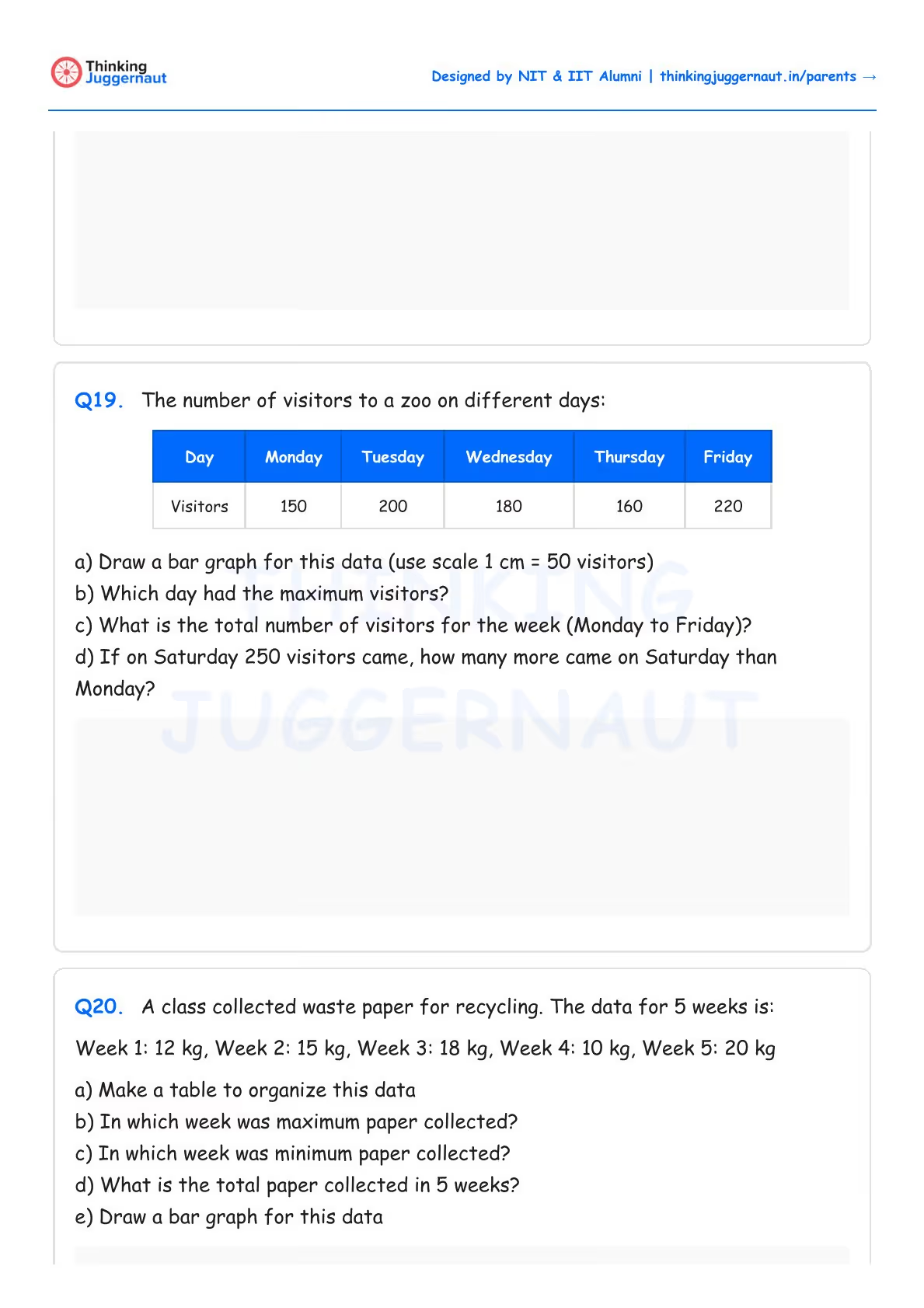
Master data handling for Class 6 with this worksheet - bar graphs, scaled pictographs, and real-world data interpretation. Includes practice questions to help your child organise, compare, and analyse data confidently.
Data is a collection of information — numbers, measurements, observations — gathered to answer questions, spot patterns, and make decisions. Data Handling at Class 6 level means not just collecting and displaying data, but actively interpreting it.
We now work with bar graphs that require reading scales, pictographs with varying keys, and multi-step problems where we calculate totals, differences, and comparisons from the same data set.
Tally Marks: Used for quick data collection and recording during surveys.
Scaled Pictographs: Each symbol represents a fixed number of items. The key tells us the value of each symbol, and we must multiply accordingly.
Bar Graphs: Rectangular bars drawn against a scaled Y-axis. The height of each bar represents the value. Bar graphs make comparison across categories much easier than tables alone.
A bar graph shows vehicles passing a crossing in one hour: Cars (40), Bikes (30), Autos (20), Buses (10). The Y-axis is scaled from 0 to 50 in steps of 10.
Read each bar against the Y-axis scale to find its value. Cars passed the most at 40. To find how many more cars than buses: 40 − 10 = 30. To find the total vehicles: 40 + 30 + 20 + 10 = 100. Bar graphs make these comparisons quick because the visual difference in bar height shows the gap at a glance.
Read the Y-axis scale before interpreting any bar graph. Misreading the scale is the single biggest source of errors at this level.
Always use a ruler when drawing bar graphs. Uneven bars make comparison unreliable and can cost marks.
Label everything — title, axes, and units. Forgetting labels is a common oversight in drawn graphs.
In pictographs, divide the total by the scale value to find how many symbols to draw. Doing this the wrong way around is a frequent mistake.
When a problem gives multiple parts, answer each one separately. Skipping a part because you think it is obvious still loses marks.
Check that bar widths are equal across a graph. Unequal widths make the graph misleading and incorrect.
Worksheets build practice. The Applied Maths Project Kit builds understanding — 30 real-world math activities covering the same concepts your child is practising here, from multiplication and grouping to measurement and data.
Designed by IIT & NIT Alumni · NEP-2020 aligned · Trusted by parents across India
Class 6 Percentage
Class 6 Fractions and Decimals
Class 6 Algebra
Class 6 Data Handling
Class 6 Geometry
Class 6 Integers
Class 6 Integer Subtraction Drill
Class 6 Ratio and Proportion
Not in Class 6?
Visit our Main Math Worksheet Hub to explore all printable worksheets from Class 2 to Class 8.
Almost there!
We will confirm your order on WhatsApp
Order placed!
Thank you! You will receive a WhatsApp confirmation shortly.