Download free Class 5 percentage worksheets with answers. Includes basic percentage concepts, fraction-to-percentage conversions, finding percentages of numbers, and real-world word problems across three difficulty levels. This is a printable PDF with answer key and assessment rubrics included.
What is Percentage?
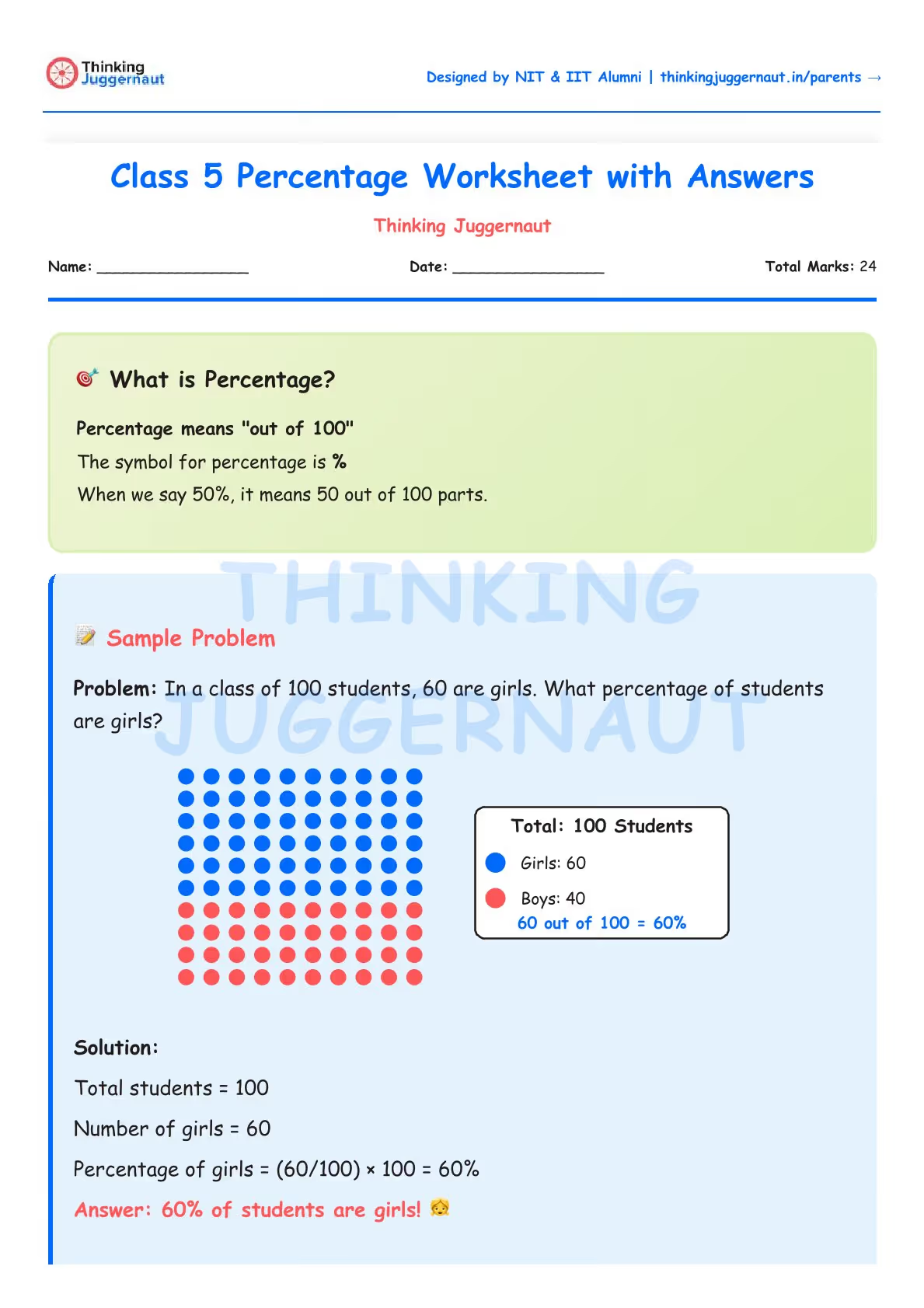
Percentage means "out of 100" or "per hundred." The symbol for percentage is %.
When we say 50%, it means 50 out of 100 parts.
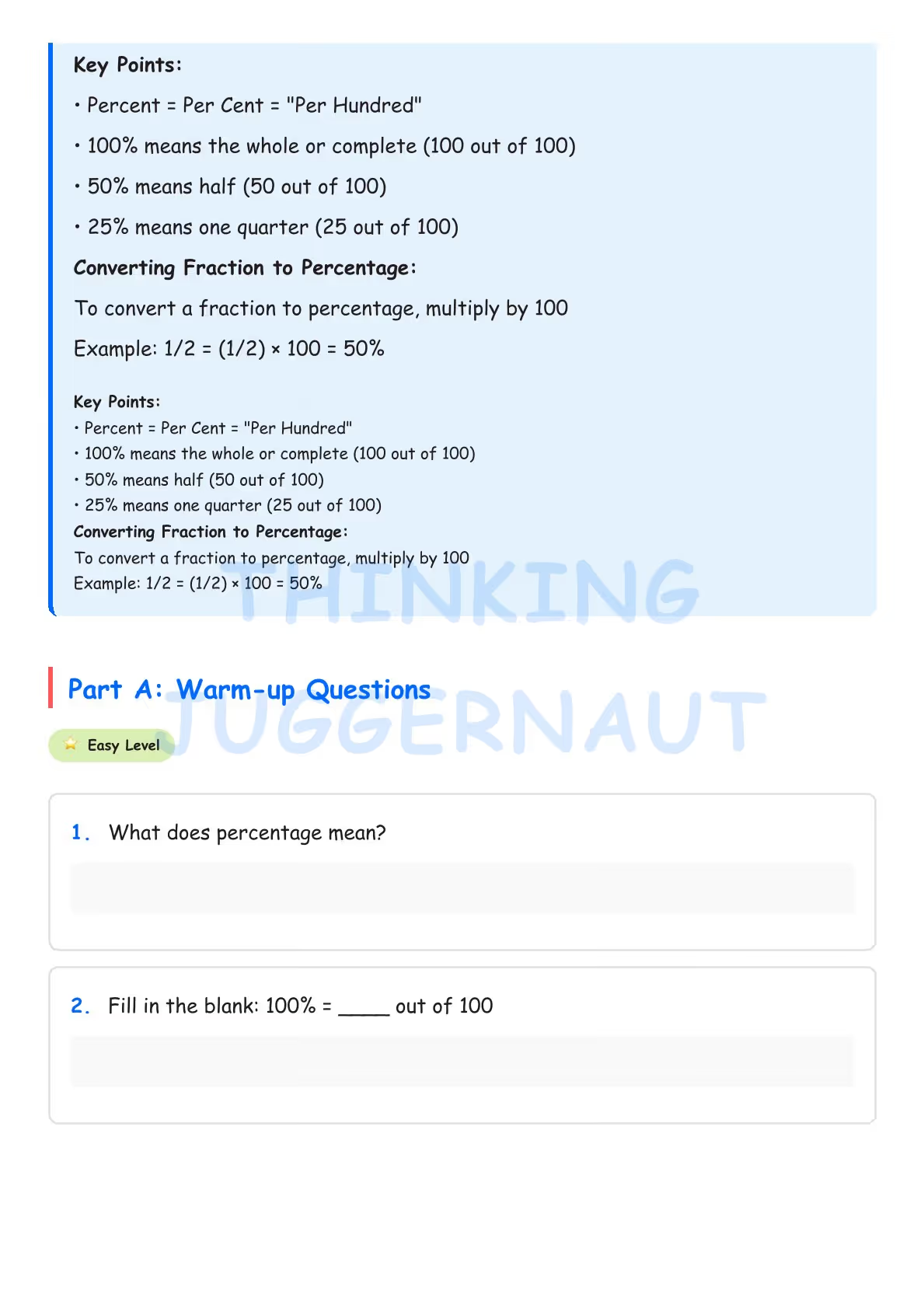
Key Points:
Percent = Per Cent = "Per Hundred"
100% means the whole or complete (100 out of 100)
50% means half (50 out of 100)
25% means one quarter (25 out of 100)
Converting Fraction to Percentage:
To convert a fraction to percentage, multiply by 100.
For example: 1/2 = (1/2) × 100 = 50%
Solved Example: Step by Step
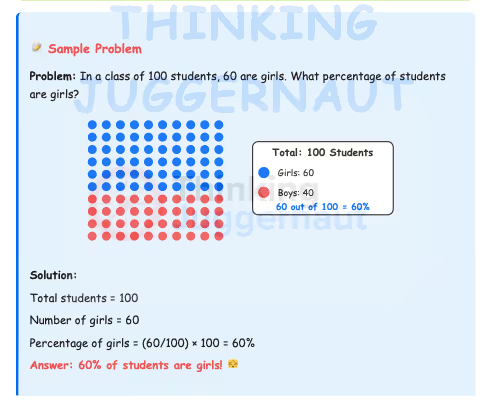
Problem: In a class of 100 students, 60 are girls. What percentage of students are girls?
Solution:
Total students = 100
Number of girls = 60
Percentage of girls = (60/100) × 100 = 60%
Answer: 60% of students are girls!
Percentage Worksheet Sample Problems
Preview the types of exercises included in the printable PDF:
Basic Concept: What does percentage mean?
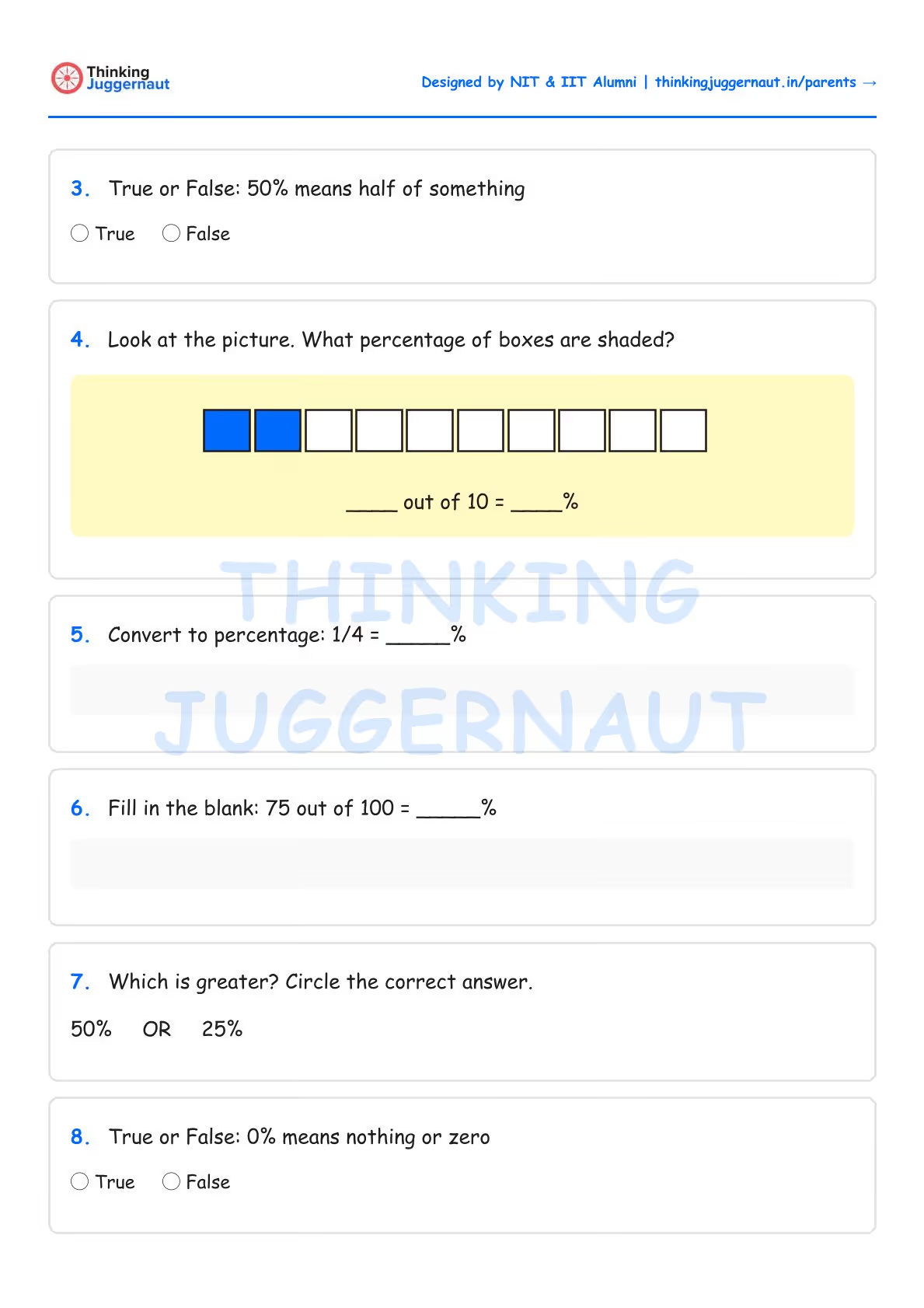
Fill in the Blanks: 75 out of 100 = ____%
Fraction Conversion: Convert to percentage: 1/4 = _____%
Picture-Based Problem: Look at the picture. What percentage of boxes are shaded? ____ out of 10 = ____%
Word Problem: A cricket team played 100 matches. They won 65 matches. What percentage of matches did they win?
Finding Percentage: A shop has 50 toys. 15 toys are cars. What percentage of toys are cars?
Multi-Step Problem: In a basket of 200 apples, 30 are rotten. What percentage of apples are good?
Applied Problem: A school has 200 students. 50% are boys. How many boys are there in the school?
Common Mistakes & Tips
Common Mistakes to Avoid:
Forgetting to Multiply by 100: When converting fractions to percentages, students often forget the final step of multiplying by 100.
Confusing Part and Whole: Make sure students identify which number is the total (whole) and which is the part when calculating percentages.
Percentage vs. Actual Number: 50% of 200 is 100, not 50. Students sometimes confuse the percentage with the actual count.
Top 5 Pro-Tips:
Remember the Meaning: Percentage always means "out of 100." This helps with all conversions and calculations.
Use the Formula: Percentage = (Part/Whole) × 100. Write this down before solving word problems.
Memorize Common Conversions: Know these by heart: 1/2 = 50%, 1/4 = 25%, 3/4 = 75%, 1/5 = 20%.
Convert to "Out of 100" First: For problems like "15 out of 50," first convert to "30 out of 100" to find 30%.
Check if Your Answer Makes Sense: If you're finding a percentage and get more than 100%, double-check your work (unless dealing with increases).
Assessing Learning: Scoring Guide
Total Questions: 24 | Total Marks: 24
Score: 20 – 24 (Excellent! ⭐⭐⭐)
What This Means: You understand percentage concepts thoroughly and can apply them to real-world problems.
Next Steps: Move on to Class 6 percentage worksheets with decimal conversions, percentage increase/decrease, and profit/loss problems. Try calculating discounts during shopping to practice.
Score: 15 – 19 (Very Good! ⭐⭐)
What This Means: You've grasped the basics but need more practice with word problems and conversions.
Next Steps: Focus on questions you got wrong. Practice converting fractions to percentages daily (spend 10 minutes). Try creating your own percentage problems from everyday situations like test scores or savings.
Score: 10 – 14 (Good Effort! ⭐)
What This Means: You understand what percentage means but struggle with calculations and applying the formula.
Next Steps: Review the formula: Percentage = (Part/Whole) × 100. Practice with simpler numbers first (percentages out of 100). Use visual aids like 100-square grids to understand the concept better. Work on 5 basic problems daily.
Score: 0 – 9 (Keep Trying!)
What This Means: The concept needs more reinforcement. Don't worry—percentages take time to master!
Next Steps: Start with understanding "out of 100" using real objects (like 100 candies). Focus only on Part A (Easy Level) questions until you get 7/8 correct consistently. Ask a teacher or parent to explain with visual examples. Practice identifying the "whole" and the "part" in simple problems.
Ready to Make Maths Hands-On?
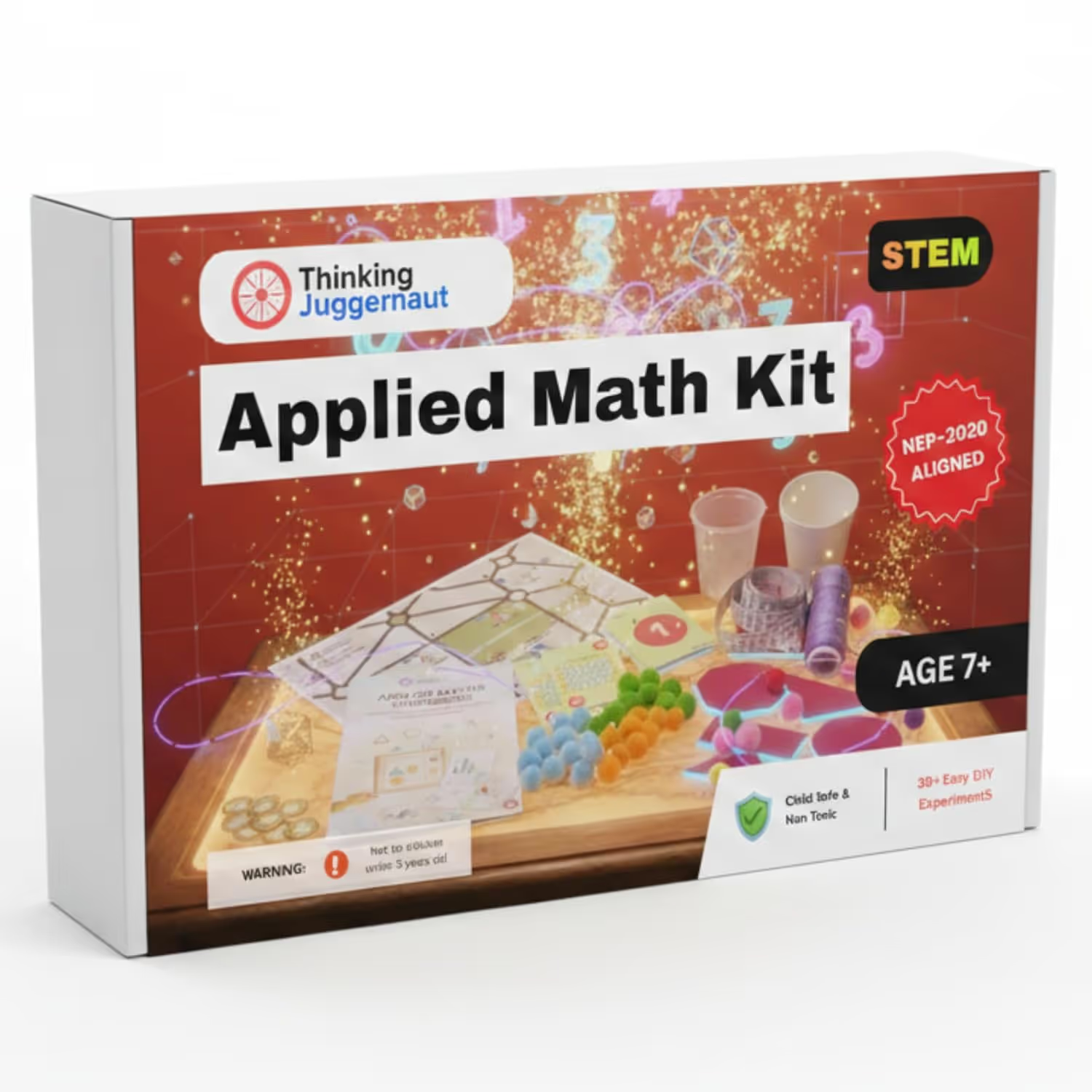
Worksheets build practice. The Applied Maths Project Kit builds understanding covering the same concepts your child is practising here. A hands-on math kit inspired by NEP 2020’s vision of learning mathematics as thinking, connecting, and applying, not just solving equations.