Download free Class 5 fractions worksheets with answers. Includes proper/improper fractions, mixed numbers, simplification, addition/subtraction of fractions, finding fractions of numbers, and real-world word problems across three difficulty levels. This is a printable PDF with answer key and assessment rubrics included.
What are Fractions?
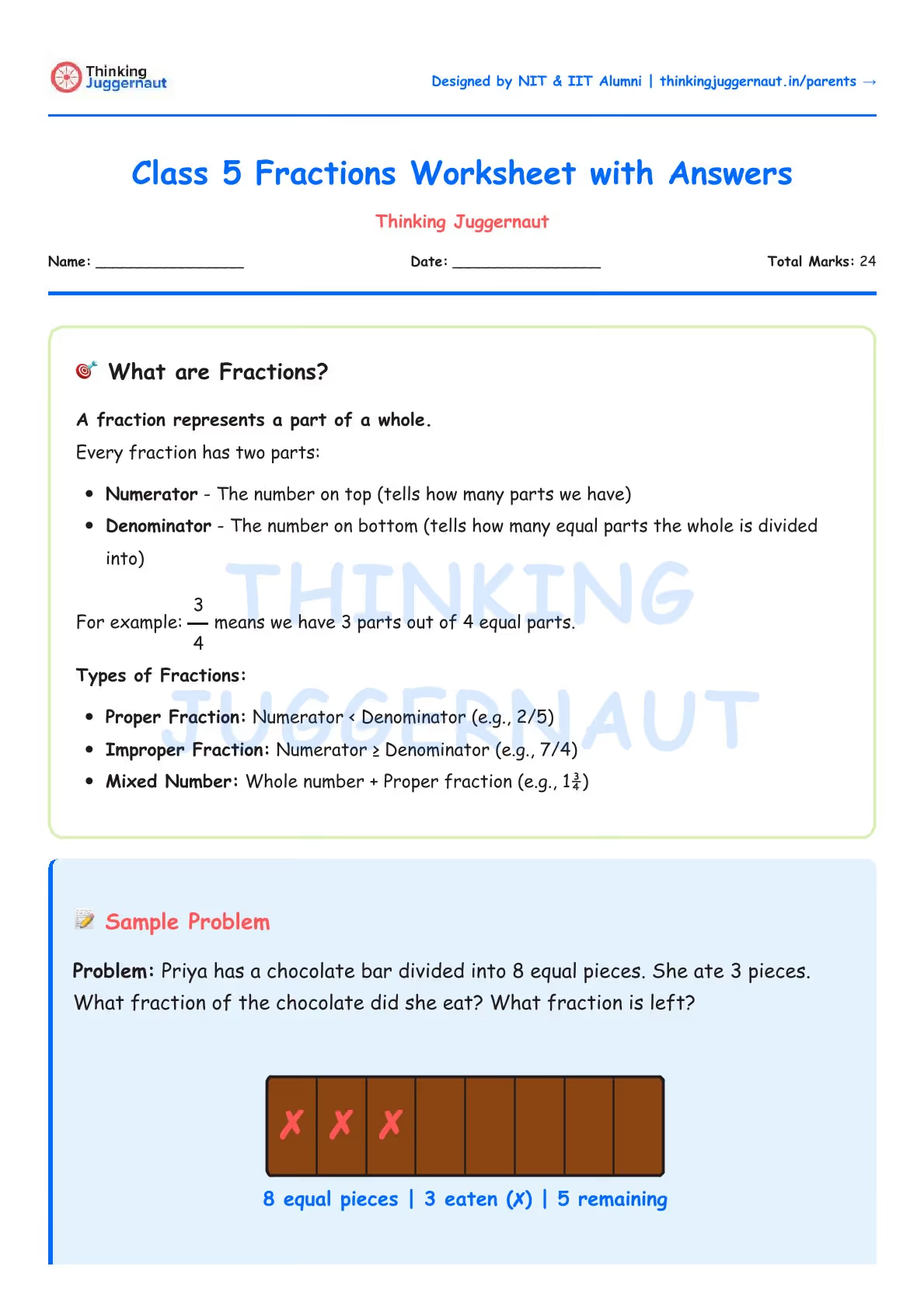
A fraction represents a part of a whole.
Every fraction has two parts:
Numerator - The number on top (tells how many parts we have)
Denominator - The number on bottom (tells how many equal parts the whole is divided into)
For example: 3/4 means we have 3 parts out of 4 equal parts.
Mixed Number: Whole number + Proper fraction (e.g., 1¾)
Solved Example: Step by Step
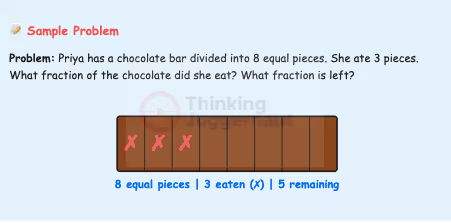
Problem: Priya has a chocolate bar divided into 8 equal pieces. She ate 3 pieces. What fraction of the chocolate did she eat? What fraction is left?
Solution:
Total pieces = 8
Pieces eaten = 3
Fraction eaten = 3/8
Pieces remaining = 8 - 3 = 5
Fraction remaining = 5/8
Answer: Priya ate 3/8 of the chocolate. 5/8 is left!
Sample Problems
What fraction of the circle is shaded?
Fill in the blank: In the fraction 5/7, the numerator is ____ and the denominator is ____.
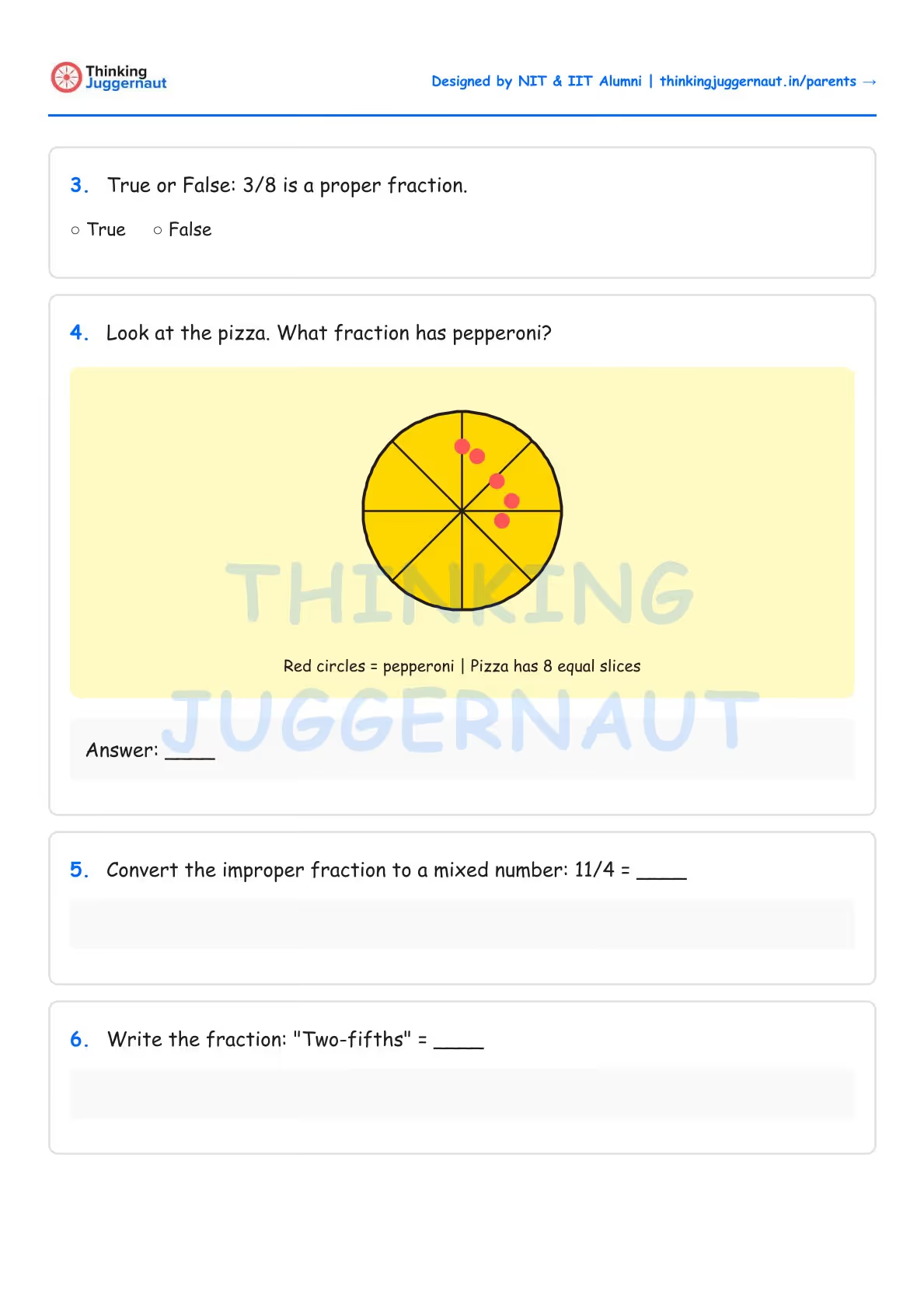
Convert the improper fraction to a mixed number: 11/4 = ____
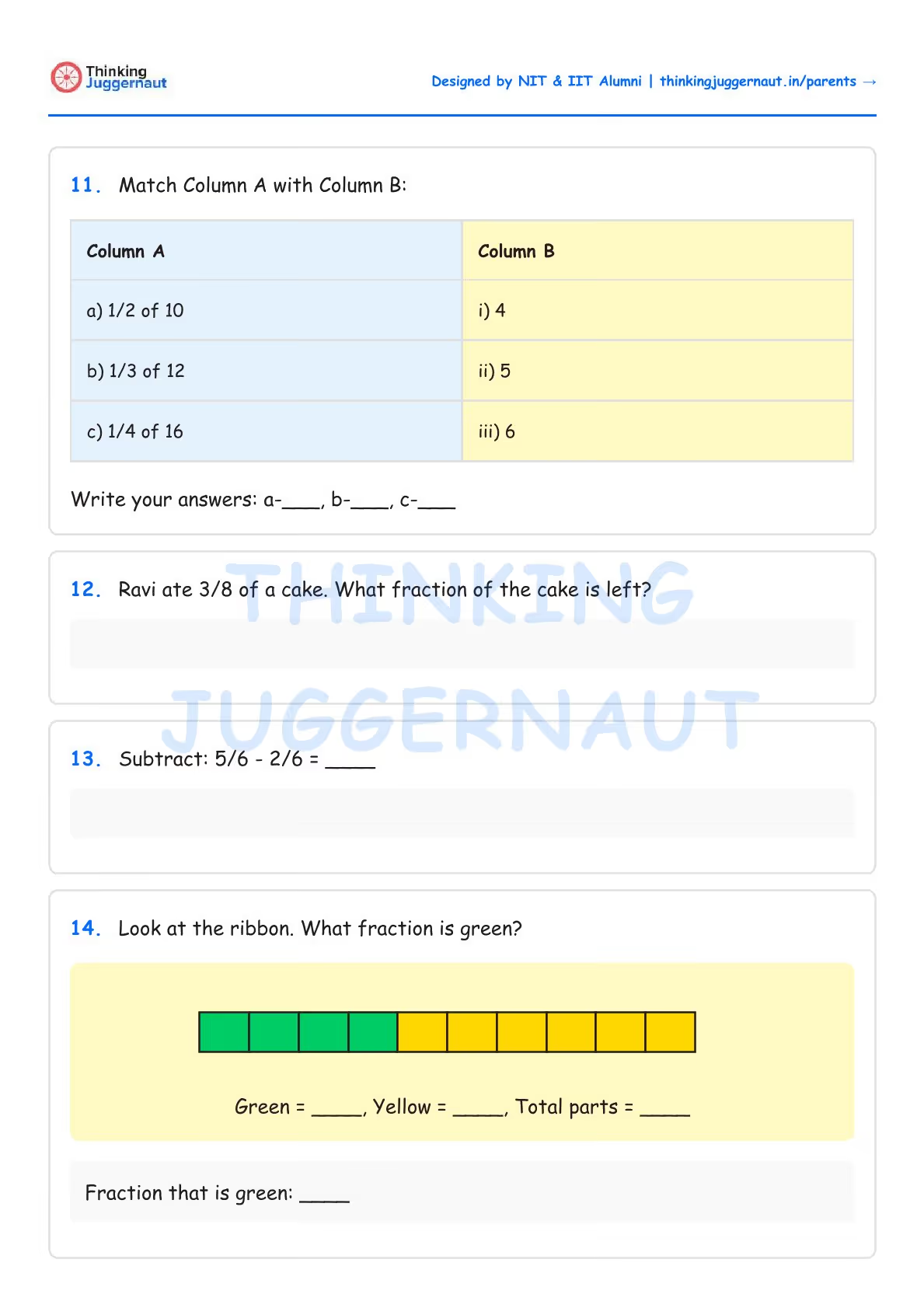
Ravi ate 3/8 of a cake. What fraction of the cake is left?
Subtract: 5/6 - 2/6 = ____
A water tank can hold 40 litres. It currently has 25 litres. What fraction of the tank is full?
In a class of 36 students, 2/3 are girls. How many boys are there?
A recipe needs 2¼ cups of flour. If you want to make half the recipe, how much flour do you need?
Common Mistakes & Tips
Common Mistakes to Avoid:
Adding/Subtracting Without Common Denominators: Students often add 1/2 + 1/3 as 2/5 (adding numerators and denominators separately). Always find a common denominator first.
Not Simplifying Final Answers: Getting 4/8 and leaving it instead of simplifying to 1/2. Always reduce to lowest terms.
Mixed Number Conversion Errors: When converting 2¾ to improper: students forget to multiply the whole number by denominator first (2×4=8, then 8+3=11, so 11/4).
Comparing Fractions Incorrectly: Thinking 1/4 > 1/2 because 4 > 2. Remember: larger denominator means smaller pieces.
Top 5 Pro-Tips:
Visual Learning is Key: Draw circles, bars, or pizzas to visualize fractions. This makes addition, subtraction, and comparison much clearer.
The Butterfly Method for Addition: When adding fractions with different denominators, use cross-multiplication to find common denominators quickly.
Simplify Immediately: Always divide both numerator and denominator by their GCD (greatest common divisor) at the end.
Check by Converting Back: After converting mixed to improper, convert back to verify. If you get 2¾ → 11/4, check: 11÷4 = 2 remainder 3 = 2¾ ✓
Assessing Learning: Scoring Guide
Total Questions: 24 | Total Marks: 24
Score: 20 – 24 (Excellent! ⭐⭐⭐)
What This Means: You've mastered fractions including addition/subtraction with different denominators, conversions, and applying fractions to word problems.
Next Steps: Move to multiplying and dividing fractions. Try Class 6 fraction worksheets with complex operations. Practice fractions in real-life situations like cooking (halving/doubling recipes) and measurement.
Score: 15 – 19 (Very Good! ⭐⭐)
What This Means: You handle basic fraction operations well but need practice with different denominators and complex word problems.
Next Steps: Focus on finding common denominators—practice LCD (Least Common Denominator) for 10 pairs of fractions daily. Work on Part C problems. Practice converting between mixed numbers and improper fractions until it becomes automatic.
Score: 10 – 14 (Good Effort! ⭐)
What This Means: You understand what fractions are but struggle with operations, especially when denominators differ, and with simplification.
Next Steps: Master simplification first—practice reducing 15 fractions to lowest terms daily. Then focus on adding/subtracting fractions with same denominators only. Use visual aids (fraction bars/circles). Once comfortable, gradually introduce different denominators using small numbers (2, 3, 4).
Score: 0 – 9 (Keep Trying!)
What This Means: The concept of fractions as parts of a whole needs more reinforcement. Operations are challenging right now.
Next Steps: Start with concrete objects—cut paper circles, chocolate bars, or pizzas into equal parts. Focus only on identifying and writing fractions (Part A, questions 1-4) for one week. Practice reading fractions aloud. Use fraction wall charts. Once you can identify fractions correctly 90% of the time, begin simple addition with same denominators. Work with a teacher/parent using visual models.
Ready to Make Maths Hands-On?
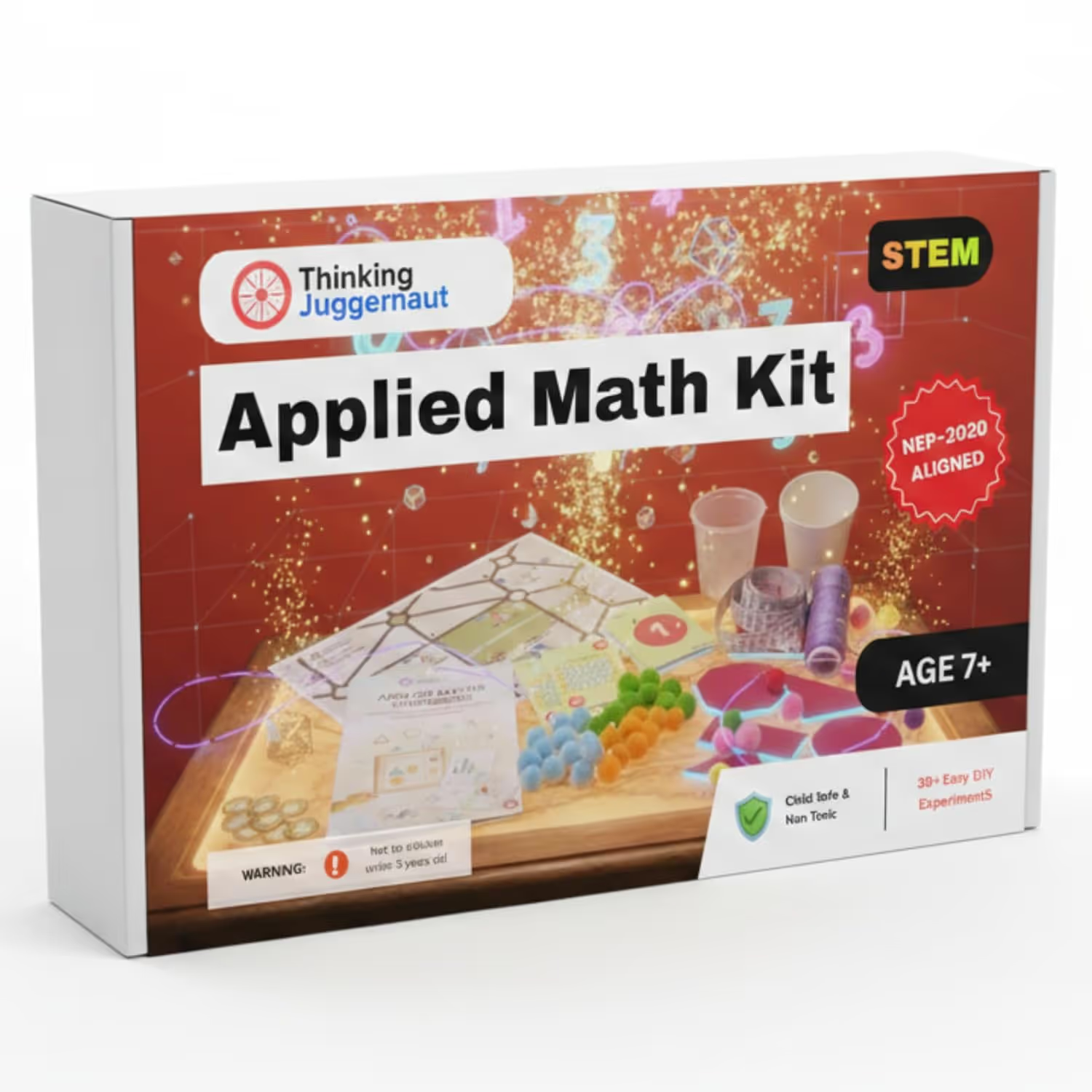
Worksheets build practice. The Applied Maths Project Kit builds understanding covering the same concepts your child is practising here. A hands-on math kit inspired by NEP 2020’s vision of learning mathematics as thinking, connecting, and applying, not just solving equations.