Download free Class 5 decimals worksheets with answers. This PDF contains practice problems covering decimal multiplication and division, converting between fractions and decimals, rounding, multi-step word problems, and working with hundredths. Includes visual problem-solving examples, complete answer key, and performance assessment rubrics.
Decimals - Class 5
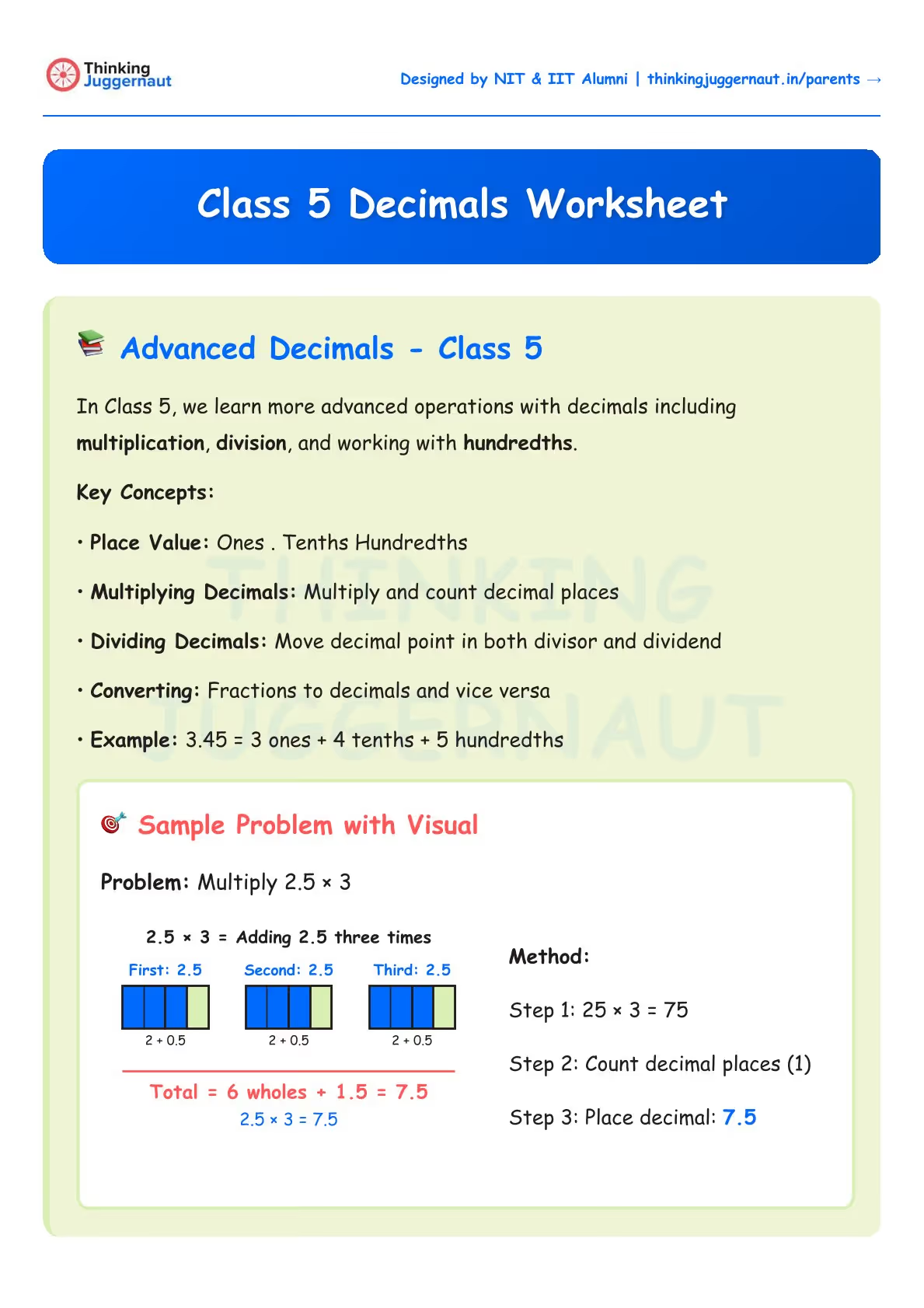
In Class 5, students advance beyond basic decimal operations to master multiplication, division, and working with hundredths place values.
Key Concepts:
Place Value System - Understanding ones, tenths, and hundredths positions
Multiplying Decimals - Multiply as whole numbers, then place the decimal point
Dividing Decimals - Adjust decimal positions to divide accurately
Fraction-Decimal Conversion - Converting between fractional and decimal forms
Rounding Decimals - Rounding to nearest tenth or hundredth
Example: In 4.67, the number 4 is in the ones place, 6 is in the tenths place (0.6), and 7 is in the hundredths place (0.07).
Solved Example: Multiplying Decimals Step-by-Step
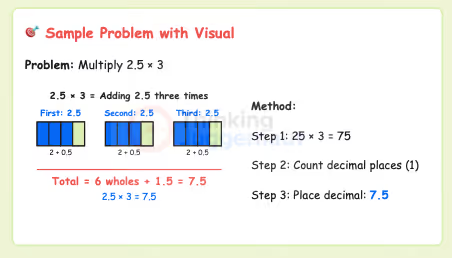
Problem: Multiply 2.5 × 3
Solution:
Step 1: Ignore the decimal and multiply: 25 × 3 = 75
Step 2: Count decimal places in the problem (2.5 has 1 decimal place)
Step 3: Place the decimal in the answer: 7.5
Visual understanding: 2.5 added three times equals 7.5
Answer: 2.5 × 3 = 7.5
Decimals Worksheet Sample Problems
Preview problem types included in the printable PDF:
Fraction to Decimal: Convert 3/10 to decimal form using a visual grid model.
Multiplication: Calculate 4.5 × 6 = ____
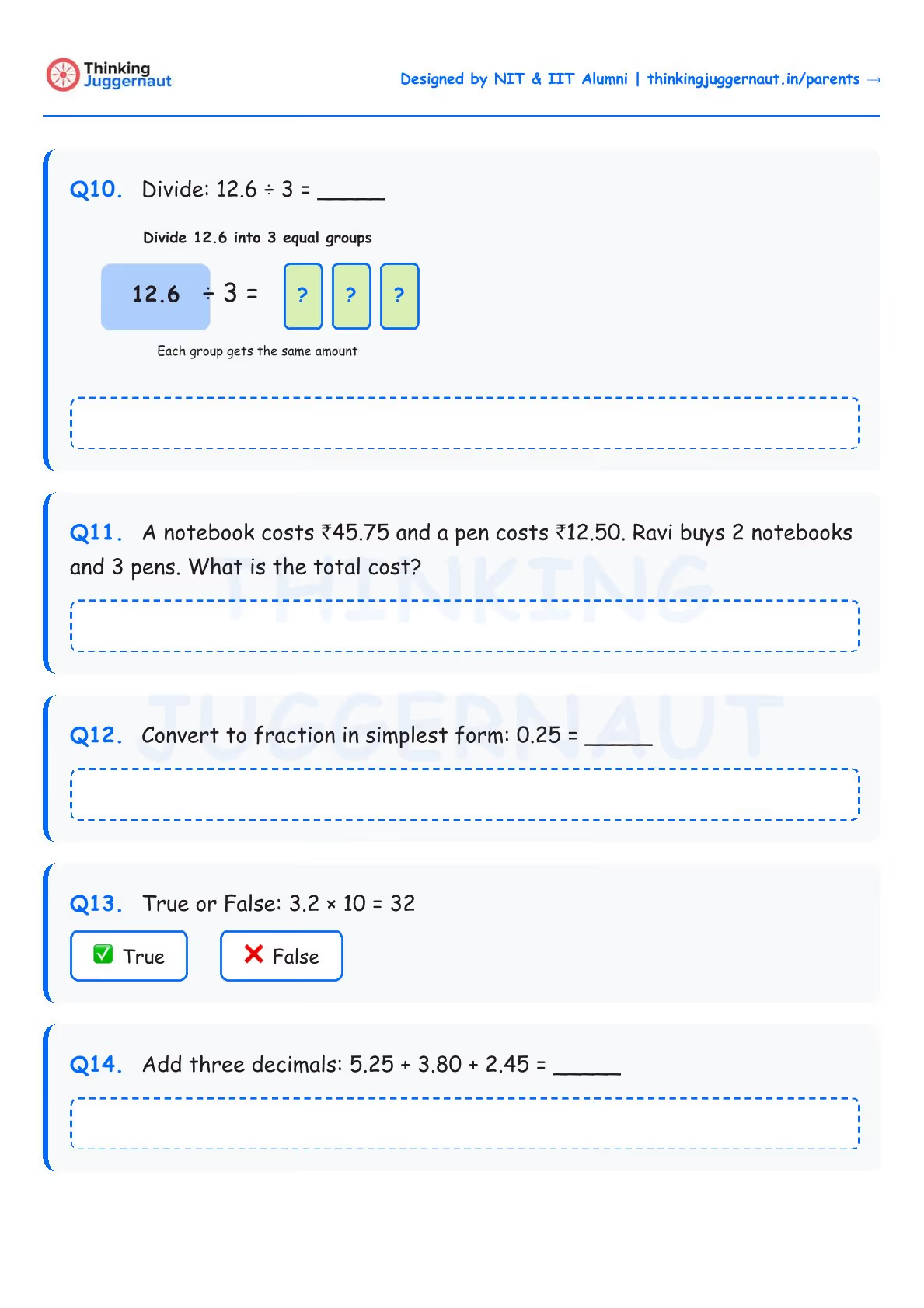
Division Challenge: Divide 12.6 ÷ 3 = ____
Multi-Step Word Problem: A notebook costs ₹45.75 and a pen costs ₹12.50. If Ravi buys 2 notebooks and 3 pens, what is the total cost?
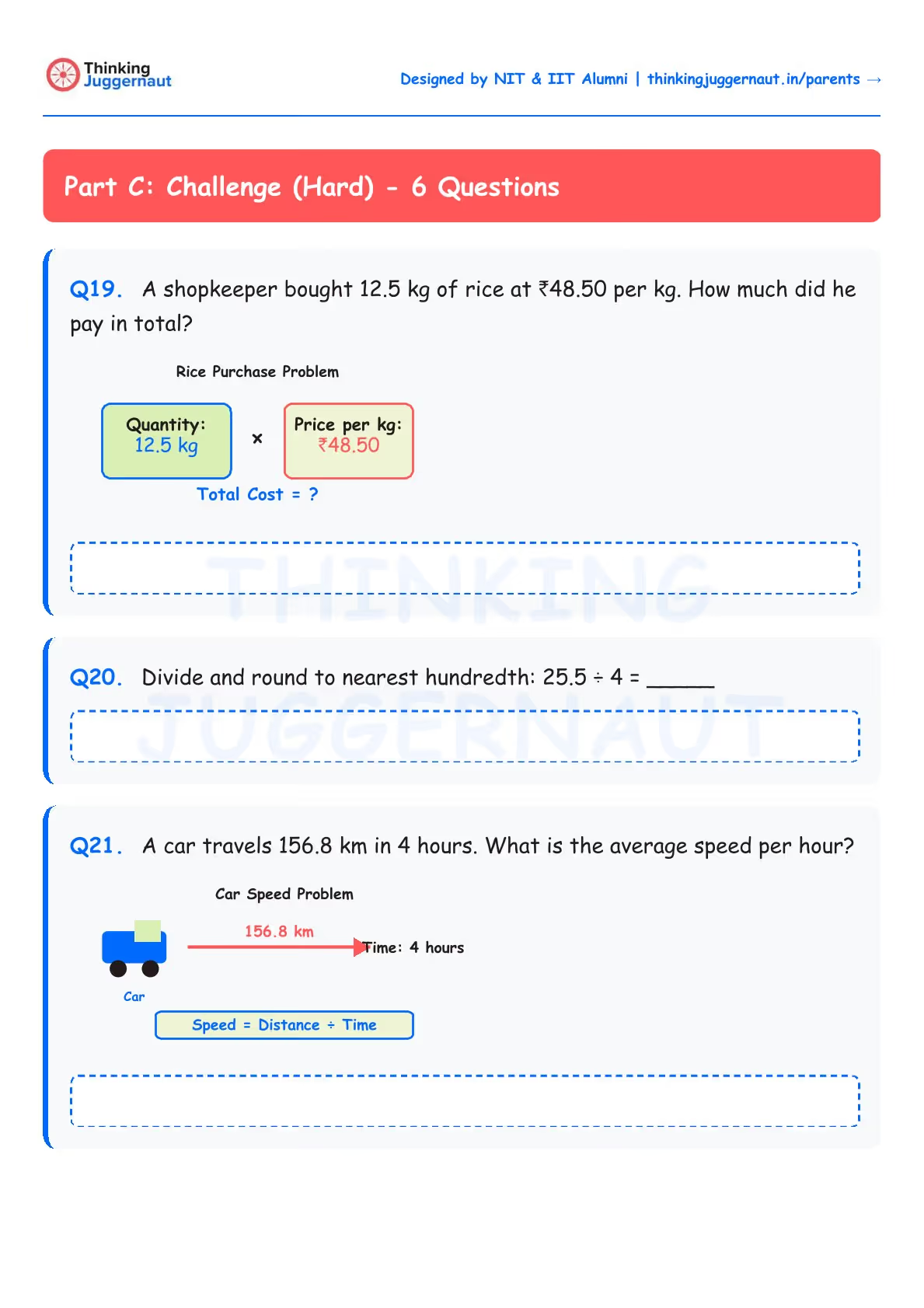
Real-World Application: A car travels 156.8 km in 4 hours. Calculate the average speed per hour.
Geometry Connection: Find the perimeter of a rectangle with length 7.5 m and width 4.2 m.
Common Mistakes & Tips
Common Mistakes to Avoid:
Decimal Point Placement in Multiplication: Students often forget to count decimal places. In 3.5 × 2, multiply to get 70, then remember 3.5 has one decimal place, so the answer is 7.0 (or 7).
Moving Decimals Incorrectly in Division: When dividing 12.6 ÷ 3, students sometimes move the decimal point randomly instead of dividing normally.
Rounding Errors: When rounding 4.83 to the nearest tenth, students might round to 4.9 instead of 4.8 because they look at the wrong digit.
Fraction-Decimal Confusion: Mixing up conversions like thinking 1/4 equals 0.25 but forgetting 3/4 equals 0.75.
Calculation Mistakes in Word Problems: Forgetting to multiply quantities before adding (like buying multiple items at different prices).
Top 5 Pro-Tips:
Count Decimal Places for Multiplication: Total decimal places in both numbers determines where the decimal goes in your answer. For 2.5 × 1.2, count 2 total decimal places, so 25 × 12 = 300 becomes 3.00.
Use Money as Practice: Currency provides natural decimal practice. ₹48.50 per kg makes multiplication and division concrete and meaningful.
Simplify Division: For 12.6 ÷ 3, think of it as dividing 126 tenths by 3, which gives 42 tenths or 4.2.
Check Reasonableness: After solving, ask if the answer makes sense. If 4.5 × 6 gives you 2.7, you know something went wrong.
Master Common Fraction-Decimal Pairs: Memorize key conversions like 1/4 = 0.25, 1/2 = 0.5, 3/4 = 0.75, 1/5 = 0.2 for quick problem-solving.
Assessing Learning: Scoring Guide
Total Questions: 24 | Total Marks: 24
Score: 20 – 24 (Excellent! ⭐⭐⭐)
Next Step: You're a decimals master! Challenge yourself with Class 6 concepts like decimal percentages or more complex multi-step problems.
Score: 15 – 19 (Very Good! ⭐⭐)
Next Step: Strong foundation! Practice multiplication and division problems to perfect your skills and reach excellence.
Score: 10 – 14 (Good Effort! ⭐)
Next Step: Focus on understanding place value and practice the step-by-step methods for multiplication and division. Review worked examples carefully.
Score: 0 – 9 (Keep Trying! 💪)
Next Step: Build fundamentals first. Start with simpler Class 4 decimal concepts, practice with visual models, and gradually work up to multiplication and division with teacher guidance.
Ready to Make Maths Hands-On?
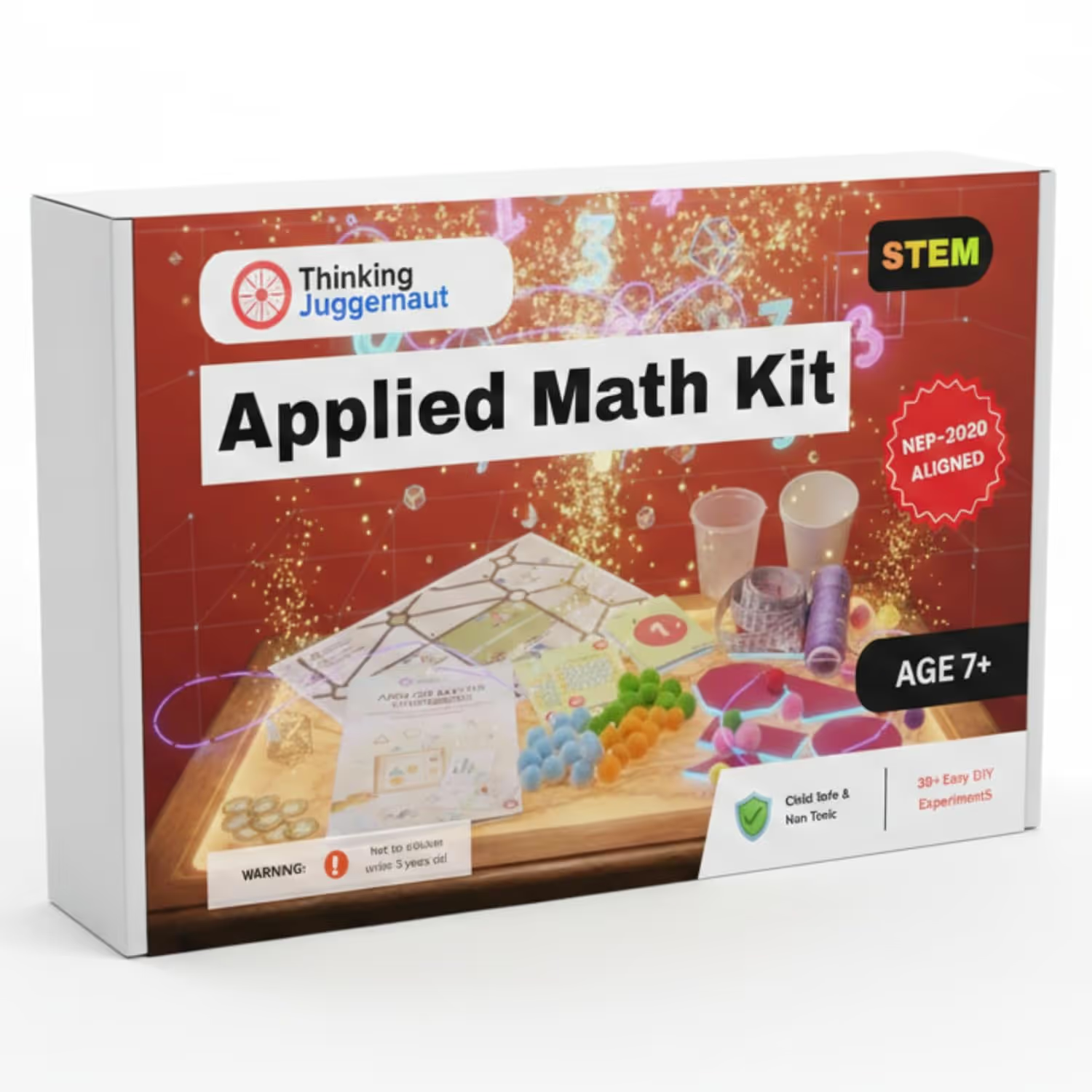
Worksheets build practice. The Applied Maths Project Kit builds understanding covering the same concepts your child is practising here. A hands-on math kit inspired by NEP 2020’s vision of learning mathematics as thinking, connecting, and applying, not just solving equations.