Master addition and subtraction word problems for Class 2 with solved examples, step-by-step methods, and free practice questions. Help your child solve real-life math problems with confidence.
What Are Word Problems?
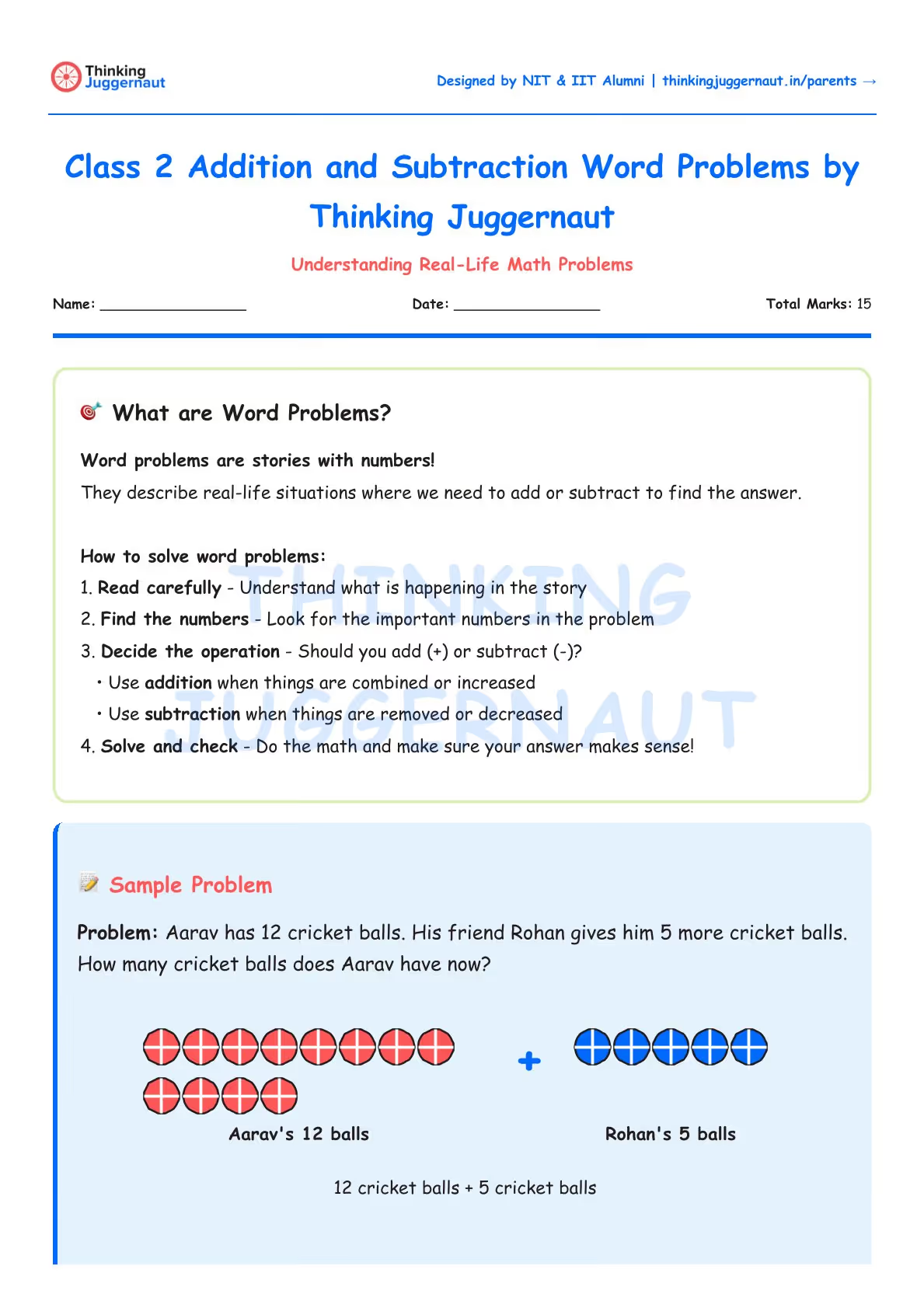
Word problems are stories with numbers. They describe real-life situations where we need to add or subtract to find the answer.
How to Solve Word Problems
Read carefully – Understand what is happening in the story.
Find the numbers – Look for the important numbers in the problem.
Decide the operation – Should you add (+) or subtract (−)? Use addition when things are combined or increased. Use subtraction when things are removed or decreased.
Solve and check – Do the math and make sure your answer makes sense.
Solved Example
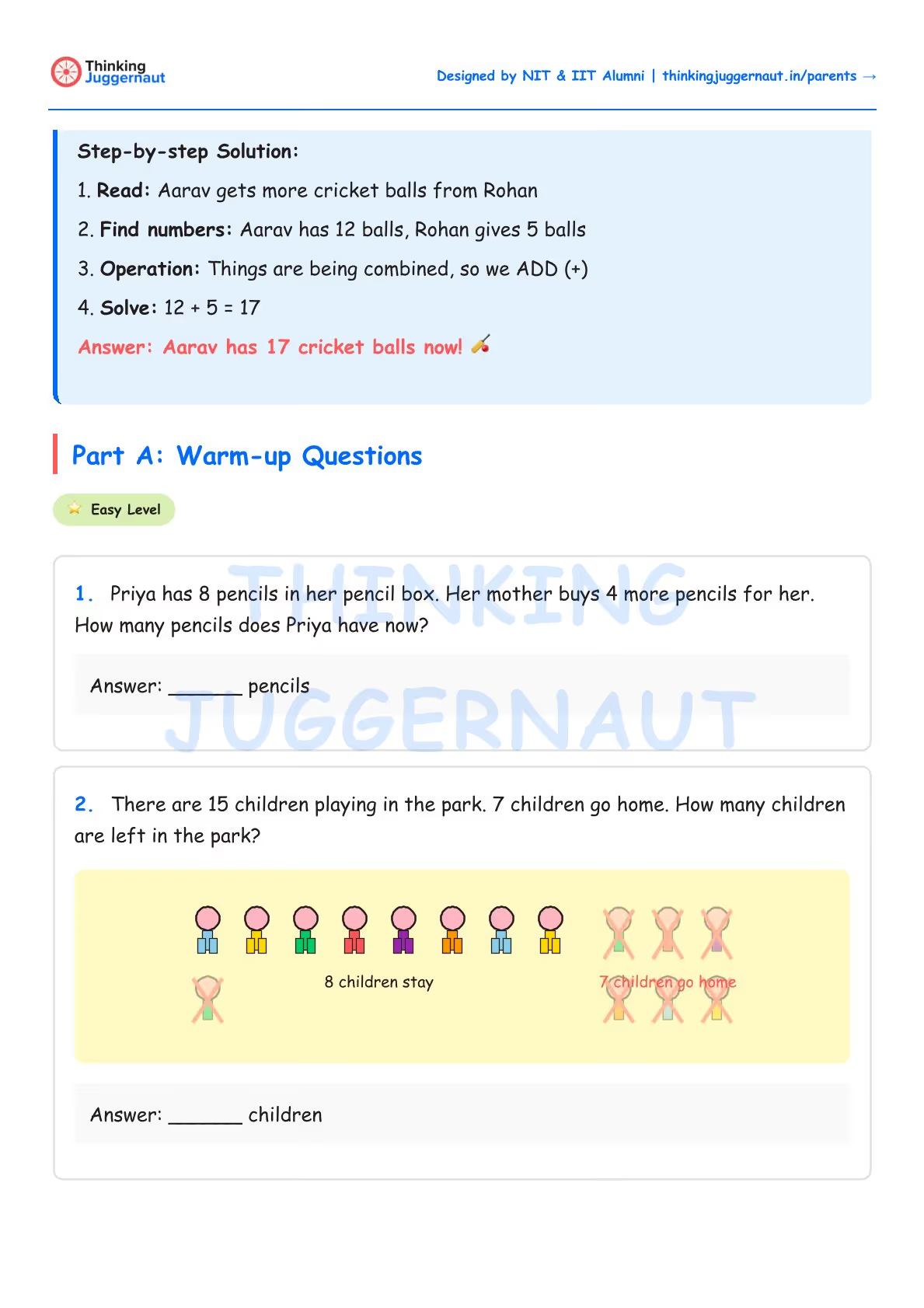
Problem: Aarav has 12 cricket balls. His friend Rohan gives him 5 more. How many cricket balls does Aarav have now?
Step-by-Step Solution
Read: Aarav gets more cricket balls from Rohan.
Find numbers: Aarav has 12 balls. Rohan gives 5 balls.
Operation: Things are being combined, so we ADD (+).
Solve: 12 + 5 = 17
Answer: Aarav has 17 cricket balls now.
Example Problems
Priya has 8 pencils. Her mother buys 4 more. How many does she have now? → Addition
15 children are in the park. 7 go home. How many are left? → Subtraction
Kavya collected 13 seashells on Monday and 8 on Tuesday. How many altogether? → Addition
Sanjay had ₹25. He spent ₹12 on a notebook. How much is left? → Subtraction
A library has 17 books. The librarian adds 9 more. How many now? → Addition
A book fair ran for 3 days. 28, 15, and 19 students bought books each day. How many in total? → Multi-step Addition
Scoring Guide
13–15 marks: Excellent! Try solving more complex problems.
10–12 marks: Very Good! Practice reading word problems more carefully.
7–9 marks: Good Effort! Focus on understanding what the problem is asking before solving.
0–6 marks: Keep Trying! Practice reading problems slowly and identifying key numbers.
Tips for Solving Word Problems
Read twice – Always read the problem at least two times before starting.
Circle the numbers – Underline or circle every number in the problem.
Underline keywords – Look for words like "total," "left," "more," or "gave away."
Draw pictures – Sketch simple visuals to understand the situation better.
Pick the right operation – Addition for combining or increasing. Subtraction for removing or decreasing.
Check your answer – Ask yourself: does this make sense with the story?
Include the unit – Always write the unit with your answer (pencils, rupees, books, etc.).
Ready to Make Maths Hands-On?
Worksheets build practice. The Applied Maths Project Kit builds understanding — 30 real-world math activities covering the same concepts your child is practising here, from multiplication and grouping to measurement and data.