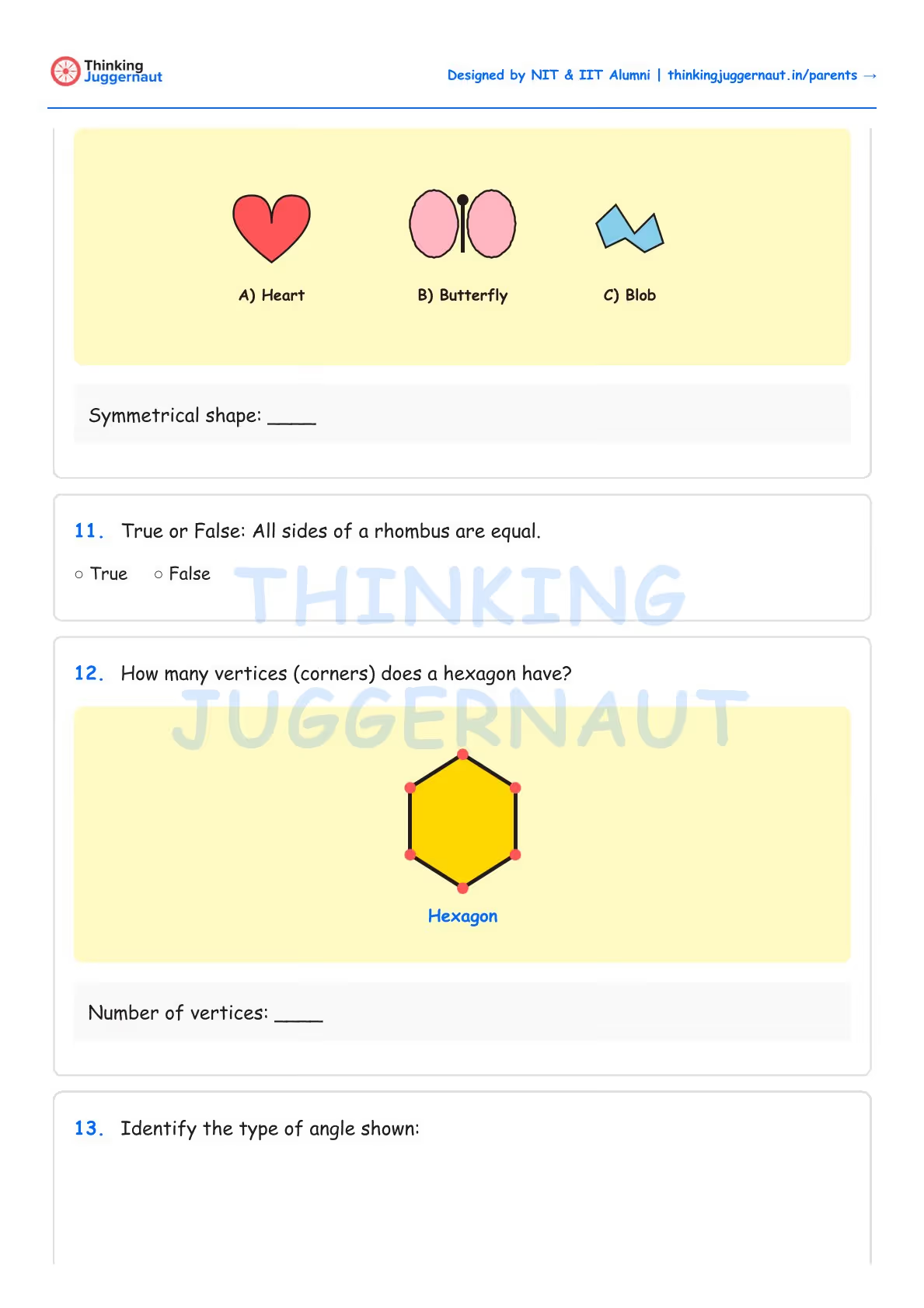
Complete geometry worksheet for Class 3 students. 24 questions across 3 progressive difficulty levels, covering types of lines, angles (acute, right, obtuse), polygons from triangle to hexagon, and symmetry. Questions move from basic identification to real-life observation, pattern recognition, and a draw-your-own symmetry problem. Includes a shape riddle, a clock angle problem, and a hidden triangles challenge. Printable PDF with full answer key and scoring guide, designed by IIT and NIT alumni.
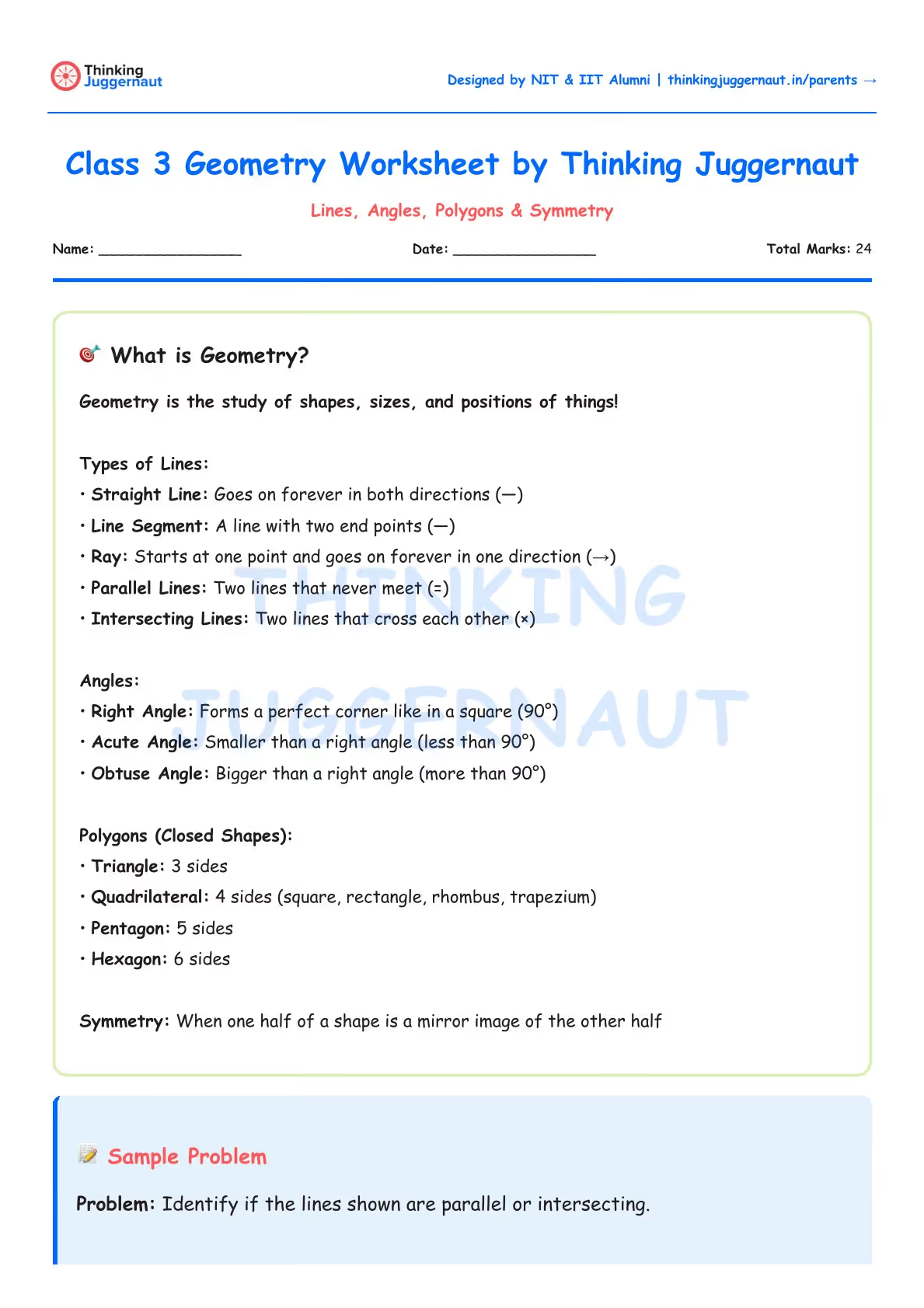
Geometry is the study of shapes, sizes, and positions of things!
Unlike arithmetic, geometry is largely visual — children who engage with shapes around them daily develop geometric intuition naturally, while those who only encounter geometry on paper often find it harder to retain.
At Class 3, geometry covers four interconnected concepts: lines, angles, polygons, and symmetry. Each builds on the previous one — understanding lines is needed to understand angles, understanding angles is needed to classify polygons accurately, and understanding polygons is needed to work with symmetry properly.
Straight Line: Goes on forever in both directions
Line Segment: A line with two end points
Ray: Starts at one point and goes on forever in one direction
Parallel Lines: Two lines that never meet
Intersecting Lines: Two lines that cross each other
Right Angle: Forms a perfect corner like in a square (90°)
Acute Angle: Smaller than a right angle (less than 90°)
Obtuse Angle: Bigger than a right angle (more than 90°)
Triangle: 3 sides
Quadrilateral: 4 sides (square, rectangle, rhombus, trapezium)
Pentagon: 5 sides
Hexagon: 6 sides
Symmetry: When one half of a shape is a mirror image of the other half
Problem: Identify if the lines shown are parallel or intersecting.
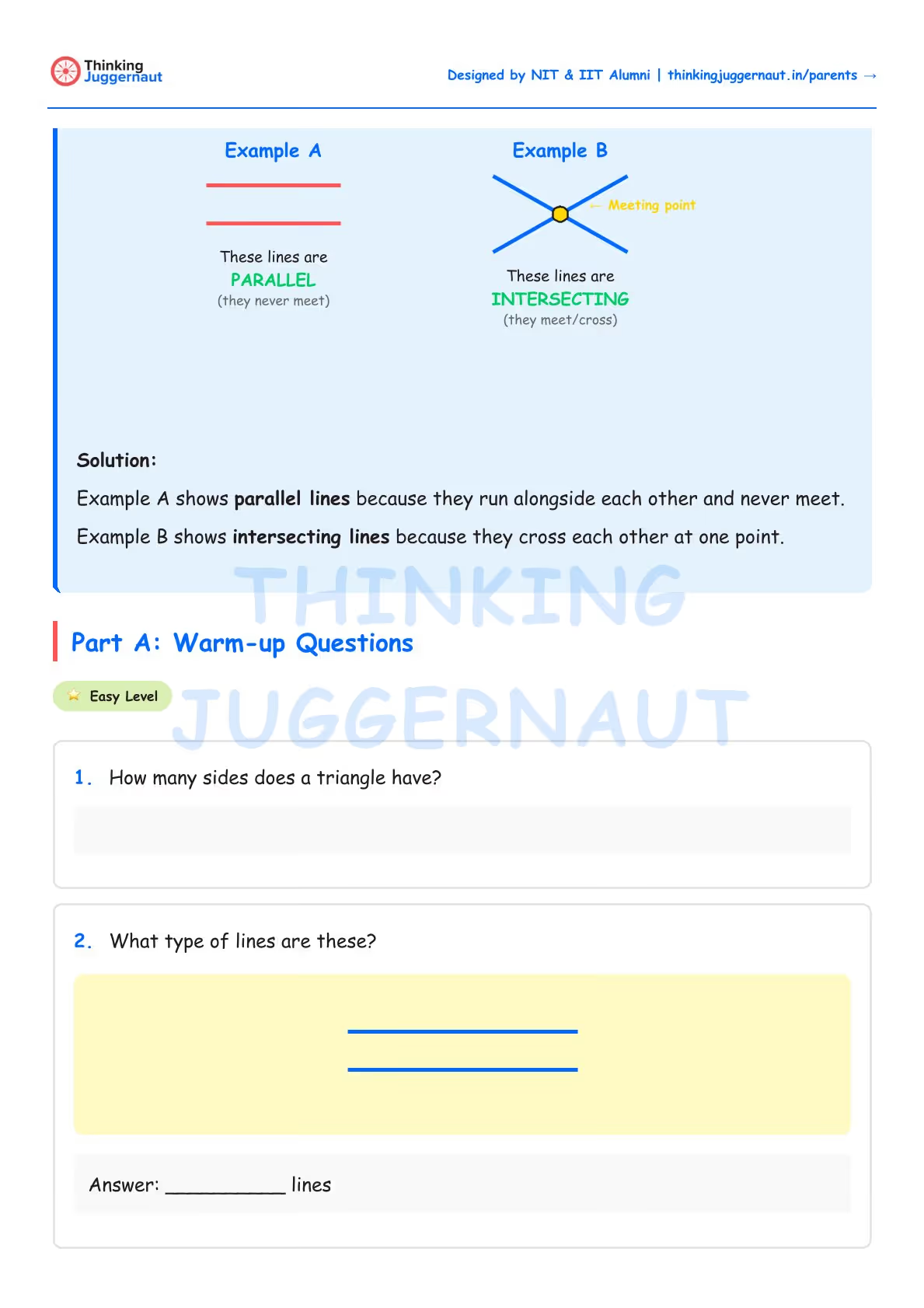
Solution:
Example A shows parallel lines because they run alongside each other and never meet.
Example B shows intersecting lines because they cross each other at one point.
What type of lines are these?
Match the angles with their types (Acute, Right, Obtuse)
Which of these shapes is symmetrical? (Heart, Butterfly, Blob)
Which letter of the English alphabet has a vertical line of symmetry? (A, F, Z)
A clock shows 3:00. What type of angle do the hour and minute hands make?
How many triangles can you find in this figure?
Solve the riddle: I am a polygon with 4 sides. All my sides are equal in length. All my angles are right angles. What shape am I?
Real-life Geometry! Find one object with parallel lines, one object shaped like a rectangle, one object that shows symmetry, and one object with a right angle.
20-24 correct: Excellent! Outstanding performance! Start learning about perimeter and area, explore more complex polygons (heptagon, octagon), practice measuring angles with a protractor, and learn about 3D shapes.
15-19 correct: Very Good! Great job! Review the properties of different angles and polygons. Practice identifying symmetry in everyday objects. Draw more geometric shapes to improve accuracy.
10-14 correct: Good Effort! Good start! Work on understanding the difference between parallel and intersecting lines. Learn the properties of basic polygons. Practice recognizing right angles in your surroundings. Draw lines and shapes daily.
0-9 correct: Keep Trying! Don't give up! Learn one concept at a time starting with lines and angles. Use a ruler to draw straight lines. Look for shapes in your environment. Practice identifying corners and sides of shapes.
Learn the difference between line, line segment, and ray. Practice drawing them with a ruler.
Understand angles: Right angle = 90° (like the corner of a book), Acute angle = less than 90°, Obtuse angle = more than 90°
Remember that polygons are closed shapes. Count their sides: Triangle (3), Quadrilateral (4), Pentagon (5), Hexagon (6)
Test for symmetry by imagining folding a shape in half. If both halves match perfectly, it's symmetrical!
Find geometric shapes in your daily life: parallel lines on railway tracks, rectangles in doors and windows
Practice drawing different shapes, angles, and patterns every day
Learn the family of 4-sided shapes: Square (4 equal sides, 4 right angles), Rectangle (opposite sides equal), Rhombus (4 equal sides), Parallelogram (opposite sides parallel)
The last question in this worksheet (Q24) asks children to find real objects with parallel lines, rectangle shapes, symmetry, and right angles in their surroundings. This is deliberate — geometry is one of the few Class 3 topics where the entire world outside the classroom is a practice resource.
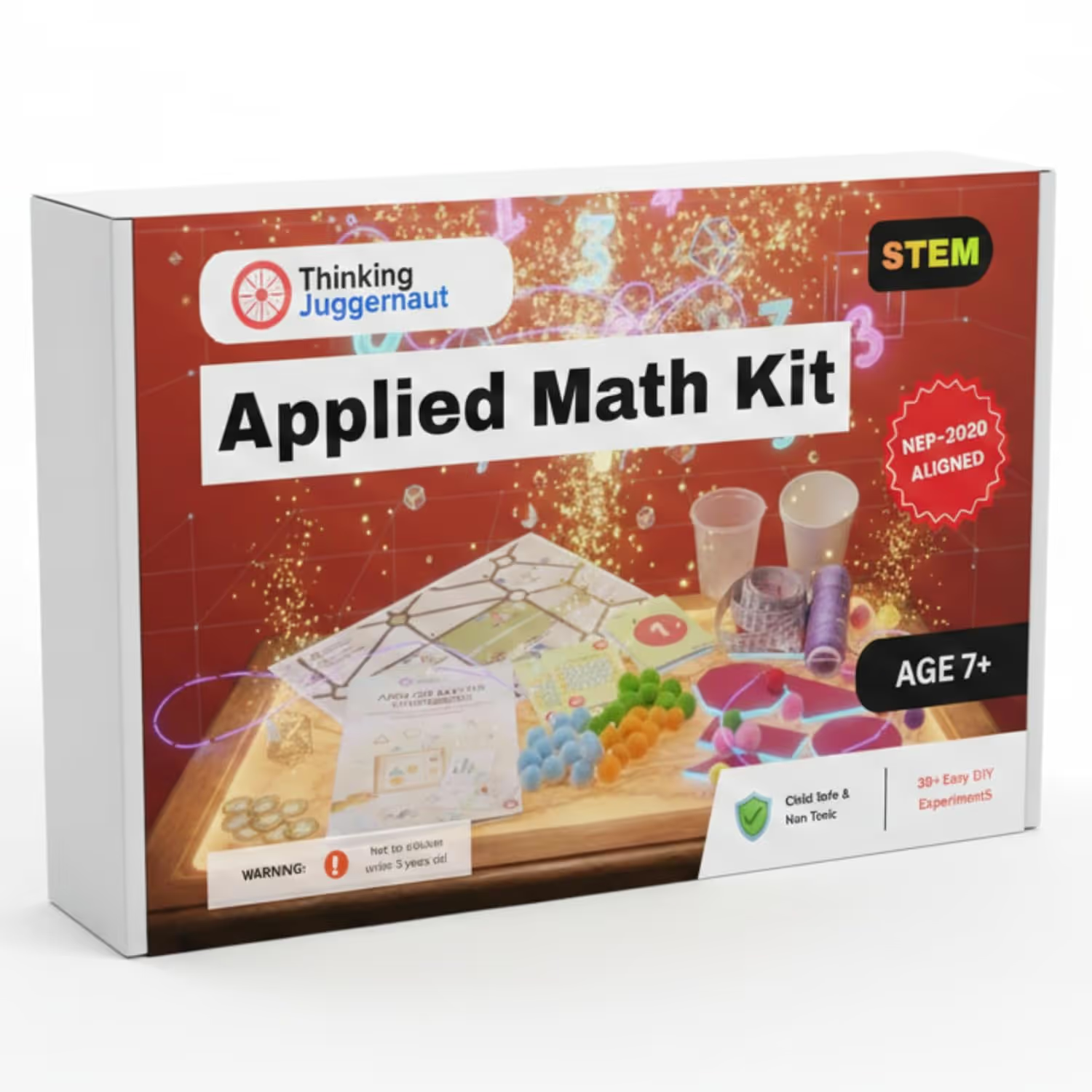
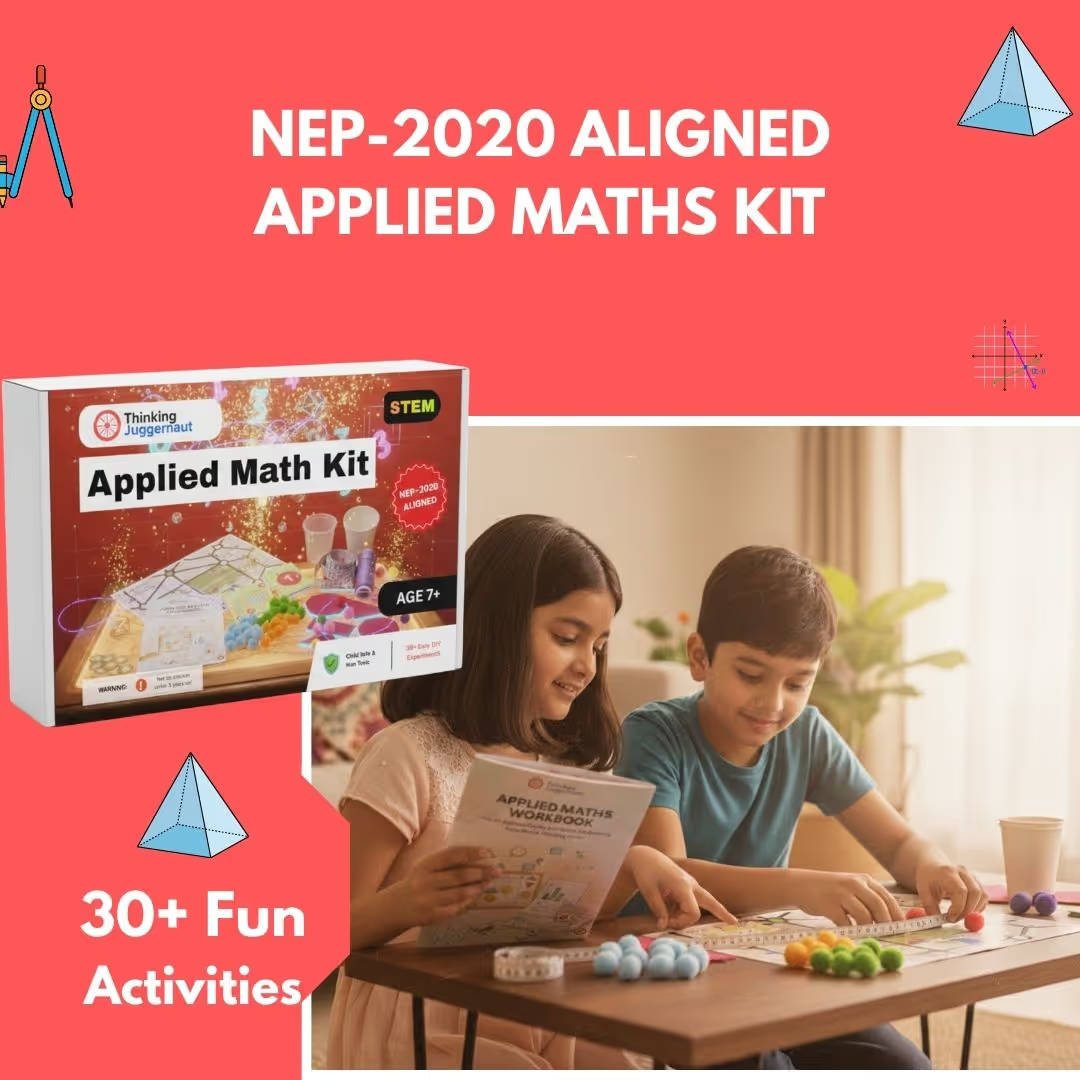
The Applied Maths Project Kit by Thinking Juggernaut includes activities where children measure, map, and explore shapes in real contexts — the same spatial thinking this worksheet builds, applied to actual hands-on challenges.
Download the complete worksheet here. The PDF includes all 24 questions across 3 difficulty levels, visual diagrams for every line and angle problem, a draw-your-own symmetry question, a shape riddle, and a full answer key including sample answers for the real-world geometry observation task.
What geometry topics are taught in Class 3?
Class 3 geometry covers four main areas: types of lines (straight, line segment, ray, parallel, intersecting), types of angles (right, acute, obtuse), polygons up to hexagon including the quadrilateral family (square, rectangle, rhombus, parallelogram, trapezium), and symmetry including lines of symmetry in shapes and letters. This worksheet covers all four areas progressively, with the harder questions combining concepts — like the clock angle problem and the shape riddle that requires knowing both side and angle properties.
What is the difference between a square and a rhombus?
Both have four equal sides — that property alone does not distinguish them. The difference is in the angles: a square has four right angles (90° at every corner), while a rhombus has angles that are not 90°. A square is essentially a special rhombus where all angles happen to be right angles. Children who know only the "four equal sides" property will confuse the two — the angle condition is what separates them, and this is tested directly in Q11 and Q23.
How do you test if a shape is symmetrical?
Imagine folding the shape along a proposed line of symmetry. If both halves align perfectly — every edge, curve, and corner matching its counterpart — the shape is symmetrical and that line is a line of symmetry. If the halves do not match, the line is not a line of symmetry, or the shape is not symmetrical at all. Physically cutting out shapes and folding them is the most reliable way to test symmetry for children who find the imagined fold difficult.
Why does a clock at 3:00 show a right angle?
At 3:00, the minute hand points straight up to 12, and the hour hand points directly to the right toward 3. The angle between a straight-up direction and a straight-right direction is exactly 90° — a right angle. This is one of the clearest real-world examples of a right angle because the clock face makes the two rays (the hands) and the vertex (the centre) immediately visible. Other clock positions produce acute angles (1:00, 2:00) or obtuse angles (4:00, 5:00).
Is this worksheet suitable for CBSE Class 3 students?
Yes. The content covers lines, angles, 2D shapes, and symmetry as prescribed in the Class 3 maths syllabus followed by CBSE and most boards. The worksheet also includes a real-world observation task (Q24) which aligns with NEP-2020's emphasis on connecting classroom concepts to the environment. The progressive structure makes it useful for standard practice, pre-assessment, or post-chapter revision.
Worksheets build practice. The Applied Maths Project Kit builds understanding — 30 real-world math activities covering the same concepts your child is practising here, from multiplication and grouping to measurement and data.
Designed by IIT & NIT Alumni · NEP-2020 aligned · Trusted by parents across India
Class 3 Multiplication Word Problems
Class 3 Division Word Problems
Not in Class 3?
Visit our Main Math Worksheet Hub to explore all printable worksheets from Class 2 to Class 8.
Almost there!
We will confirm your order on WhatsApp
Order placed!
Thank you! You will receive a WhatsApp confirmation shortly.