Every time you split a pizza equally, divide pocket money among friends, or pack items into equal boxes — you are dividing. Division is one of the most used maths skills in daily life, and Class 4 is where it gets serious. This worksheet takes students from basic division facts all the way to long division with remainders — the method that forms the foundation for everything that comes next, including fractions, decimals, and algebra. Download the free PDF with a full answer key below, or work through the solved examples on this page before you begin.
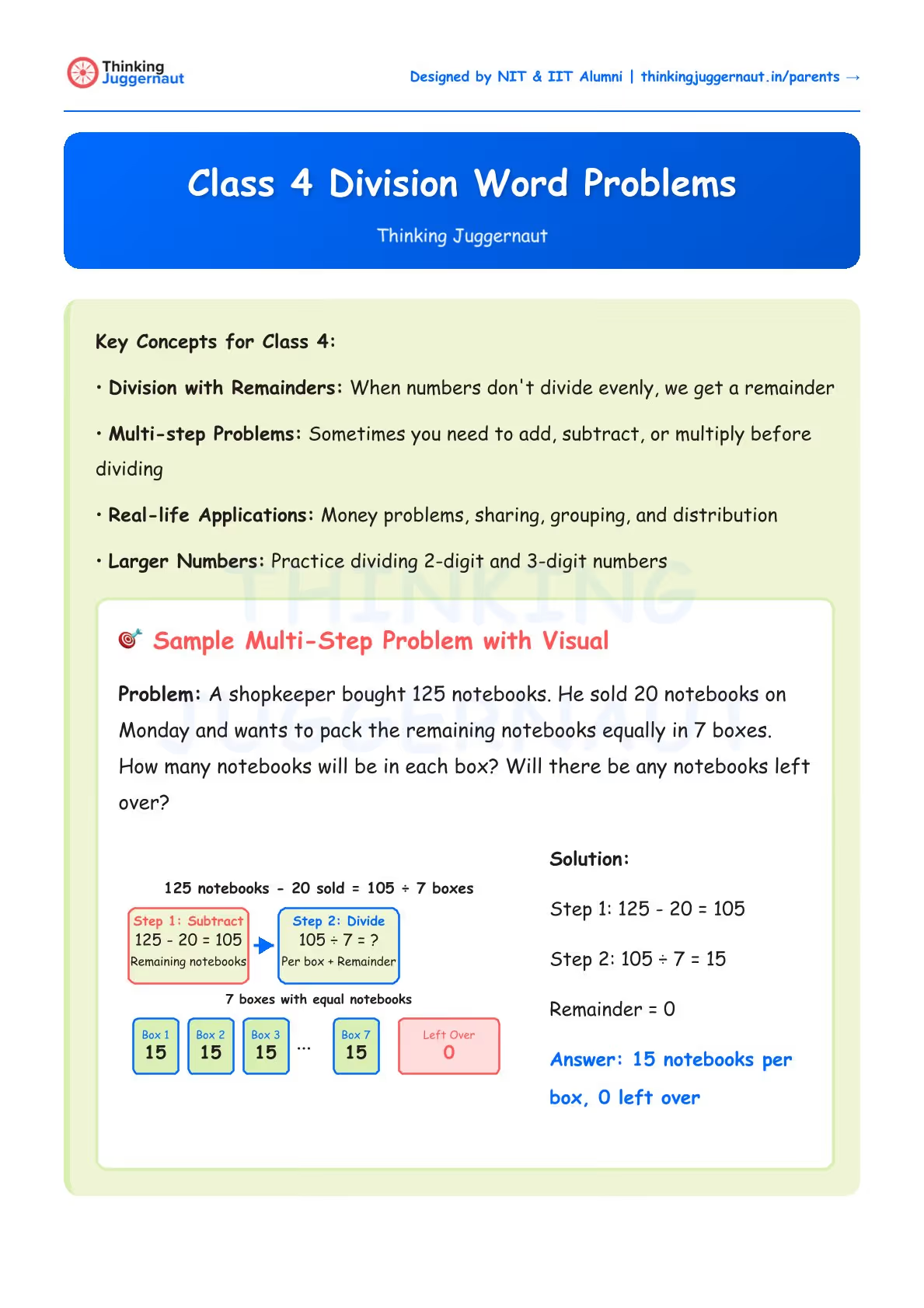
Division with Remainders: When numbers don't divide evenly, we get a remainder
Multi-step Problems: Sometimes you need to add, subtract, or multiply before dividing
Real-life Applications: Money problems, sharing, grouping, and distribution
Larger Numbers: Practice dividing 2-digit and 3-digit numbers
Problem: A shopkeeper bought 125 notebooks. He sold 20 notebooks on Monday and wants to pack the remaining notebooks equally in 7 boxes. How many notebooks will be in each box? Will there be any notebooks left over?
Solution:
Step 1: 125 - 20 = 105 (remaining notebooks)
Step 2: 105 ÷ 7 = 15 (notebooks per box)
Remainder = 0
Answer: 15 notebooks per box, 0 left over
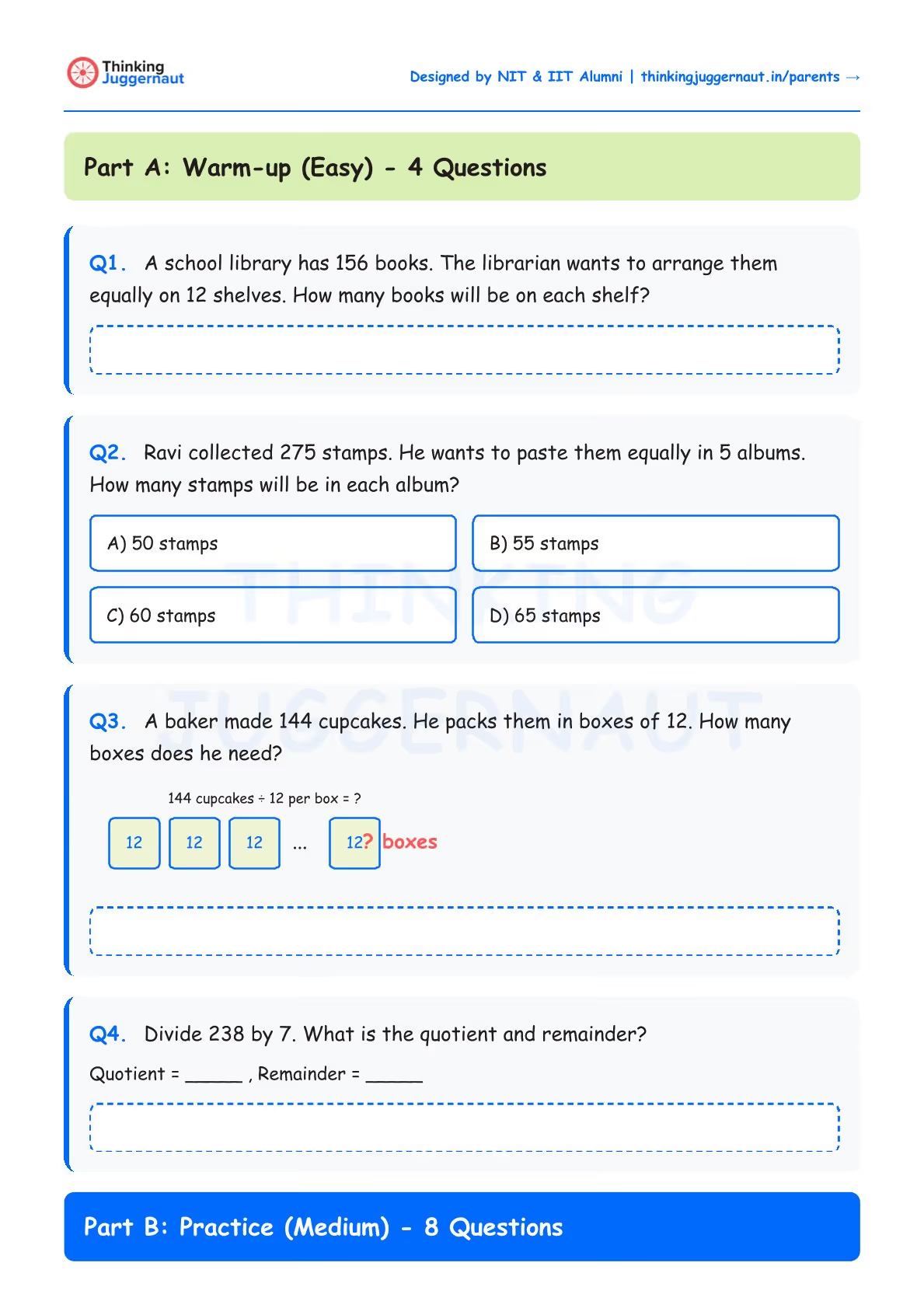
A school library has 156 books. The librarian wants to arrange them equally on 12 shelves. How many books will be on each shelf?
A baker made 144 cupcakes. He packs them in boxes of 12. How many boxes does he need?
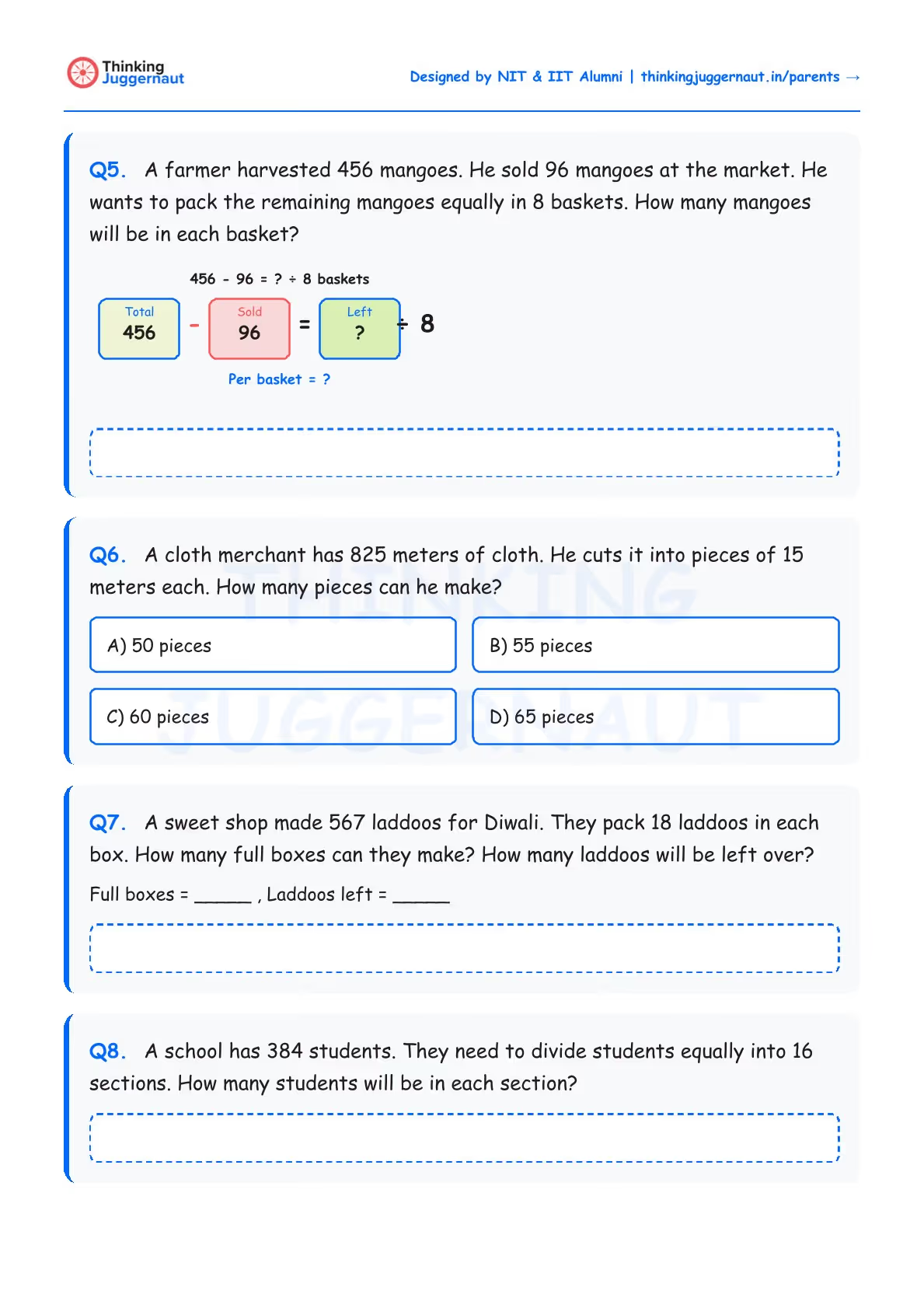
A farmer harvested 456 mangoes. He sold 96 mangoes at the market. He wants to pack the remaining mangoes equally in 8 baskets. How many mangoes will be in each basket?
A sweet shop made 567 laddoos for Diwali. They pack 18 laddoos in each box. How many full boxes can they make? How many laddoos will be left over?
Meera saved ₹945 in her piggy bank. She wants to buy notebooks that cost ₹21 each. How many notebooks can she buy? How much money will be left?
A bookstore received 855 books. The owner wants to display them on shelves with 19 books on each shelf. How many shelves will be completely filled? How many books will remain?
A vegetable vendor bought 1,536 tomatoes. He sold 288 tomatoes in the morning and 360 tomatoes in the afternoon. He packed the remaining tomatoes equally in 24 crates. How many tomatoes are in each crate?
A construction company has 1,875 bricks. They used 315 bricks for building a wall. The remaining bricks are to be loaded equally on 12 trucks. How many bricks will each truck carry? If each brick weighs 3 kg, what is the total weight of bricks on one truck?
13-15 correct: Excellent! You've mastered Class 4 division. Try Class 5 word problems for more challenge.
10-12 correct: Very Good! Focus on multi-step problems. Practice: Subtract/Add first, then divide. Double-check remainders.
7-9 correct: Good Progress! Work on long division practice (3-digit ÷ 2-digit), write all steps clearly, and verify answers by multiplying back.
Below 7: Keep Practicing! Master division tables first (up to 12×12). Practice simple division (2-digit ÷ 1-digit) daily. Ask teacher to explain remainders again.
Always write the problem in steps - don't try to solve everything at once
For remainders, check if quotient × divisor + remainder = dividend
Keywords: "equally", "each group", "distribute", "share" usually mean division
For multi-step problems, decide the order: usually subtract/add first, then divide
Draw diagrams or boxes to visualize how items are being grouped
Check if your answer makes sense: Can 7 boxes really hold 100+ notebooks each?
When there's a remainder, decide what it means: leftover items, need an extra box, etc.
Practice long division format to organize your work clearly
This worksheet covers:
Download Class 4 Division Worksheet
What is long division and why does Class 4 learn it?
Long division is a step-by-step method — Divide, Multiply, Subtract, Bring down — for dividing larger numbers that cannot be solved mentally. Class 4 is when CBSE and NCERT introduce this method as students move from single-digit to multi-digit division.
What is a remainder in division?
A remainder is what is left over when a number cannot be divided exactly. For example, 37 ÷ 5 = 7 remainder 2, because 5 × 7 = 35, and 37 − 35 = 2.
How do I verify a division answer?
Use the division formula: (Divisor × Quotient) + Remainder = Dividend. If the result matches the original number, the answer is correct.
What multiplication tables should a Class 4 student know before attempting long division?
Tables from 2 to 12 are essential. Strong recall of multiplication facts makes each step of long division significantly faster and more accurate.
What comes after long division in Class 5?
In Class 5, students apply division to decimals and larger numbers. They also encounter division within fractions and more complex multi-step word problems.
Is this worksheet aligned with the CBSE Class 4 syllabus?
Yes. The worksheet covers all division topics in the NCERT Class 4 Mathematics syllabus, including long division, remainders, verification, and word problems.
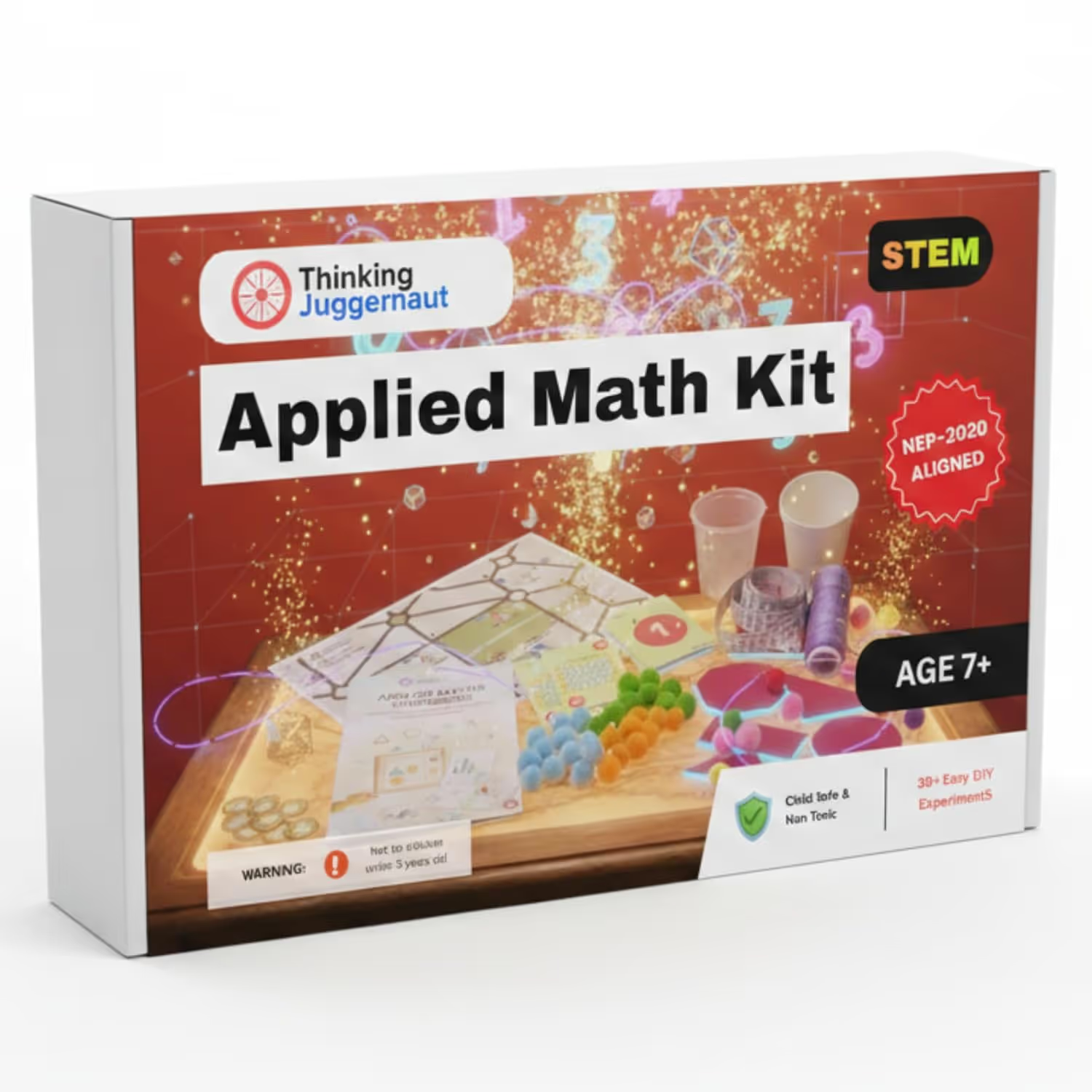
Worksheets build practice. The Applied Maths Project Kit builds understanding — 30 real-world math activities covering the same concepts your child is practising here, from multiplication and grouping to measurement and data.

Designed by IIT & NIT Alumni · NEP-2020 aligned · Trusted by parents across India
Not in Class 4?
Visit our Main Math Worksheet Hub to explore all printable worksheets from Class 2 to Class 8.
Almost there!
We will confirm your order on WhatsApp
Order placed!
Thank you! You will receive a WhatsApp confirmation shortly.