Class 4 Maths Perimeter and Area Worksheet: Printable PDF with Answers
Perimeter and area are two of the rare maths topics where you can walk outside and immediately point to both. The boundary of your school ground — that is perimeter. The floor space inside your classroom — that is area. One is a length, the other is a surface. They use different formulas, different units, and answer completely different questions. Yet they are almost always tested together, and almost always confused.
This worksheet straightens that out — 24 problems covering rectangles, squares, word problems, cost calculations, and reverse problems where you work backwards from the answer. Full answer key included, free to download.
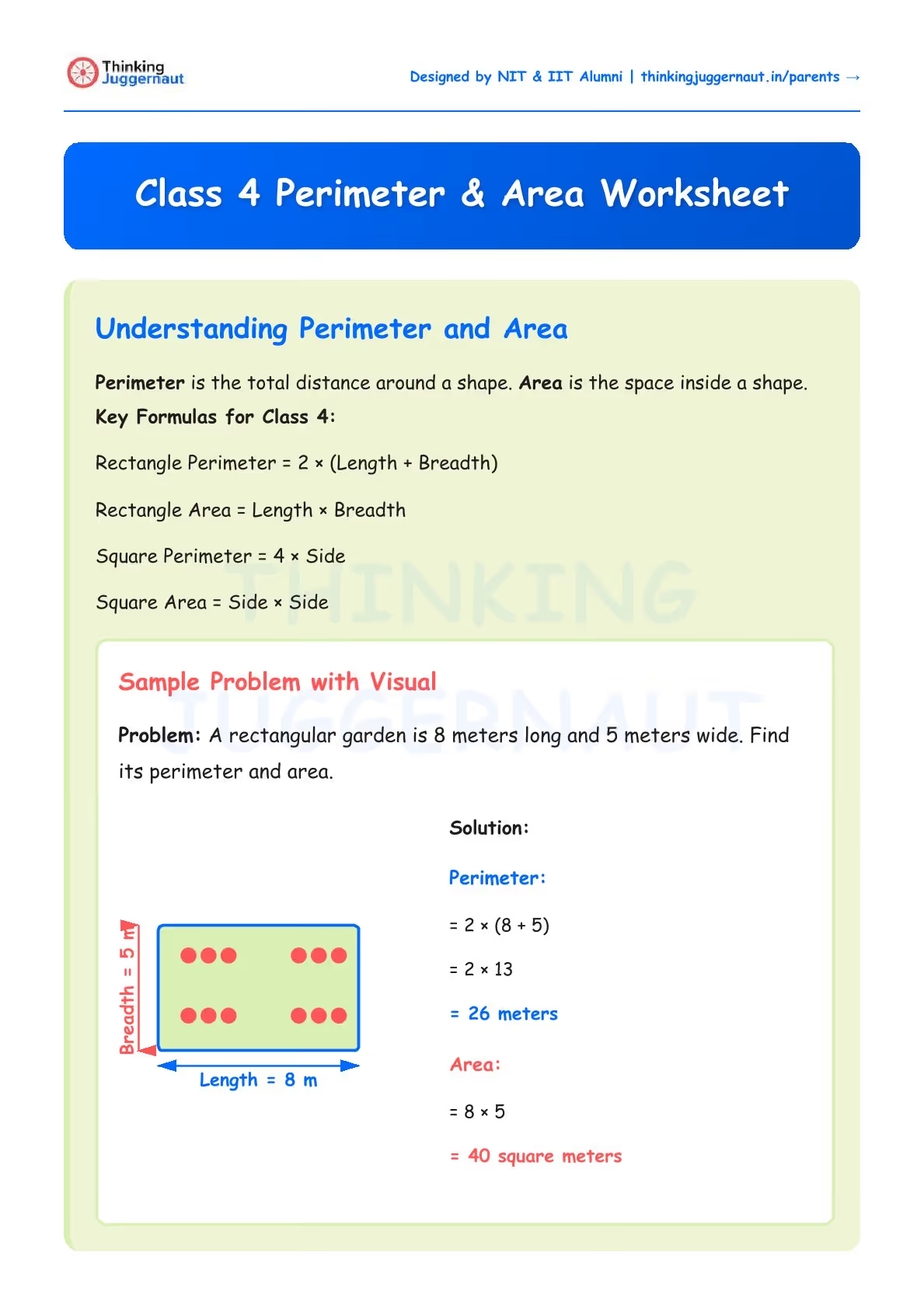
Perimeter is the total distance around the outside of a shape. Think of it as walking around the boundary of a garden or playground.
Area is the amount of space inside a shape. Think of it as the carpet needed to cover a floor or paint needed to cover a wall.
Key Formulas for Class 4:
Rectangle Formulas:
Perimeter = 2 × (Length + Breadth)
Area = Length × Breadth
Square Formulas:
Perimeter = 4 × Side
Area = Side × Side
Important Units:
Perimeter is measured in: cm, m, km (length units)
Area is measured in: sq cm, sq m, sq km (square units)
Solved Example: Step by Step
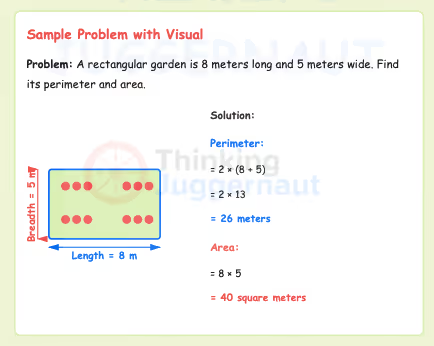
Problem: A rectangular garden is 8 meters long and 5 meters wide. Find its perimeter and area.
Solution:
Step 1 - Find Perimeter:
Formula: Perimeter = 2 × (Length + Breadth)
= 2 × (8 + 5)
= 2 × 13
= 26 meters
Step 2 - Find Area:
Formula: Area = Length × Breadth
= 8 × 5
= 40 square meters
Answer: Perimeter is 26 meters and Area is 40 square meters.
Worksheet Problem Types
This PDF includes varied question formats:
Basic Calculations: Find perimeter of rectangle with length 10 cm and breadth 6 cm
Square Problems: Find area of a square with side 7 cm
Fill in the Blanks: Area of rectangle = Length × _____
True/False: The perimeter of a square with side 5 cm is 20 cm
Word Problems: A rectangular classroom is 8 meters long and 6 meters wide. How many square meters of carpet is needed?
Cost Calculations: Find the cost of fencing a park at Rs 15 per meter
Reverse Calculations: If a square has perimeter 24 cm, what is the length of one side?
Challenge Problems: A square and rectangle have the same perimeter - which has larger area?
Common Mistakes & Learning Tips
Frequent Errors to Avoid:
Mixing Up Perimeter and Area: Perimeter adds all sides, area multiplies length and width. Remember: perimeter is the fence around a garden, area is the grass inside.
Wrong Units: Using 'cm' for area instead of 'sq cm'. Area always needs square units (sq cm, sq m).
Forgetting to Multiply by 2: In rectangle perimeter formula, students often forget the "2 ×" part. Rectangle perimeter = 2 × (L + B), not just (L + B).
Adding Instead of Multiplying for Area: Area is Length × Breadth, not Length + Breadth.
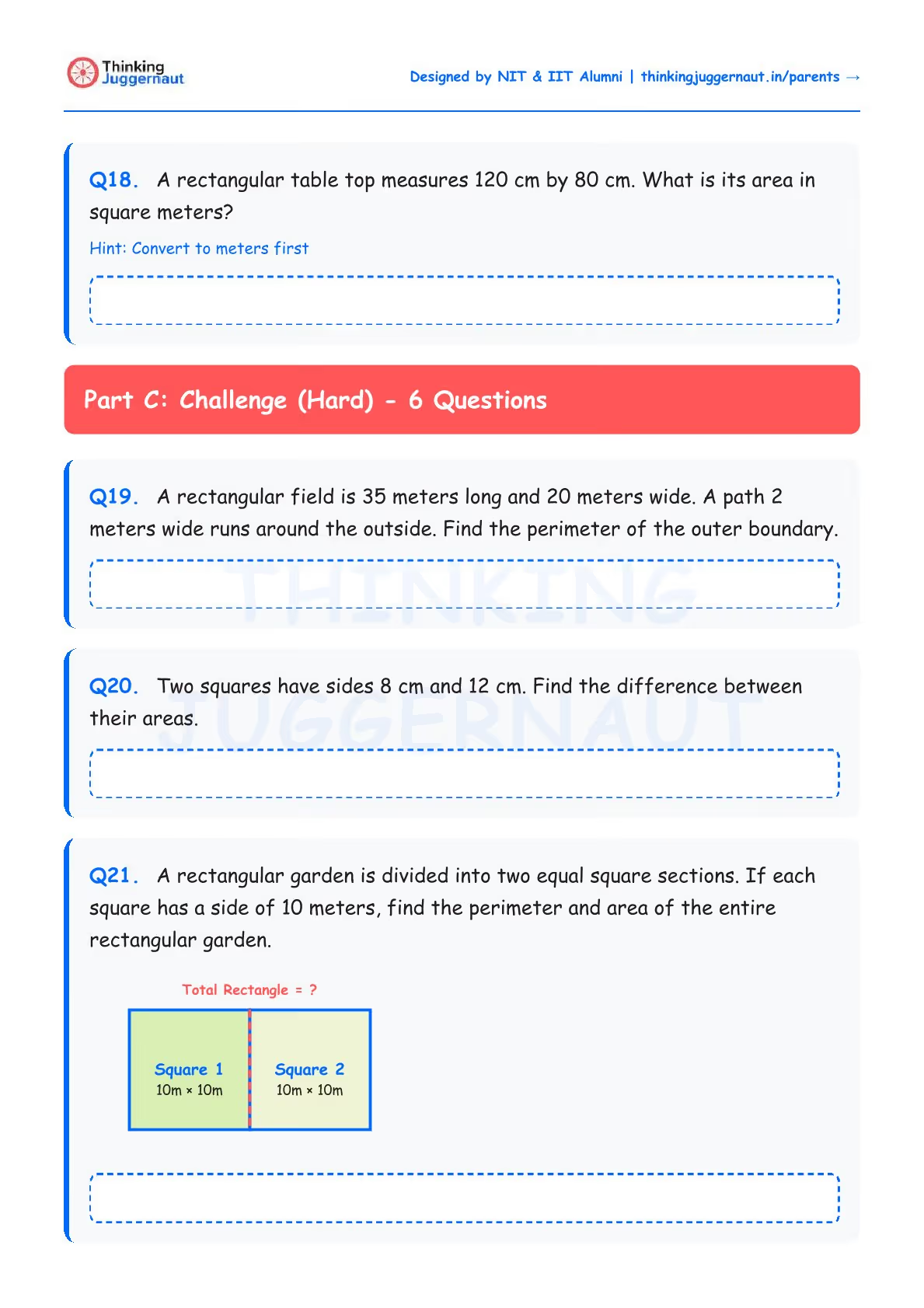
Not Converting Units: When asked for area in square meters but dimensions given in centimeters, always convert first.
5 Essential Tips for Mastery:
Draw the Shape: Always draw a diagram and label all sides with their measurements. Visual representation prevents confusion between length and breadth.
Remember the Key Difference: Perimeter is a LINE (measured in cm, m), Area is a SURFACE (measured in sq cm, sq m). If you're counting squares inside, it's area. If you're walking around the edge, it's perimeter.
Square is Special: For squares, all four sides are equal, so Perimeter = 4 × Side is much quicker than adding all four sides separately.
Check Your Units: Perimeter uses single units (cm, m), Area uses square units (sq cm, sq m). Wrong units = wrong answer, even if the number is correct.
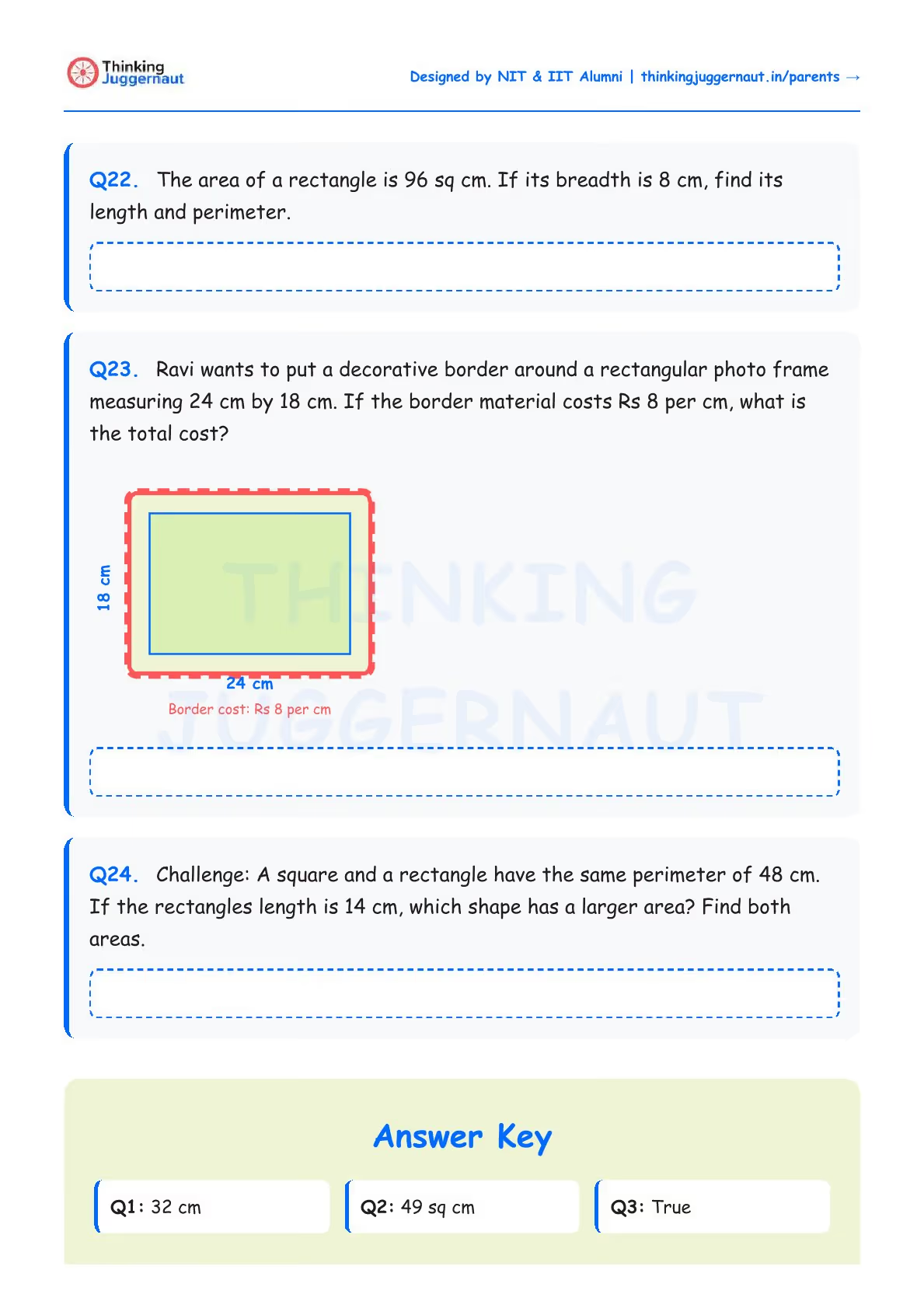
Use Real-Life Examples: Practice with objects around you - find the perimeter of your notebook, area of your room floor, or perimeter of a photo frame. Real-world practice makes formulas stick.
Assessment Guide
Total Questions: 24 | Total Marks: 24
Score: 22–24 (Outstanding! 🌟)
Mastery Level: Complete understanding of perimeter and area
Next Step: Try problems with composite shapes or Class 5 concepts
Score: 18–21 (Excellent! ⭐)
Strong Understanding: Solid grasp of both concepts
Next Step: Focus on word problems and unit conversion challenges
Score: 14–17 (Very Good! ✓)
Good Foundation: Core formulas understood
Next Step: Practice more rectangle and square problems, review formula application
Score: 10–13 (Good Effort! 💪)
Developing Skills: Basic concepts in place, needs reinforcement
Next Step: Memorize formulas, practice with visual diagrams
Score: Below 10 (Keep Practicing! 📚)
Building Foundation: More practice needed on fundamentals
Next Step: Review difference between perimeter and area, practice basic problems daily with drawings
Download Your Class 4 Perimeter and Area Worksheet — Free PDF with Answer Key
This worksheet covers:
Perimeter of rectangles and squares using formulas
Area of rectangles and squares using formulas
Fill-in-the-blank and true/false questions
Word problems — gardens, classrooms, playgrounds
Cost-based problems — fencing and flooring at a given rate per metre
Reverse problems — finding a missing side from perimeter or area
Challenge problems comparing shapes with equal perimeters
Full answer key on the last page
24 questions | 24 marks | Printable, A4 size | No sign-up needed
What is the difference between perimeter and area in simple terms?
Perimeter is the total length around the outside of a shape. Area is the total space inside it. Perimeter is measured in units like cm or m. Area is measured in square units like sq cm or sq m.
Why do we write sq cm for area but just cm for perimeter?
Because perimeter is a single line measured end to end, like a piece of string. Area covers a flat surface, so the unit is multiplied by itself — cm × cm = sq cm. Using the wrong unit in an answer is treated as an error even if the number is right.
How do I find the side of a square if only the perimeter is given?
Divide the perimeter by 4. Since all four sides of a square are equal, the perimeter is 4 × side — so side = perimeter ÷ 4. For example, if the perimeter is 24 cm, each side is 24 ÷ 4 = 6 cm.
My child keeps using the wrong formula for perimeter and area. What helps?
Tie each formula to a real action. Perimeter = walking around the edge — so add all sides. Area = covering the inside — so multiply length by breadth. Acting it out physically, even once, tends to fix the confusion permanently.
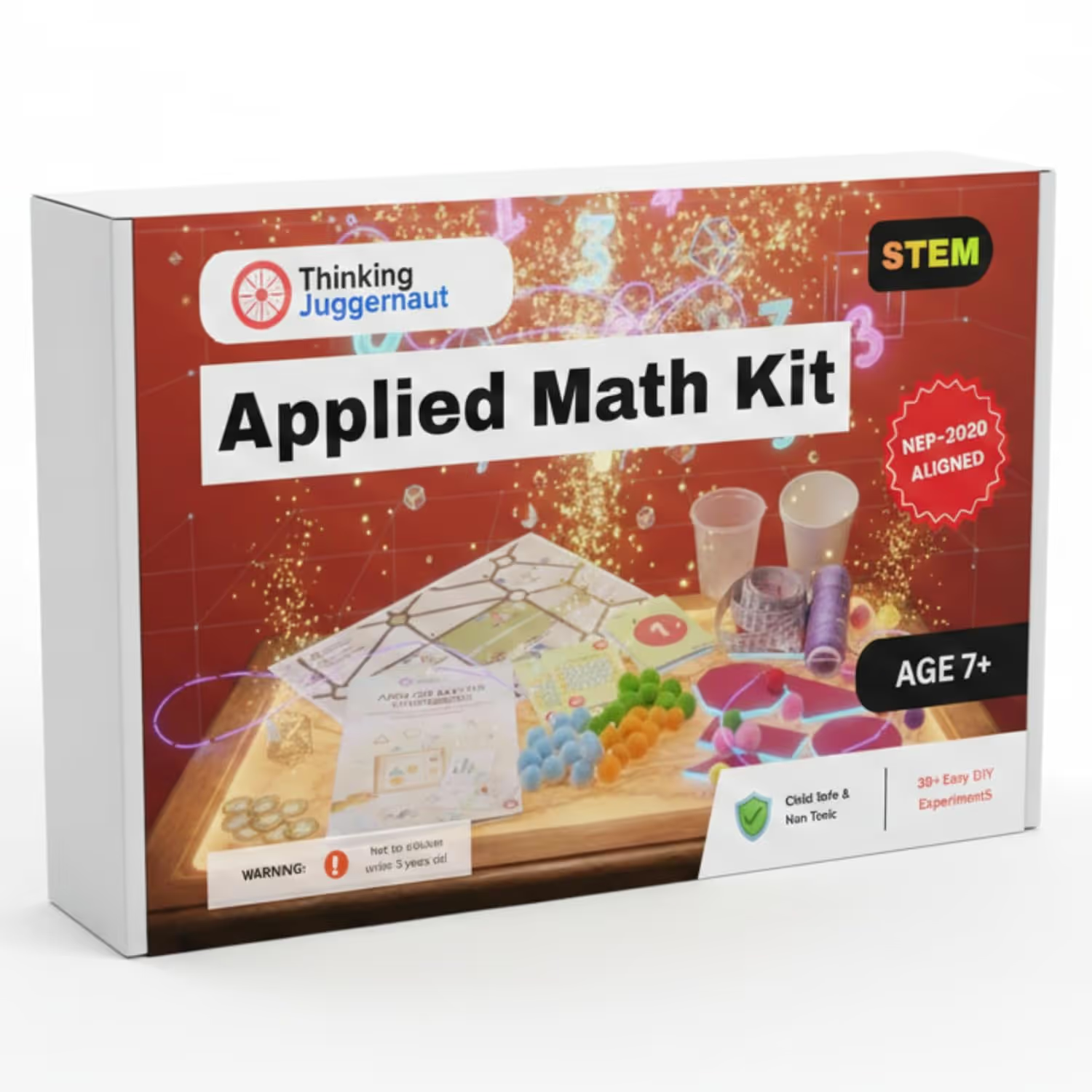
Ready to Make Maths Hands-On?
Worksheets build practice. The Applied Maths Project Kit builds understanding covering the same concepts your child is practising here. A hands-on math kit inspired by NEP 2020’s vision of learning mathematics as thinking, connecting, and applying, not just solving equations.