Class 4 Division: Long Division & Verification Worksheet
Long division looks intimidating the first time — a bracket, a line, digits going in and coming out in a specific order. But once the method clicks, it becomes one of the most satisfying things in Class 4 maths. There is a clear process, a way to check your own answer, and a right-or-wrong outcome with no ambiguity.
This worksheet builds that confidence step by step: from basic division facts to long division with remainders, from fill-in-the-blank to multi-step word problems involving factories, farmers, and shopkeepers. 24 questions, answer key on the last page, free to download.
Preview problem types included in the printable PDF:
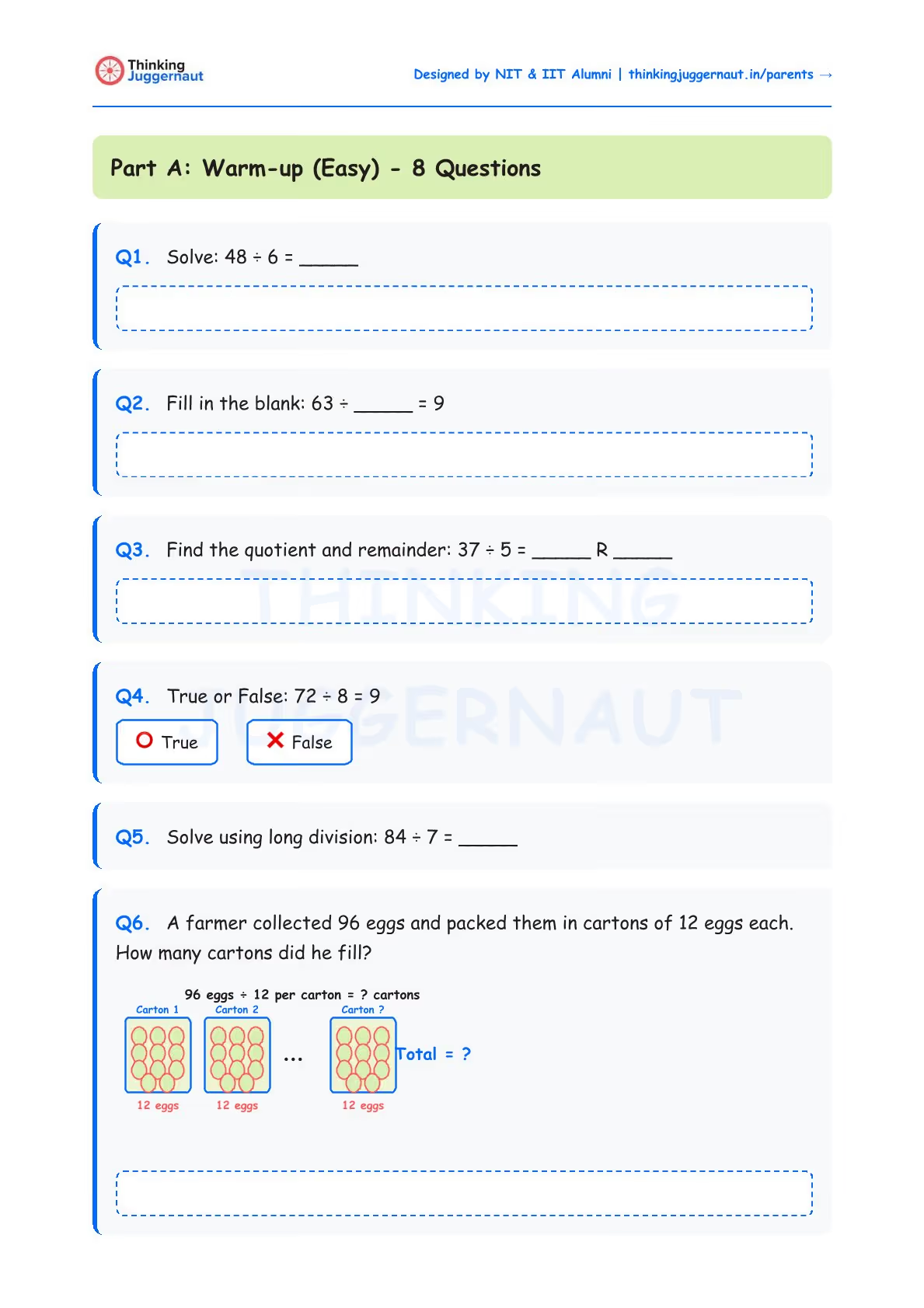
Basic Division: Solve 48 ÷ 6 = ____
Division with Remainders: Find quotient and remainder for 37 ÷ 5 = ____ R ____
Fill in the Blank: 63 ÷ ____ = 9
Word Problem with Visual: A farmer has 96 eggs and packs them in cartons of 12 each. How many cartons does he fill?
Multi-Step Challenge: A sweet shop has 864 laddoos packed in boxes of 24 each. After filling all boxes, if 3 are sold, how many remain?
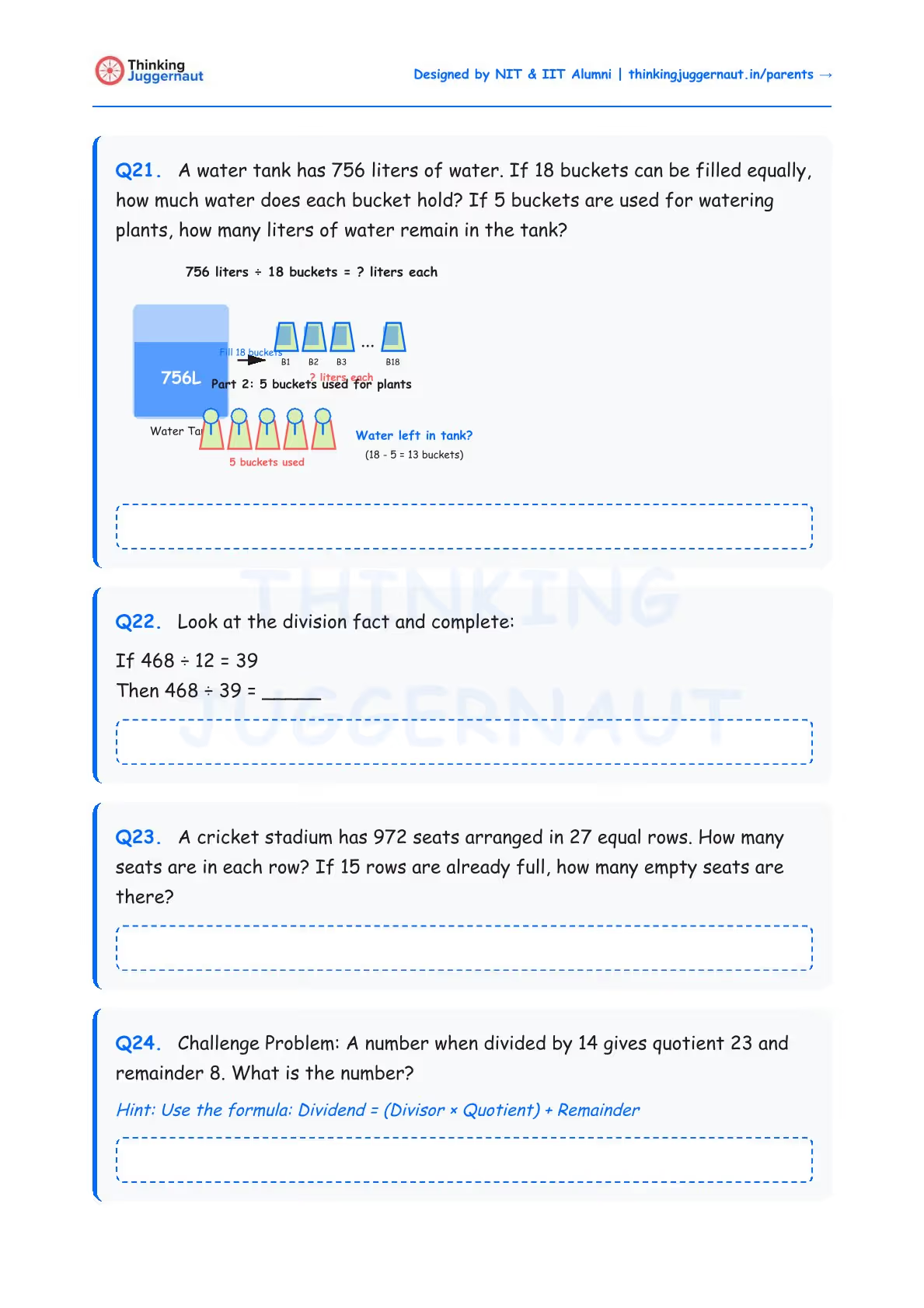
Reverse Division: If 468 ÷ 12 = 39, then what is 468 ÷ 39?
Formula Application: A number divided by 14 gives quotient 23 and remainder 8. Find the original number.
Common Mistakes & Tips
Common Mistakes to Avoid:
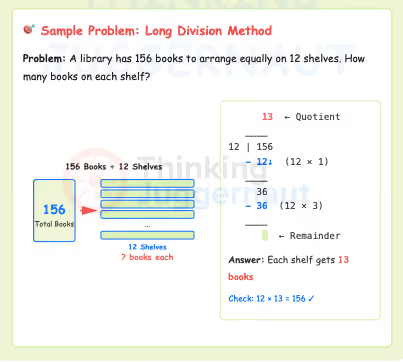
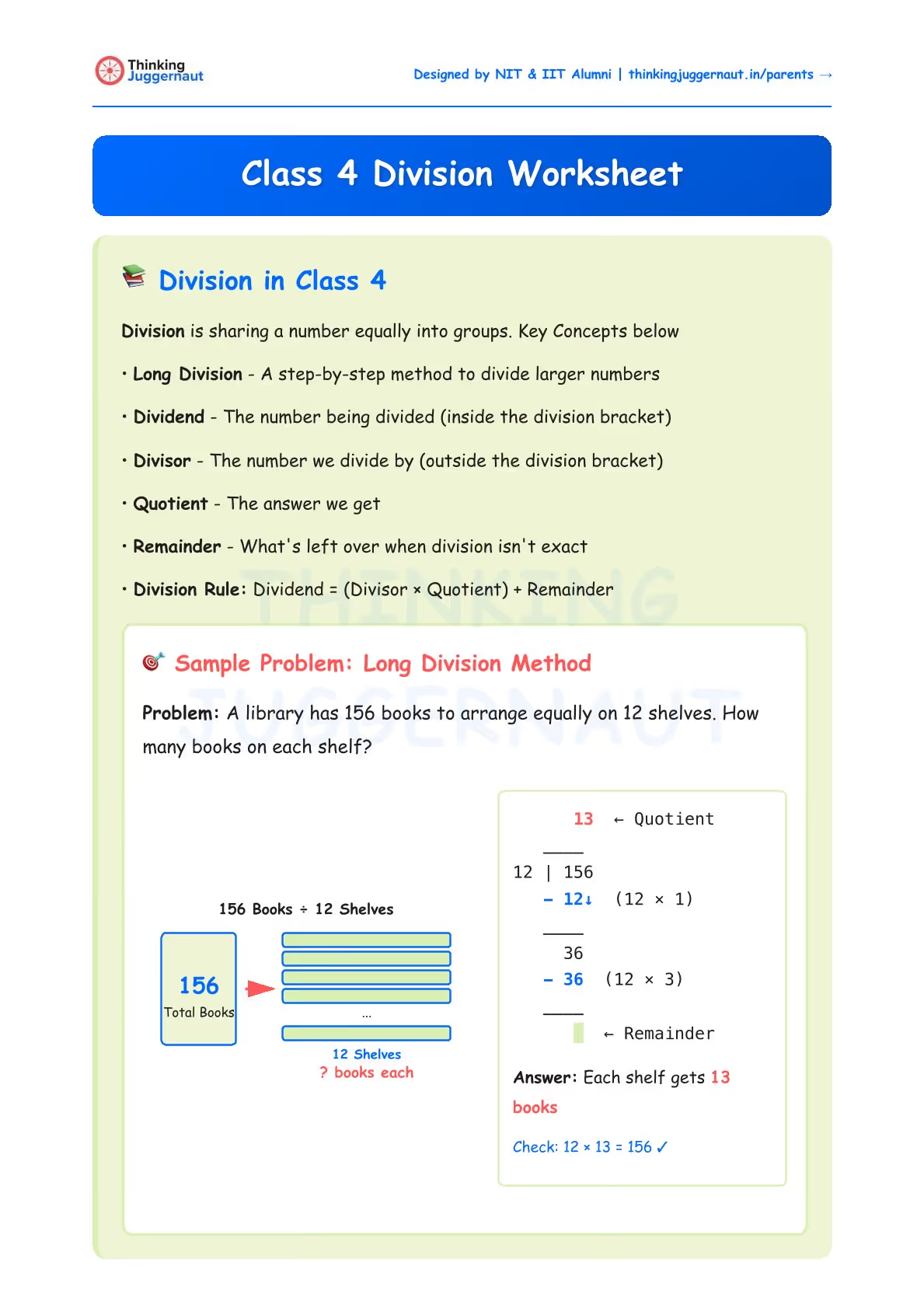
Bringing Down Digits Too Early: In long division, students often bring down the next digit before completing the current step. Always multiply and subtract before bringing down.
Incorrect Placement of Quotient: When dividing 156 by 12, students might write the quotient digits in wrong positions. Each quotient digit should align with the dividend digit you're working with.
Forgetting the Remainder: In problems like 37 ÷ 5, students write just 7 instead of 7 R 2. Always check if there's anything left over.
Not Checking Answers: Students skip verification. Always check: (Divisor × Quotient) + Remainder should equal the Dividend.
Division by Zero Confusion: Some students think any number divided by zero equals zero or the number itself. Division by zero is undefined.
Top 5 Pro-Tips:
Use the DMSB Method: Divide, Multiply, Subtract, Bring down. Follow this sequence every time for long division accuracy.
Estimate Before You Divide: For 156 ÷ 12, think "12 times what is close to 15?" This helps you find the first quotient digit quickly.
Always Verify Your Answer: Use the division formula to check: (12 × 13) + 0 = 156. This catches calculation errors.
Practice Times Tables: Strong multiplication facts make division much easier. If you know 12 × 3 = 36 instantly, division becomes faster.
Remainder Must Be Smaller: The remainder must always be less than the divisor. If you get 37 ÷ 5 = 7 R 5, something's wrong because the remainder equals the divisor.
Assessing Learning: Scoring Guide
Total Questions: 24 | Total Marks: 24
Score: 22 – 24 (Outstanding! ⭐⭐⭐)
Next Step: You're a division master! Try Class 5 division with decimals or tackle more complex multi-step word problems.
Score: 18 – 21 (Excellent! ⭐⭐)
Next Step: Strong skills! Practice long division with larger numbers and focus on word problems to reach mastery level.
Score: 14 – 17 (Very Good! ⭐)
Next Step: Good foundation! Review the long division steps carefully and practice problems with remainders to improve accuracy.
Score: 10 – 13 (Good Effort! 💪)
Next Step: Focus on the DMSB method (Divide, Multiply, Subtract, Bring down). Practice with smaller numbers first, then gradually increase difficulty.
Score: Below 10 (Keep Trying! 📚)
Next Step: Build fundamentals first. Review multiplication tables, practice simple division facts, and work on division with single-digit divisors before attempting long division. Ask for help from a teacher or parent.
Frequently Asked Questions
What is a remainder and when does it appear?
A remainder is what is left when a number cannot be divided exactly. For example, 37 ÷ 5 = 7 remainder 2, because 5 goes into 37 seven times (35), and 2 is left over. The remainder is always smaller than the divisor — if it is not, the quotient is wrong.
How do I know if my long division answer is correct?
Use the division formula: multiply the divisor by the quotient, then add the remainder. If the result equals the dividend, the answer is correct. This check takes 10 seconds and catches almost every calculation error.
Ready to Make Maths Hands-On?
Worksheets build practice. The Applied Maths Project Kit builds understanding covering the same concepts your child is practising here. A hands-on math kit inspired by NEP 2020’s vision of learning mathematics as thinking, connecting, and applying, not just solving equations.