In a traditional classroom, a student might solve 20 algebraic equations from a textbook. They learn the steps, but not purpose.
Now imagine, we start with a real-world setting. The same concept could become: “Is there a shortest path from your home to the ice-cream shop? What if you have to visit the tailor shop also - which route to take” — a problem that applies optimization, estimation, reasoning and eventually leading to the same equations
Jump to Class-wise activities directly if you want to skip the next section
NEP 2020 answers it clearly — mathematics is the foundation of India’s future in AI, data science, and technology. Yet most students still see formulas, not applications. They solve equations without ever understanding how math shapes the world around them. To make math meaningful, we as teachers must bridge the gap between abstract concepts and real-world problem solving.
In the example we saw above, the first options builds equation-solving. The other builds problem-solving thinking.
We are moving to applied thinking — from “How to find x?” to “Why does x matter here?”
Not word problems. "Ram has 20 apples" is still abstract.
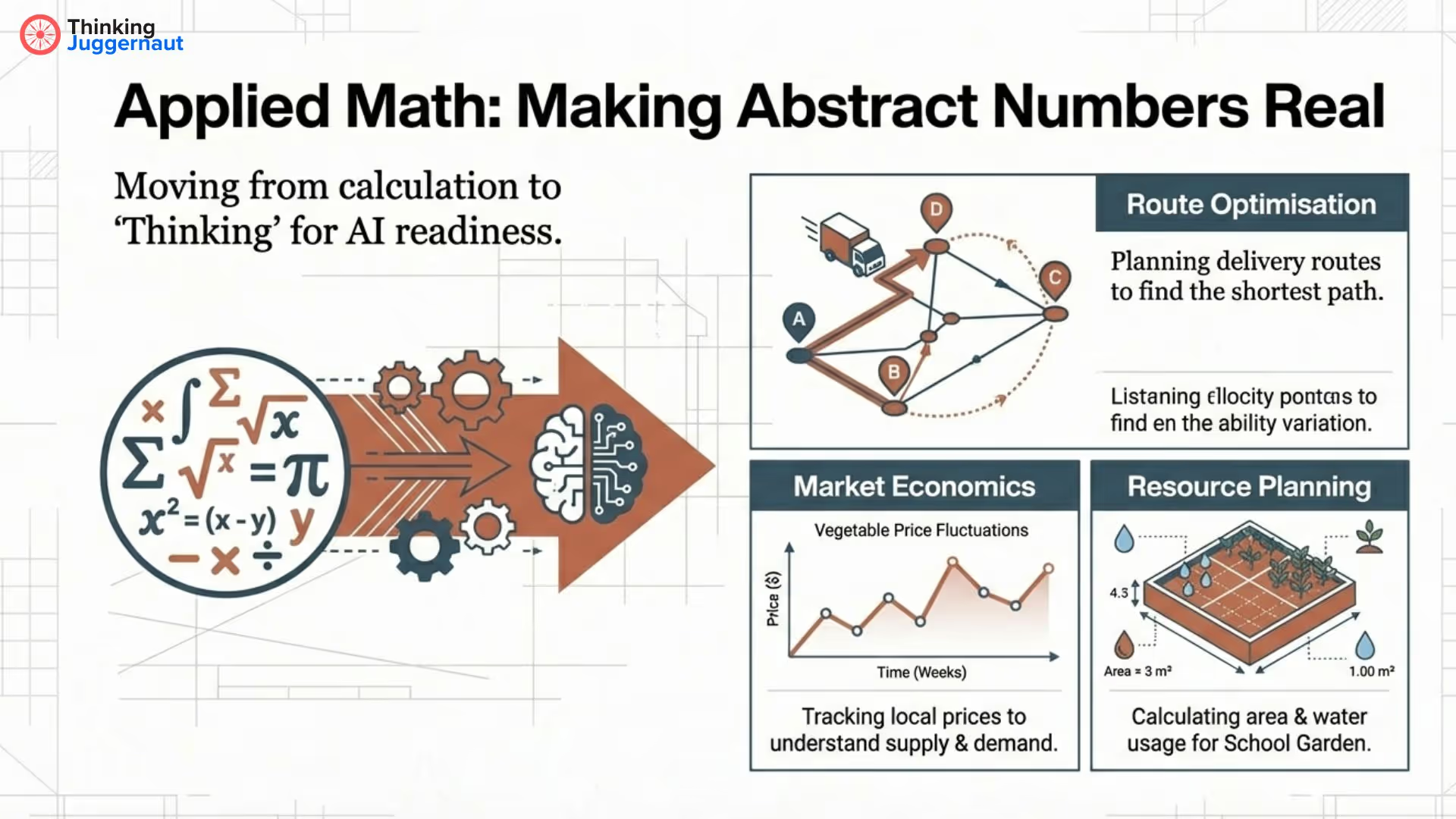
Real-world math solves actual problems students encounter or can imagine encountering.
Real-world math connects classroom concepts with real challenges. Here’s what it looks like in action:
The Travelling Salesman Problem works perfectly for Class 6-8.
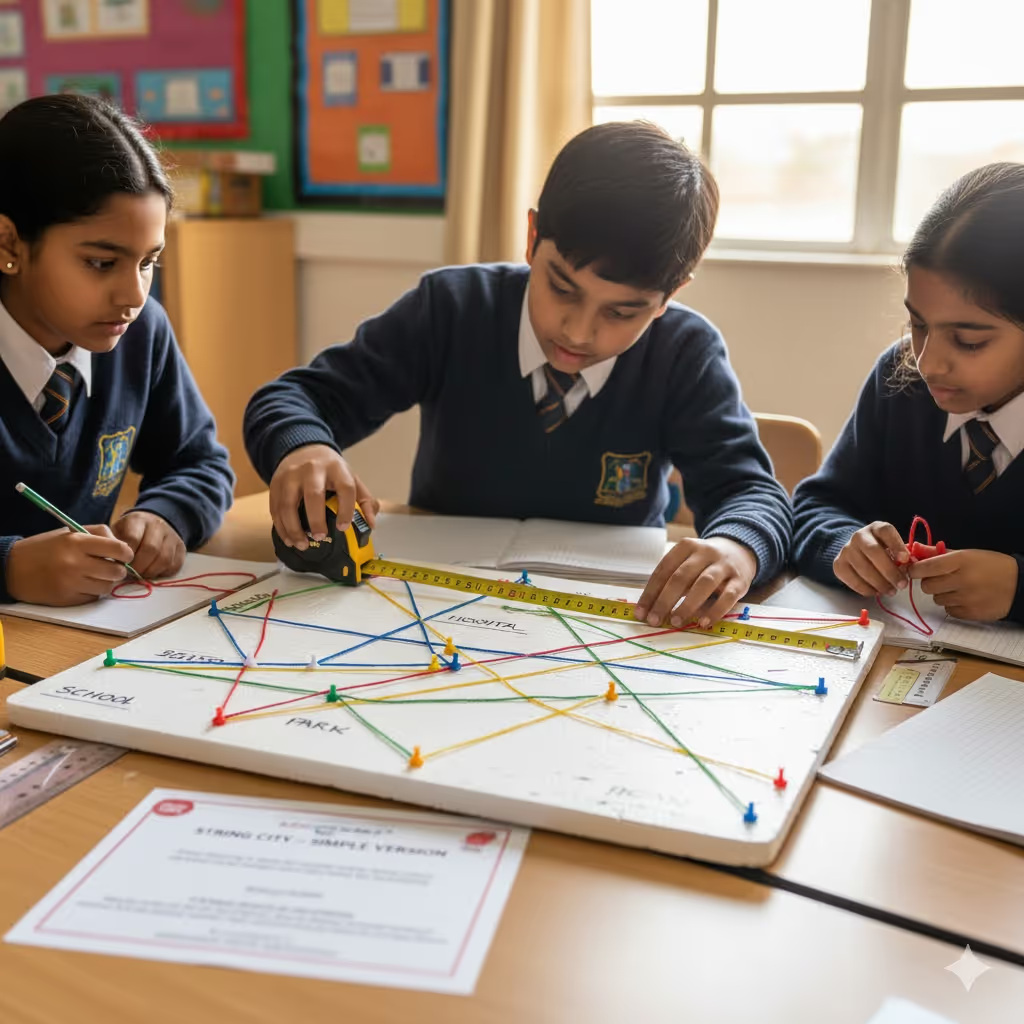
The challenge: A delivery driver must visit 5 houses and return to the warehouse. What's the shortest possible route?
How it works: Students get a map with the warehouse and 5 houses. Using thread and push pins on a foam board, they:
What they discover:
Then it gets real: Add constraints. "Grandma Lakshmi needs urgent medicine—you MUST deliver there first. Now what's the shortest route?"
Students learn:
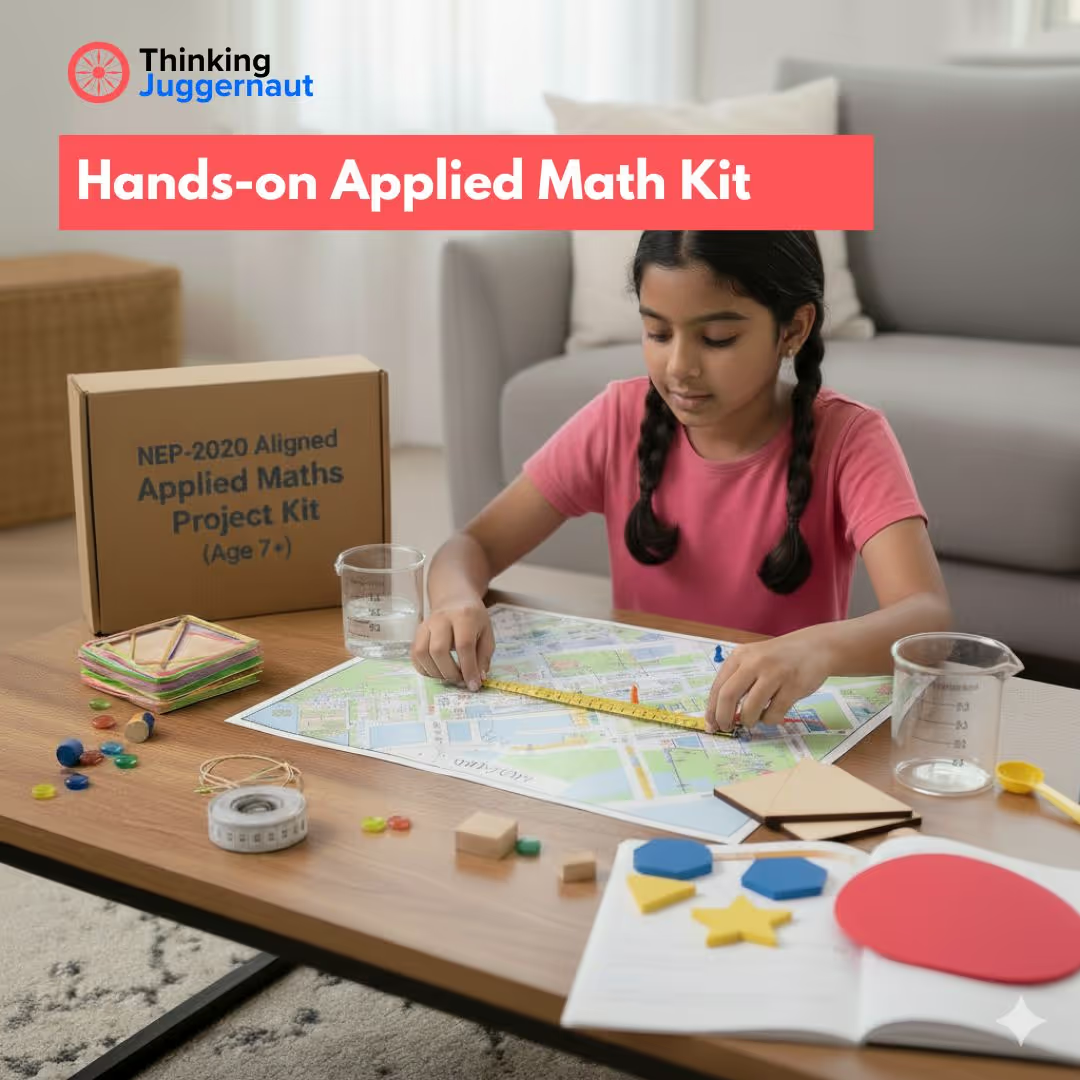
Our Applied Math Kit's Delivery Route Planner includes this complete activity. Students don't just calculate—they physically test routes, measure results, and experience why delivery companies need optimization algorithms.
Now, students are into the activity - this is when you can introduce equations from the book - around the activity!
This is one example, and at Thinking Juggernaut we can help you with Class Wise - exactly what to do and kit materials delivered. Zero prep required!
Here, are a few more examples class wise
At this stage, the goal is to make numbers visible in the child’s world — to connect counting, measuring, and shapes to things they see and do.
These activities build comfort and curiosity with math before abstraction begins.
Now, students can handle small-scale problem solving that involves reasoning and simple data.
Math becomes a tool to organize and understand their world.
Students are ready for logical, structured thinking.
Let us look at how to teach applied math in a classroom setting. You can also refer to this NCERT resource on how to teach maths.
Show where it's used BEFORE teaching the concept.
Before fractions:
Students see the need. Then you give them the tool.
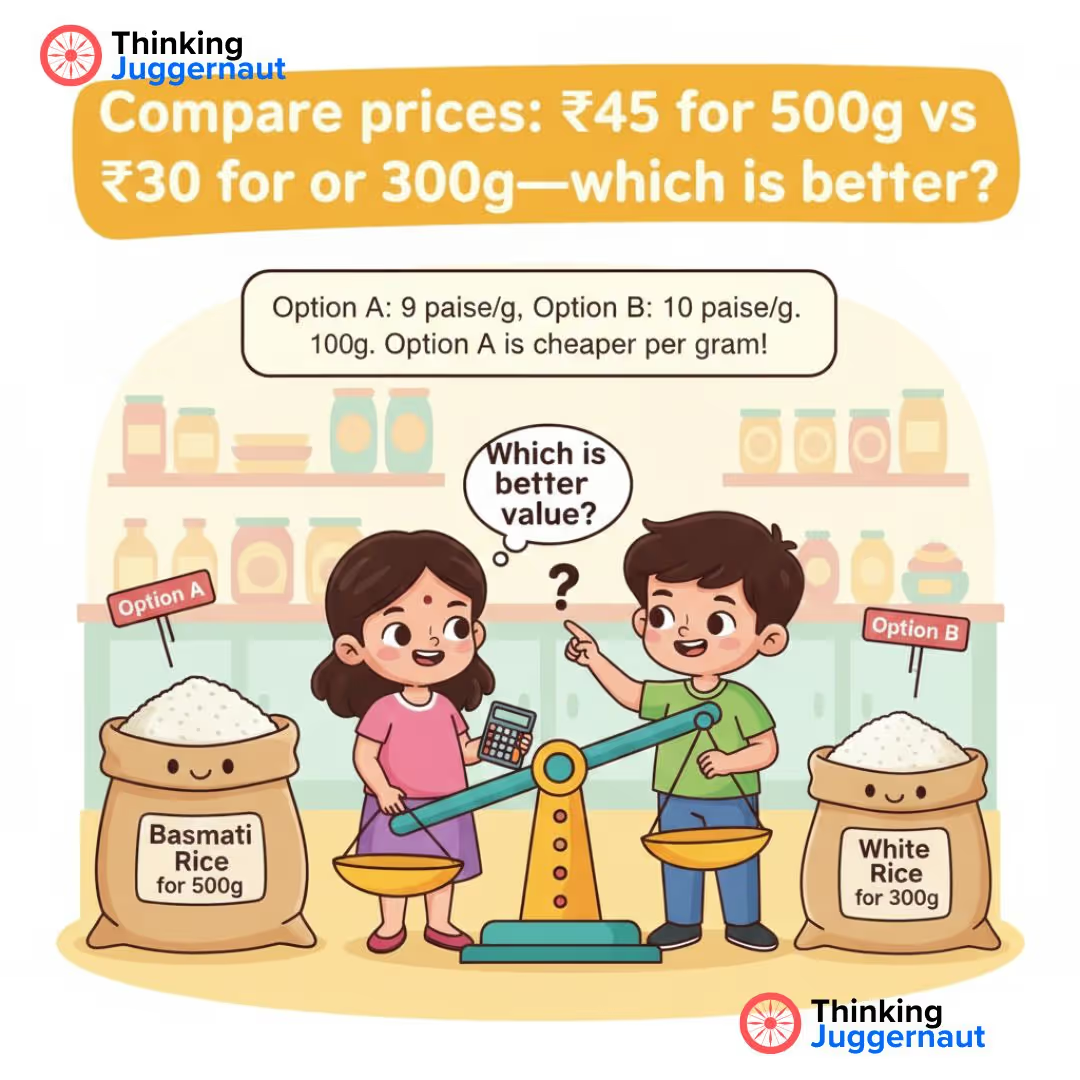
Now teach the formal math. They're curious because they already understand the problem it solves.
Don't give 20 similar problems. Apply to different situations.
Percentages across contexts:
Real understanding = applying to new situations.
Learned fractions through recipes? Can they use it for:
Math becomes a life tool, not just a school subject
At Thinking Juggernaut, we see this transformation. Students using our Applied Math Kit stop asking "when will I use this?" They already know.
Real-world application speeds understanding. Students grasp faster when they see why it matters. Cover fewer practice problems, get better retention and transfer. NEP 2020 moves away from "completing the syllabus" and focuses on Competency (proving you actually know how to use what you learned).
We, at Thinking Juggernaut built our applied math kits specifically for this reality, class wise - for schools, and parents. Contact us, and we will help you out.
Better than before. Real-world use reinforces fundamentals through application. Students learn "how" and "why" together—deeper than memorization alone.
Almost there!
We will confirm your order on WhatsApp
Order placed!
Thank you! You will receive a WhatsApp confirmation shortly.


![[background image] electronics workbench](https://cdn.prod.website-files.com/6867e17b7728d4dad1984de4/6972eedd9a524edd5b252ce3_13.avif)
![[digital project] image of past client project on a magazine page](https://cdn.prod.website-files.com/6867e17b7728d4dad1984de4/6971adf677d574c530eb0b3a_Critical%20Thinking%20TJ.avif)
![[digital project] image of past client project on a magazine page](https://cdn.prod.website-files.com/6867e17b7728d4dad1984de4/6971ec2d29d12c20984b2c4e_Gemini_Generated_Image_v2dmwrv2dmwrv2dm.avif)