National Education Policy 2020 is India's new education framework—the first major change since 1986.
The goal: Shift from memorization to understanding, from exam focus to skill-building, from rigid streams to flexible learning.
Timeline: Being implemented in phases from 2020-2030 and will continue to evolve. Some changes are already happening. Others will roll out gradually.
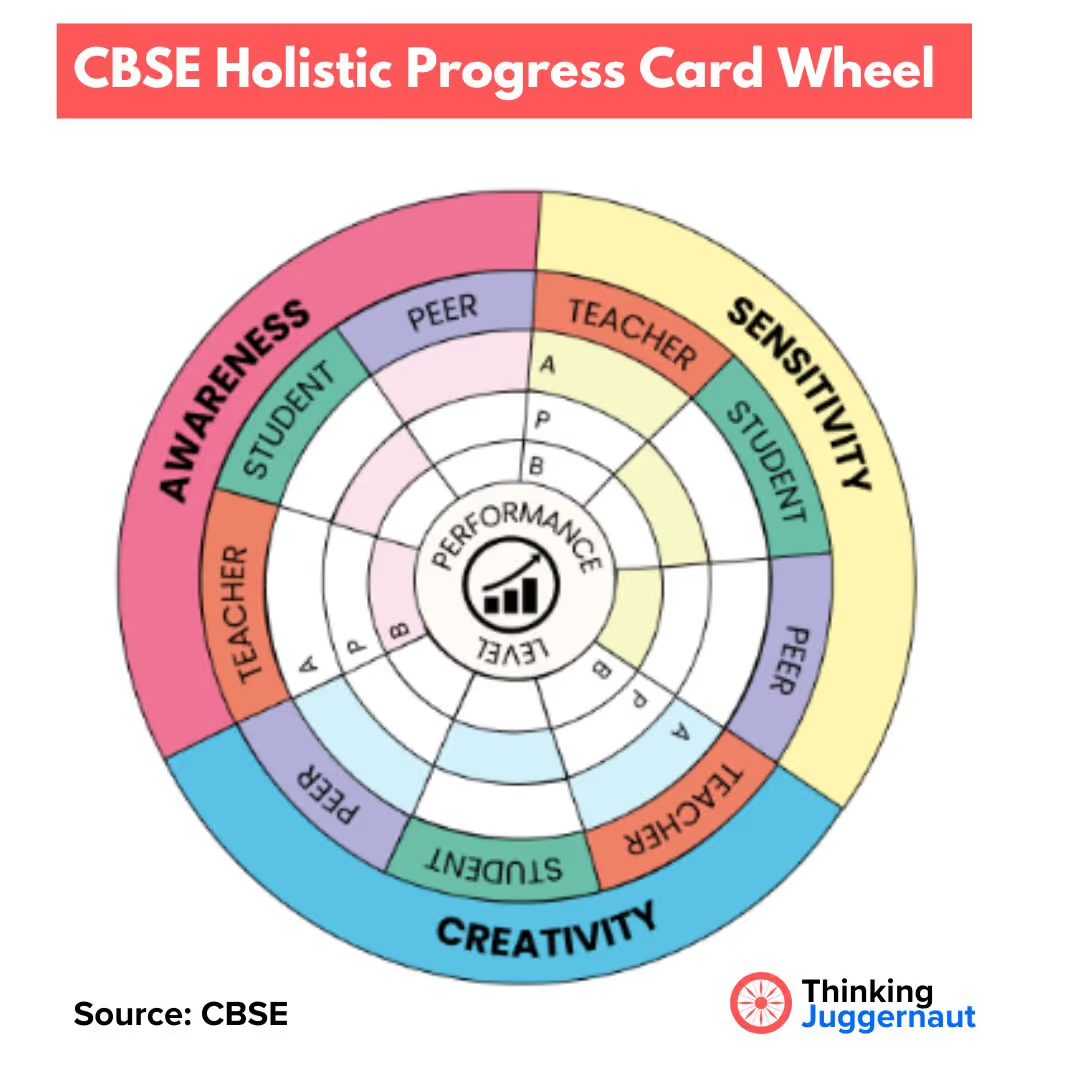
Old system: 10 years + 2 years (Class 1-10, then 11-12)
New system: 5+3+3+4 based on child development stages
When: Already implemented in most CBSE schools from 2021-22.
What changes for your child:
Old rule: Choose one stream in Class 11. Stuck with it.
New flexibility: Pick subjects across streams.
Examples:
When: Rolling out now. Check with your school—some have started, others implementing gradually.
What this means: Your child isn't trapped. Interested in medicine but also loves economics? Both possible.
What's new: From Class 6, students get hands-on vocational exposure.
The 10-Day Bag-Free Period: Students in Class 6-8 spend 10 days per year interning with local vocational experts—carpenters, gardeners, potters, coders, electricians, chefs.
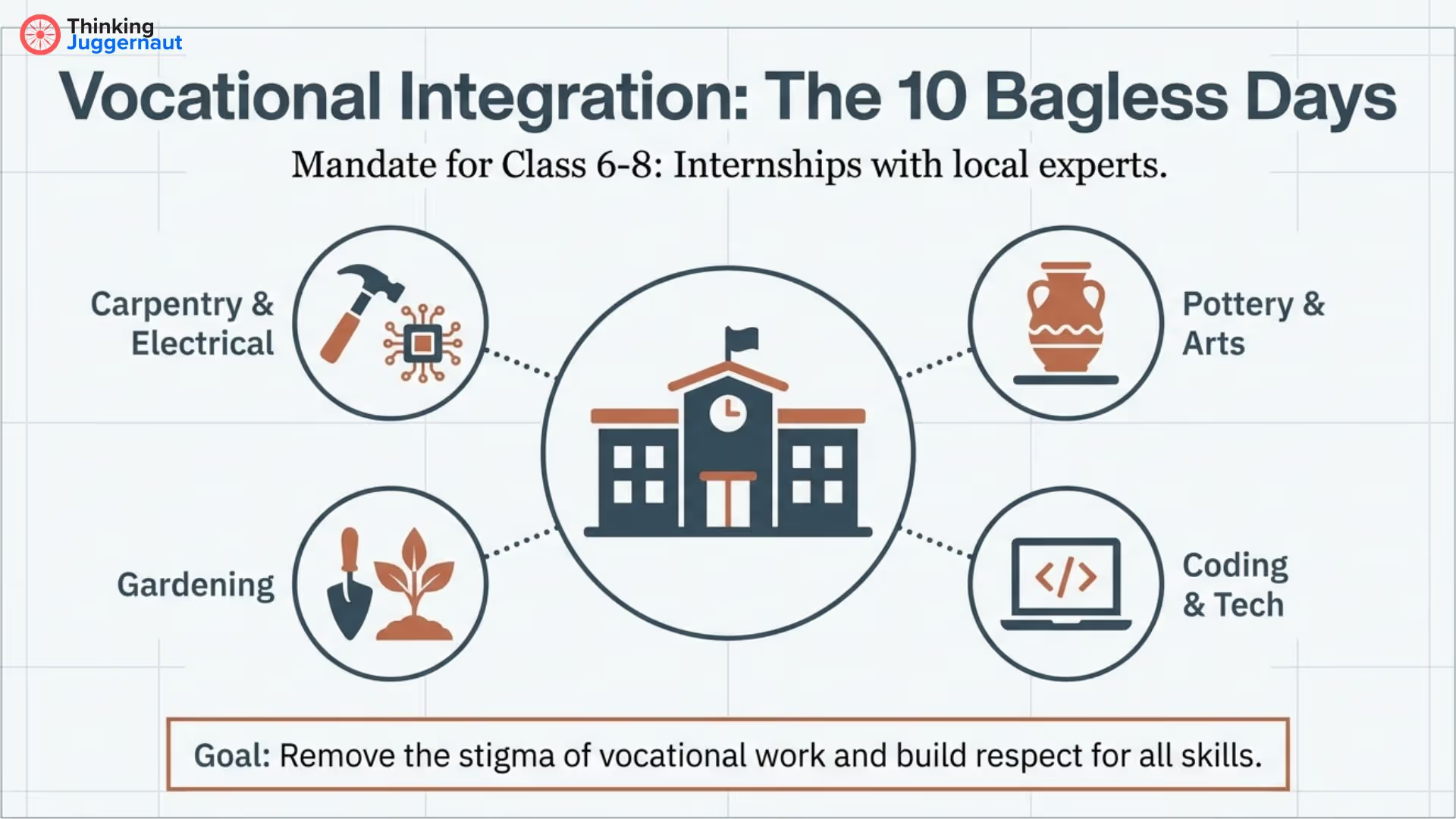
Why: Remove stigma that "vocational = inferior." Show that all skills have value.
When: Some schools started 2023-24. Full implementation expected by 2025-26.
What your child will do:
Your role: Don't dismiss it as "waste of time." These experiences build confidence and expose children to options beyond traditional careers.
Old report card: Math: 85, Science: 78, English: 92
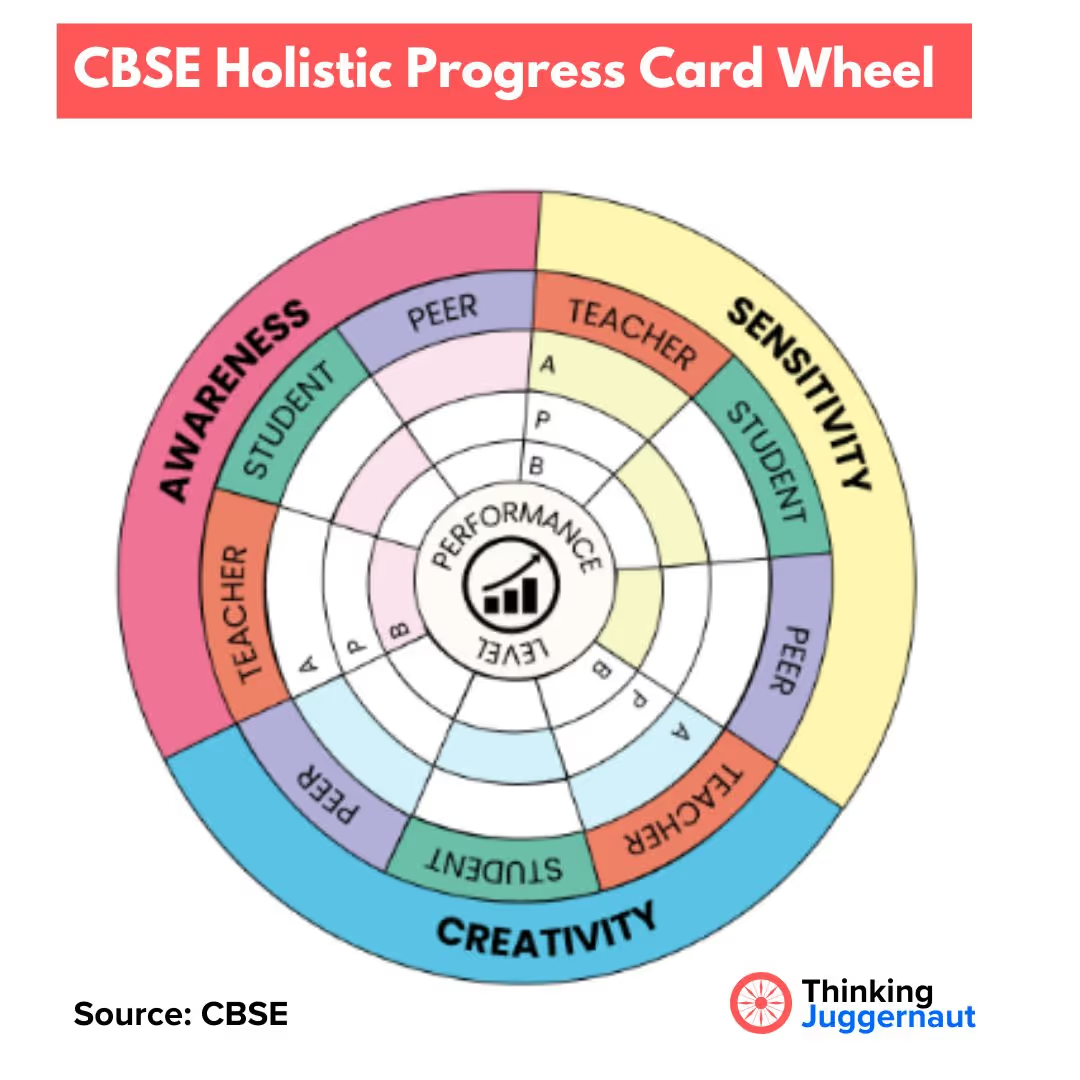
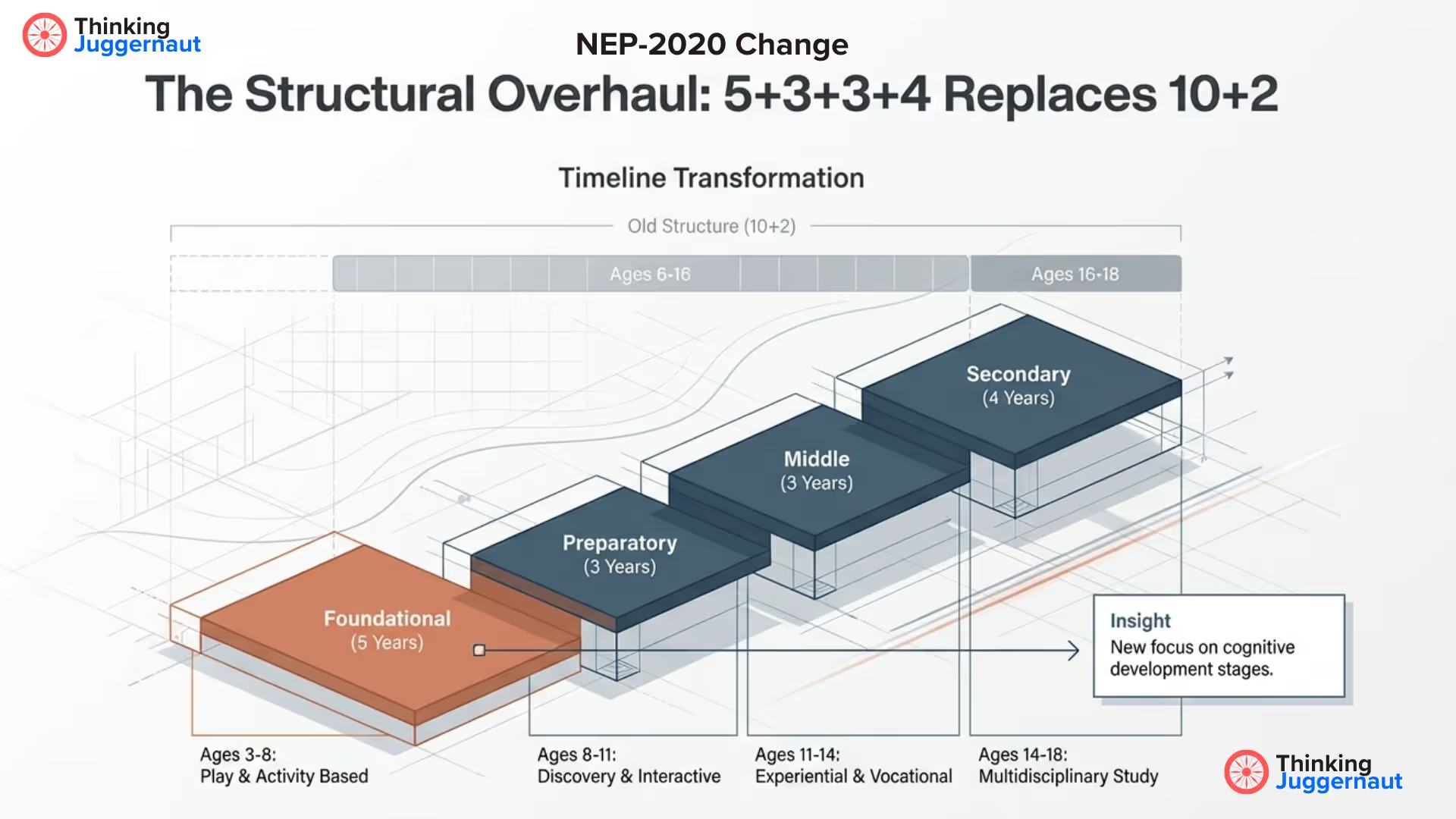
New holistic progress card includes:
When: CBSE introduced holistic progress cards from 2021-22. Full implementation ongoing.
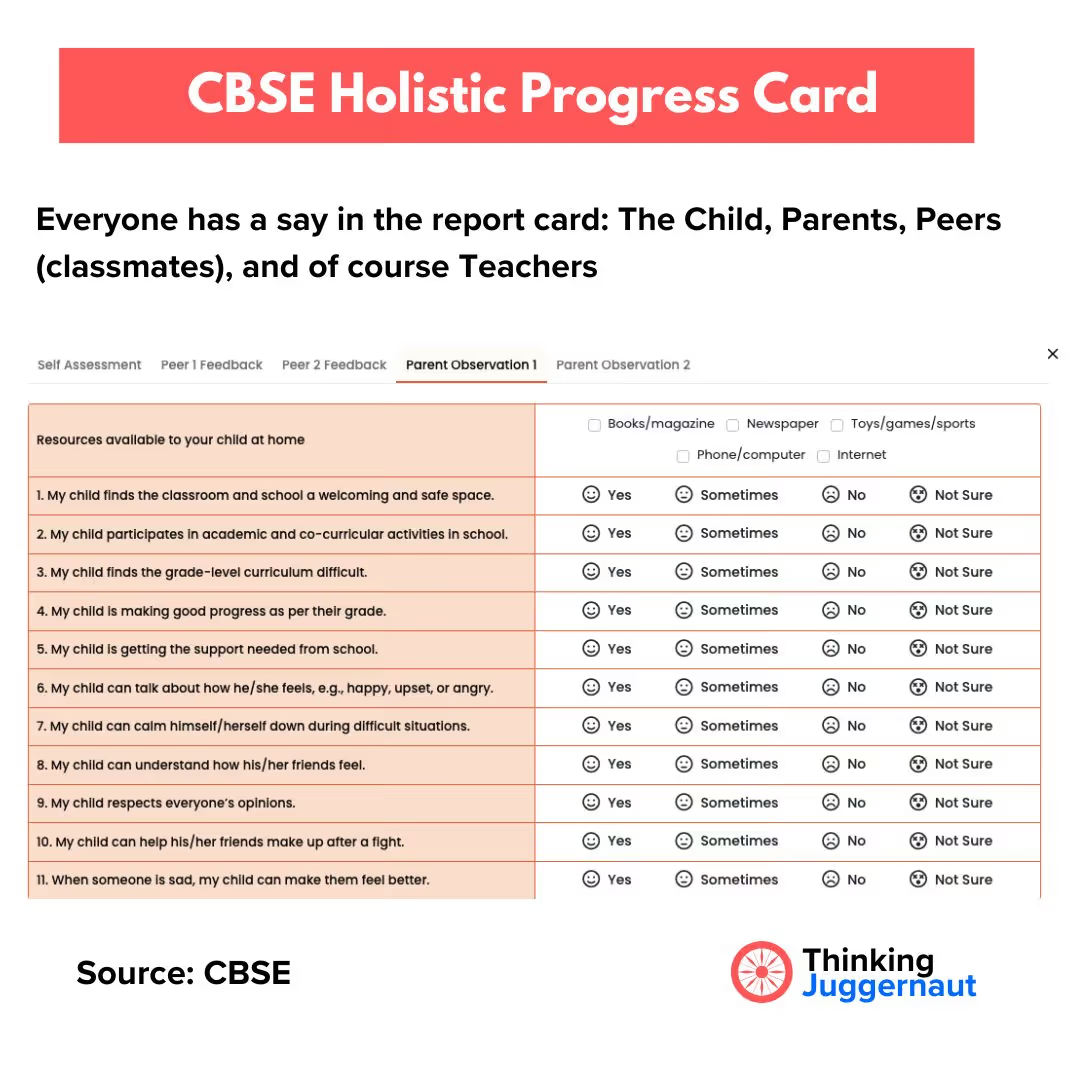
What changes:
Example:
Old: "What is photosynthesis? (5 marks)"
New: "Your plant isn't growing despite water and sunlight. What might be wrong? Design experiment to test." (Assesses understanding + application)
For classes 9-12, read more about CBSE assessment changes here.
What changes: From reading about concepts to experiencing them.
Example:
Old: Read about photosynthesis, memorize steps, write in exam.
New: Plant seeds, observe with/without sunlight, measure growth, analyze data, THEN connect to photosynthesis theory.
When: Schools implementing this progressively. Quality varies—some schools doing it well, others just adding activities without depth.
What to watch for: Is your child just "doing activities" or actually understanding through experience? Ask: "Can you explain WHY that worked?" If yes, it's working.
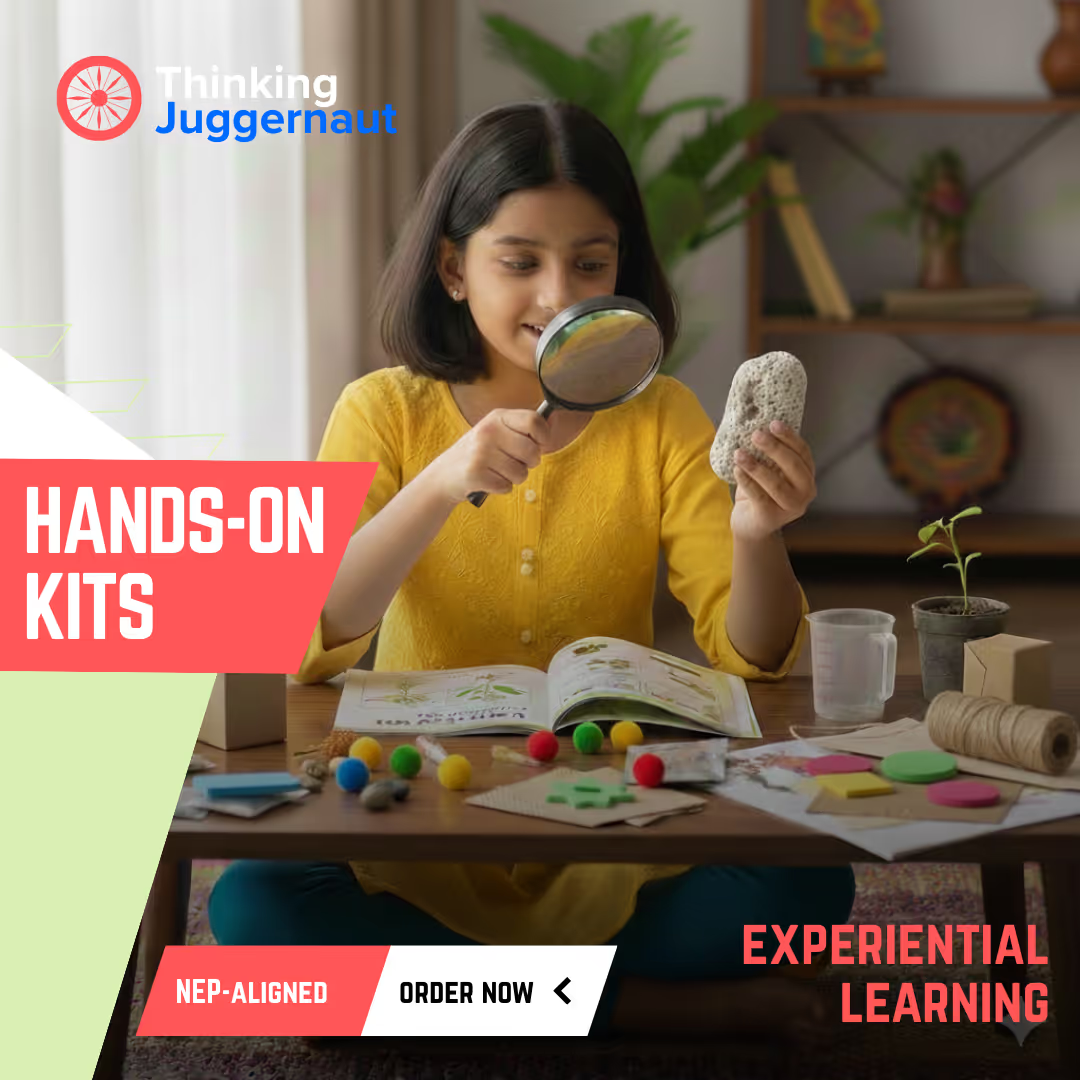
While schools implement NEP, you can support experiential learning at home. Thinking Juggernaut's learning kits provide hands-on activities that align with NEP's experiential learning approach—helping children understand concepts through real experiments, not just reading about them.
1. Stop asking only "What marks did you get?"
Also ask:
2. Value all skills, not just academics
If your child excels at sports, art, coding, or fixing things—celebrate it. NEP recognizes these as valuable.
3. Let them explore different subjects
Your child wants Physics + Psychology? Support it. The rigid "science student" vs "commerce student" mindset is outdated.
4. Encourage hands-on learning at home
Cooking involves math (measurements, time, temperature). Gardening teaches biology. Budgeting teaches financial literacy. Connect school concepts to daily life.
5. Don't dismiss vocational education
If your child enjoys the 10-day bag-free internship with a carpenter or coder, that's valuable learning—not time wasted.
"Will my child be disadvantaged if they don't get high marks now?"
If assessment is done right, no. Competency-based evaluation shows what your child can actually DO. But yes, transition is ongoing—some competitive exams still focus on marks. Balance is needed.
"Should I change schools to find one implementing NEP better?"
Not necessarily. Ask your current school how they're implementing. Many are improving gradually. If there's zero progress after 2-3 years, consider options.
"My child's school hasn't started vocational education yet. Should I worry?"
It's rolling out gradually. Some schools started, others planning. Ask when they'll begin. Meanwhile, expose your child to different skills at home or through workshops.
"What about board exams and college admissions?"
Class 10 and 12 board exams continue. However, exam patterns are shifting toward competency-based questions. Students who understand deeply (not just memorize) will perform better.
"Will this reduce exam pressure?"
Partially. Continuous assessment means less reliance on one final exam. But parental and societal mindset also needs to shift—stop obsessing over marks.
"My child is weak academically but good at art/sports. Does NEP help?"
Yes! Holistic progress cards recognize non-academic strengths. However, foundational literacy and numeracy (reading, basic math) are still essential.
NEP 2020 is ambitious. Implementation will take years. Not every school will do it perfectly.Contact us to explore how hands-on learning can complement your child's school education.
Almost there!
We will confirm your order on WhatsApp
Order placed!
Thank you! You will receive a WhatsApp confirmation shortly.


![[background image] electronics workbench](https://cdn.prod.website-files.com/6867e17b7728d4dad1984de4/6971adf677d574c530eb0b3a_Critical%20Thinking%20TJ.avif)
![[digital project] image of past client project on a magazine page](https://cdn.prod.website-files.com/6867e17b7728d4dad1984de4/6972eef136a679551ba6030f_14.avif)
![[digital project] image of past client project on a magazine page](https://cdn.prod.website-files.com/6867e17b7728d4dad1984de4/6971ec2d29d12c20984b2c4e_Gemini_Generated_Image_v2dmwrv2dmwrv2dm.avif)