"We're looking for NEP-aligned kits for our school."
Every vendor says their product is "NEP 2020 aligned." But when you ask what that actually means, answers get vague.
Here's the truth: Most learning kits aren't truly aligned with NEP 2020. They're traditional products with new labels.
This guide helps schools evaluate NEP-aligned learning kits properly—so you invest in tools that genuinely implement NEP's vision, not just claim to.
NEP 2020 isn't just about adding activities to lessons. It fundamentally changes HOW students learn.
NEP 2020's core requirement: "Pedagogy must evolve to make education more experiential, holistic, integrated, inquiry-driven, discovery-oriented, learner-centred, discussion-based, flexible, and enjoyable."
For a learning kit to be truly NEP-aligned, it must:
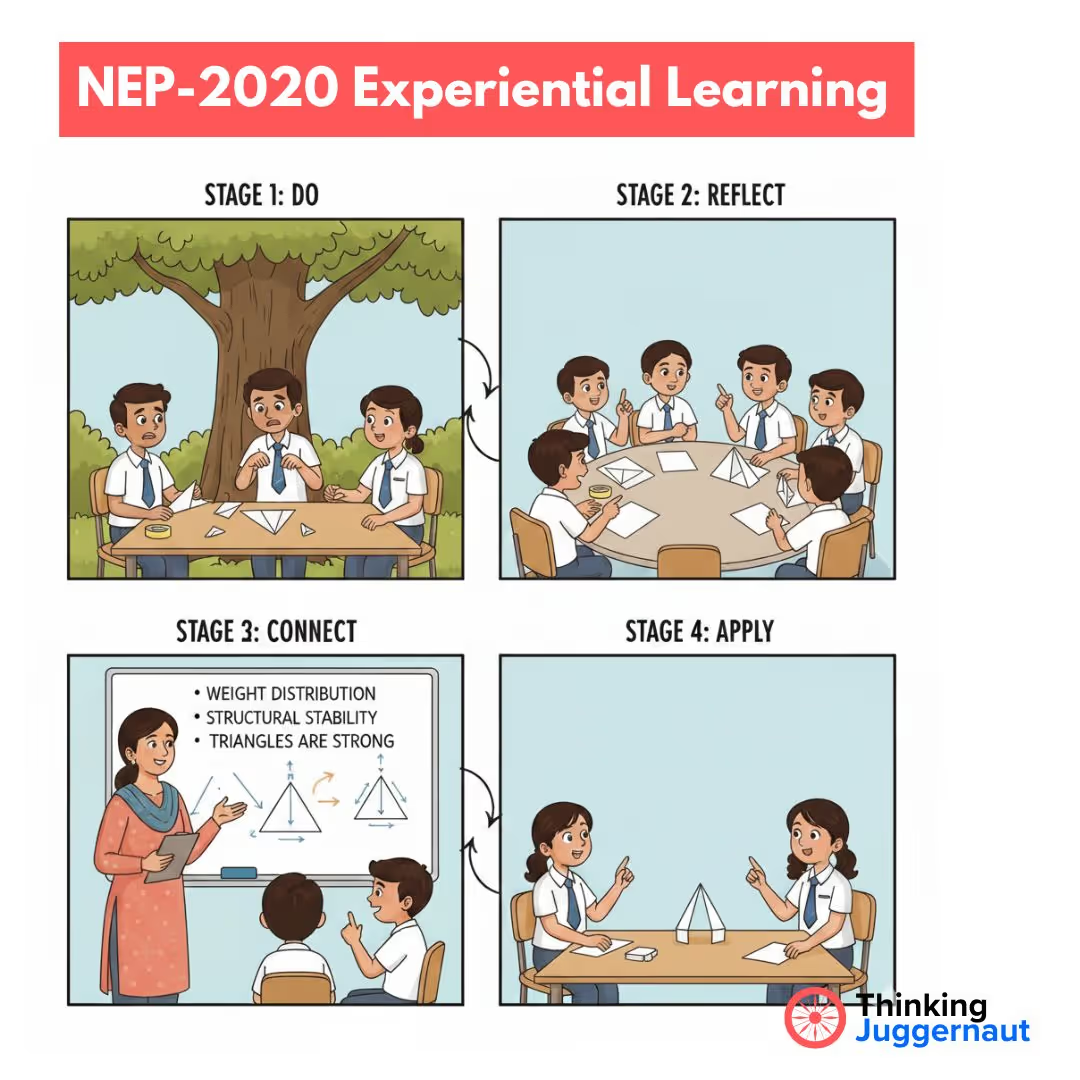
NEP-aligned kits don't just provide activities. They guide students through all four stages:
Stage 1: Concrete Experience (DO)
Hands-on engagement with materials or real problem
Stage 2: Reflective Observation (REFLECT)
Questions that prompt analysis: "What happened? Why? What patterns?"
Stage 3: Abstract Conceptualization (CONNECT)
Linking observations to curriculum concepts and theory
Stage 4: Active Experimentation (APPLY)
Testing understanding in new situations
Red flag: Kits that only provide Stage 1 (the activity) without reflection questions, concept connections, or application challenges aren't experiential learning—they're just activities.
NEP 2020 emphasizes competency-based education aligned with NCERT learning outcomes
What this means:
Every activity should target specific, documented learning outcomes—not vague "general science" goals.
Example of proper mapping:
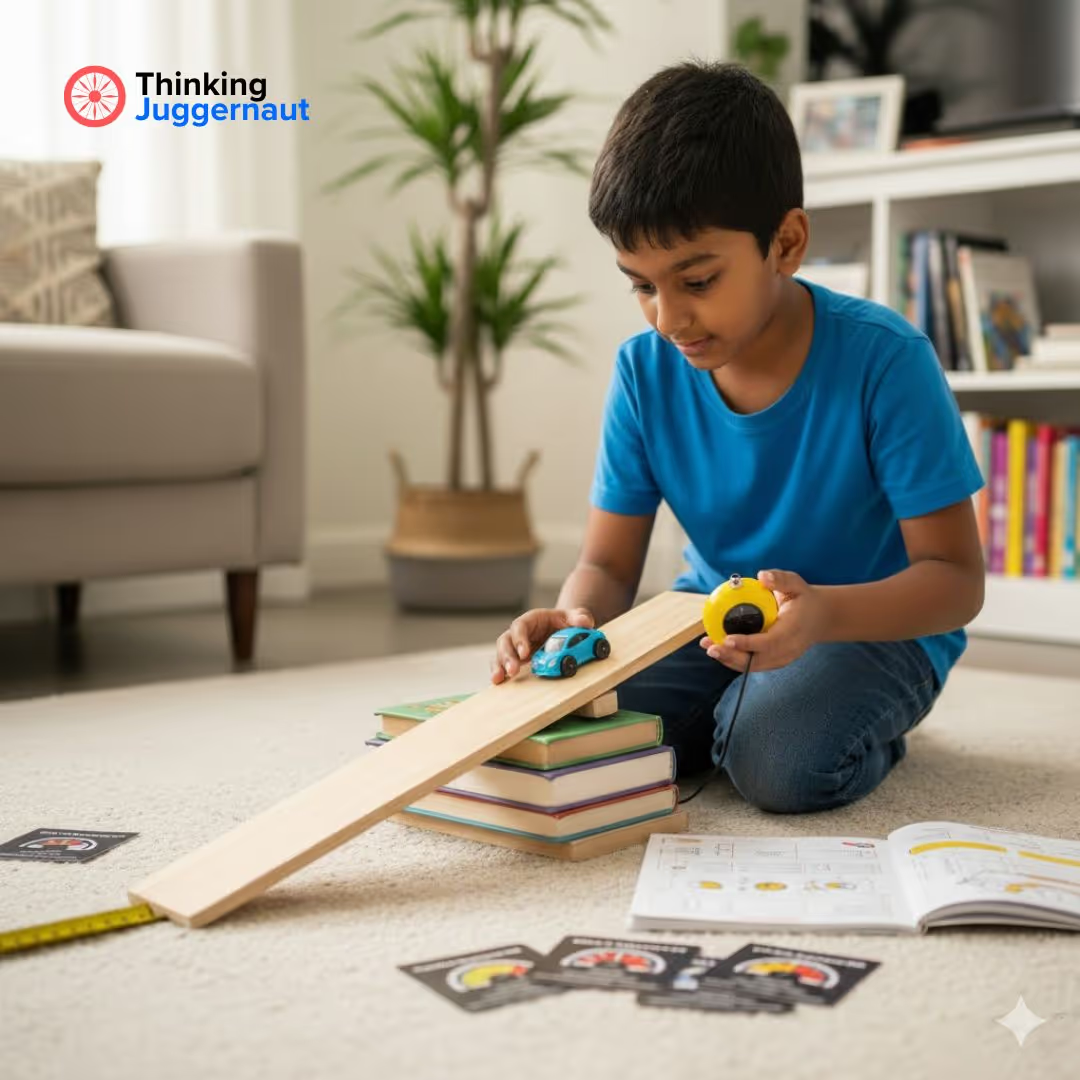
Activity: Speed and motion ramp experiment
Mapped Learning Outcomes:
Red flag: Kits with no clear learning outcome documentation or generic claims like "develops scientific thinking."
NEP 2020 states: "Curricula must include scientific method and reasoning, creativity and innovation, aesthetics and art, oral and written expression, physical education, fitness, wellness, and sports."
NEP-aligned kits naturally connect multiple subjects because real-world problems don't come in subject boxes.
Example:
A plant growth experiment isn't just biology. It involves:
Red flag: Kits that isolate single subjects without showing natural connections.

CBSE has shifted toward competency-based assessment — evaluating whether students can APPLY knowledge, not just recall it.
Many vendors slap "NEP 2020" labels on old products. Here's how to spot them:
What you see: Kit provides materials for one-time use, no depth or progression.
Why it's not NEP-aligned: NEP emphasizes deep learning over superficial coverage. Activities should build understanding over time, not provide one-off experiences.
What to ask: "Can students use this kit for multiple experiments? Does it allow for extended investigation?"
What you see: Just materials with basic instructions. No guidance on facilitating reflection, connecting to curriculum, or assessing learning.
Why it's not NEP-aligned: NEP requires pedagogical shift. Teachers need support to facilitate experiential learning effectively.
What to ask: "What teacher training or guides are included? How do you help teachers implement the experiential cycle?"
What you see: Step-by-step instructions to complete activity, then... nothing. No questions prompting analysis or connection to concepts.
Why it's not NEP-aligned: Without reflection and conceptualization stages, students do activities without learning from them.
What to ask: "Show me the reflection questions for this activity. How does it connect to curriculum concepts?"
NEP 2020 has multiple focus areas. Different kits serve different purposes:
Purpose: Experiential learning in science, math, engineering
NEP alignment: Hands-on discovery, scientific reasoning, mathematical application
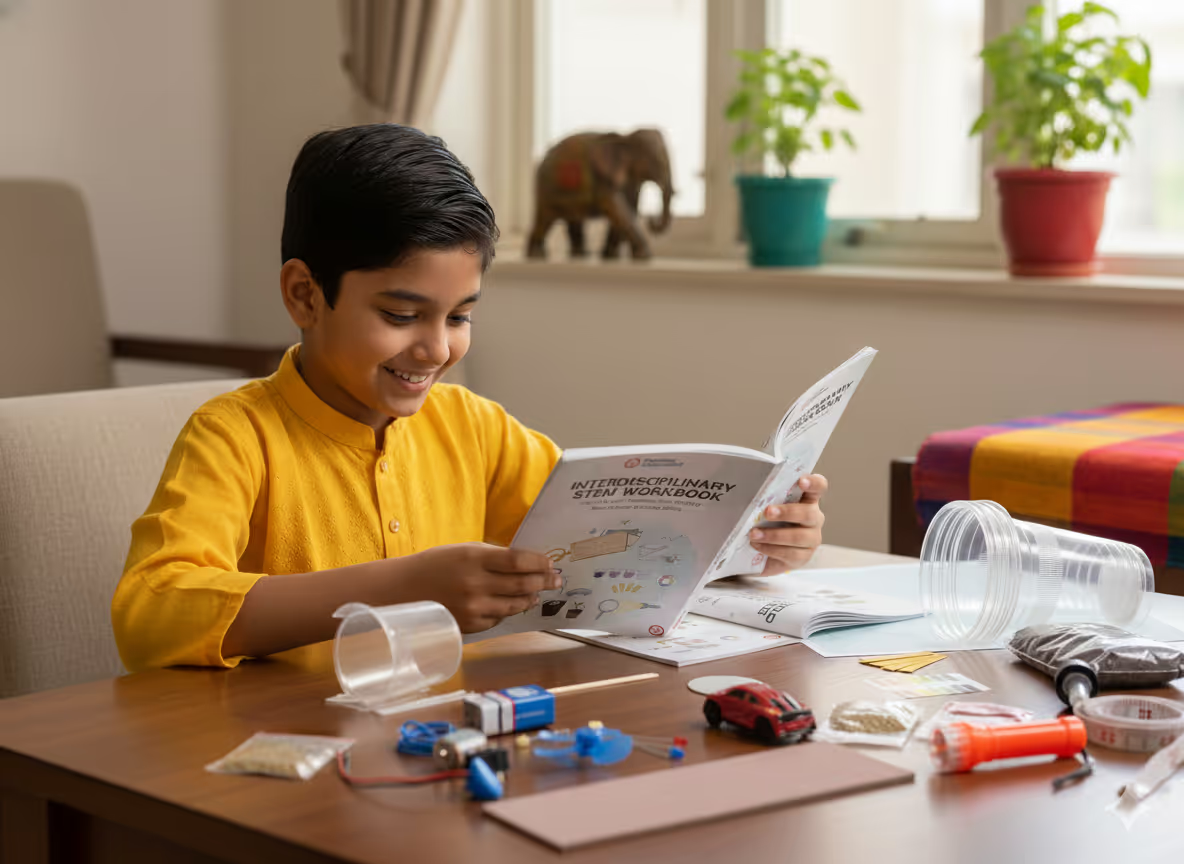
Example: Thinking Juggernaut's Interdisciplinary STEM Kit with 30+ experiments connecting Physics, Chemistry, Biology, Math, and Engineering through real observation and discovery.
What to look for:
Purpose: Making mathematics meaningful through real-world applications
NEP alignment: Problem-solving, critical thinking, mathematical reasoning
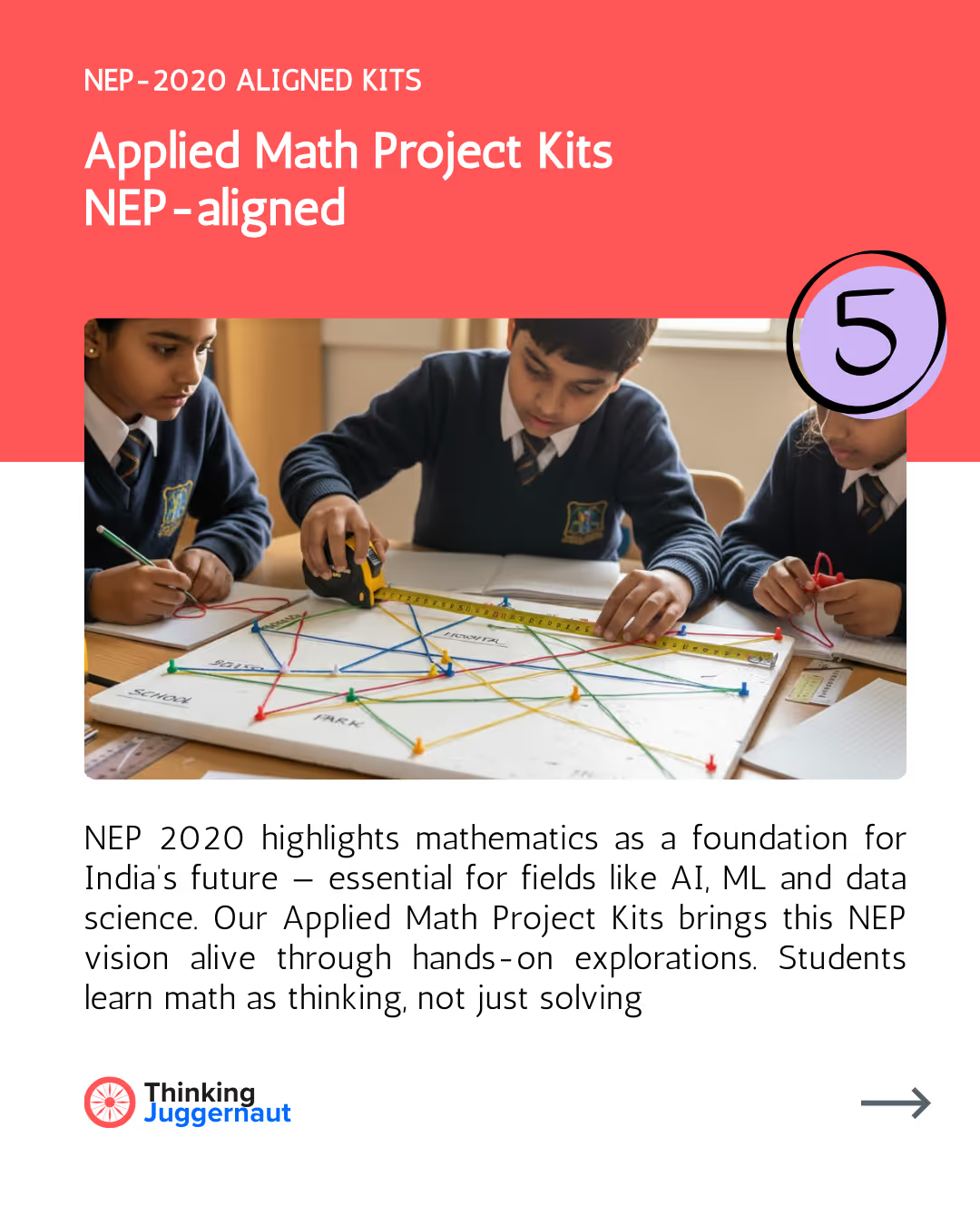
Example: Thinking Juggernaut's Applied Math Kit with activities like route optimization (Travelling Salesman Problem), budget planning, and data analysis.
What to look for:
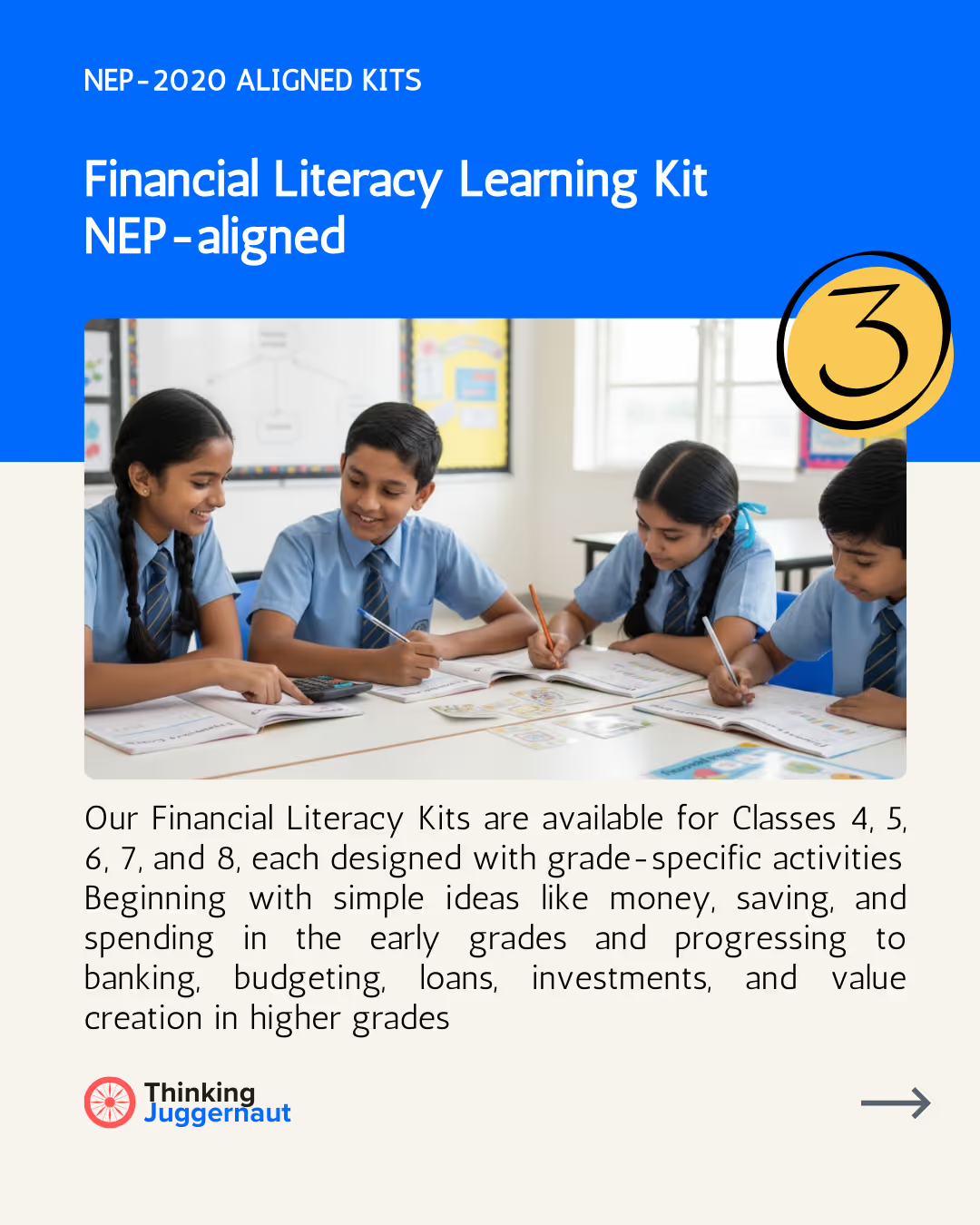
Purpose: Practical money management and economic understanding
NEP alignment: Life skills, real-world application, vocational preparation
What to look for:
Purpose: Understanding technology critically, not just using it
NEP alignment: 21st-century skills, critical thinking about technology
Example: Thinking Juggernaut's AI Discovery Kit teaching students to question AI bias and understand how algorithms work.
What to look for:
Purpose: Multilingual learning, linguistic diversity appreciation
NEP alignment: Mother tongue emphasis, multilingual education
What to look for:
Purpose: Vocational skills, business thinking, problem-solving
NEP alignment: Skill-based education from Class 6, vocational integration
What to look for:
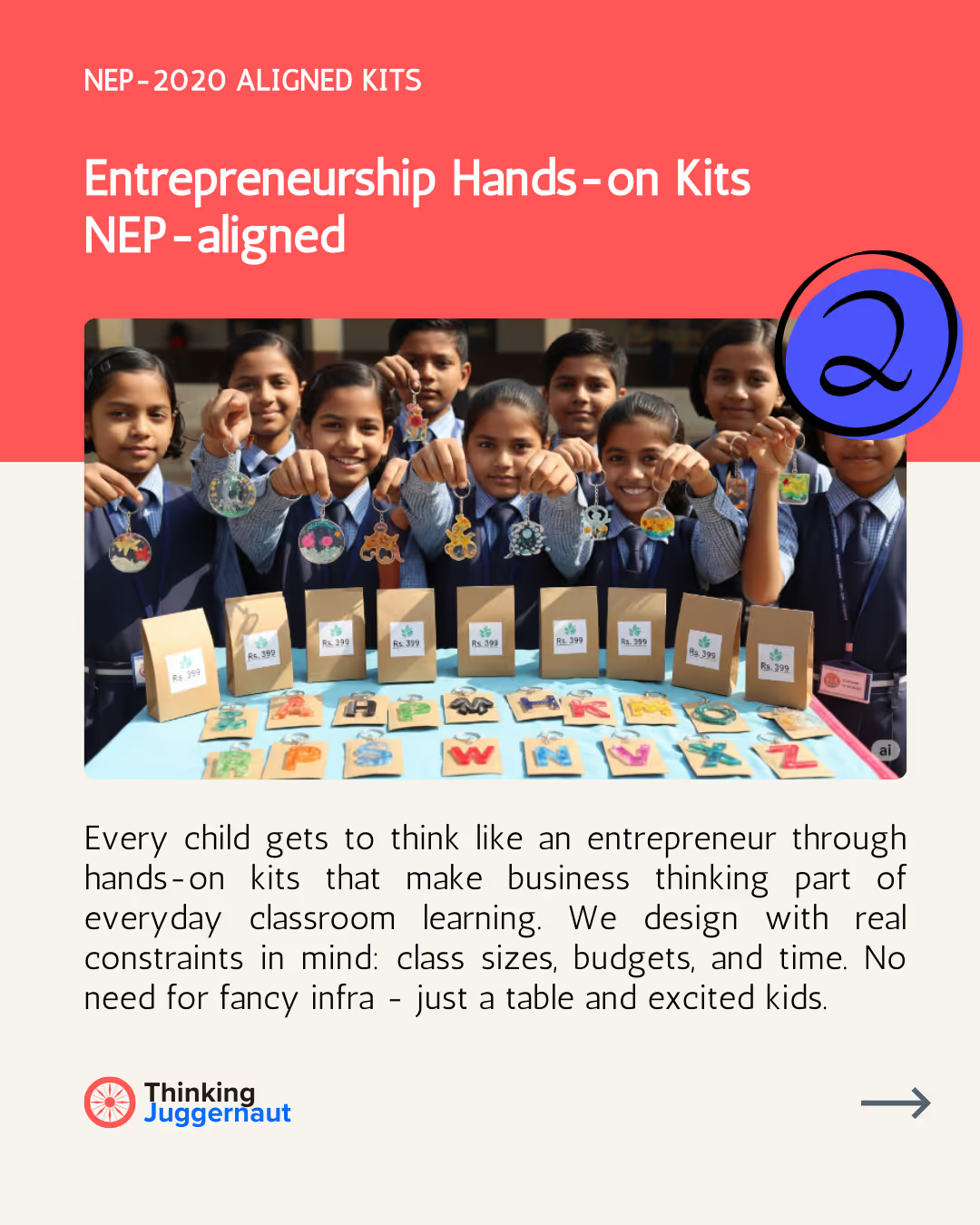
Example: Thinking Juggernaut Entrepreneurship Hands on Kits NEP-aligned
Every child gets to think like an entrepreneur through hands-on kits that make business thinking part of everyday classroom learning. We design with real constraints in mind: class sizes, budgets, and time. No need for fancy infrastructure — just a table and excited kids.
NEP 2020 isn't going away. CBSE is mandating experiential learning and competency-based assessment.
Schools need tools that genuinely implement this vision—not products that claim alignment while delivering traditional experiences.
The difference between quality NEP-aligned kits and rebranded products:
Your investment should:
Not just check compliance boxes.
Contact us for a consultation to evaluate which kits best fit your school's NEP implementation needs.
![[background image] electronics workbench](https://cdn.prod.website-files.com/6867e17b7728d4dad1984de4/6972eef136a679551ba6030f_14.avif)
![[digital project] image of past client project on a magazine page](https://cdn.prod.website-files.com/6867e17b7728d4dad1984de4/6971adf677d574c530eb0b3a_Critical%20Thinking%20TJ.avif)
![[digital project] image of past client project on a magazine page](https://cdn.prod.website-files.com/6867e17b7728d4dad1984de4/690d8e0a3c1ff9e8e49f74f5_cit%20planning.avif)
Almost there!
We will confirm your order on WhatsApp
Order placed!
Thank you! You will receive a WhatsApp confirmation shortly.