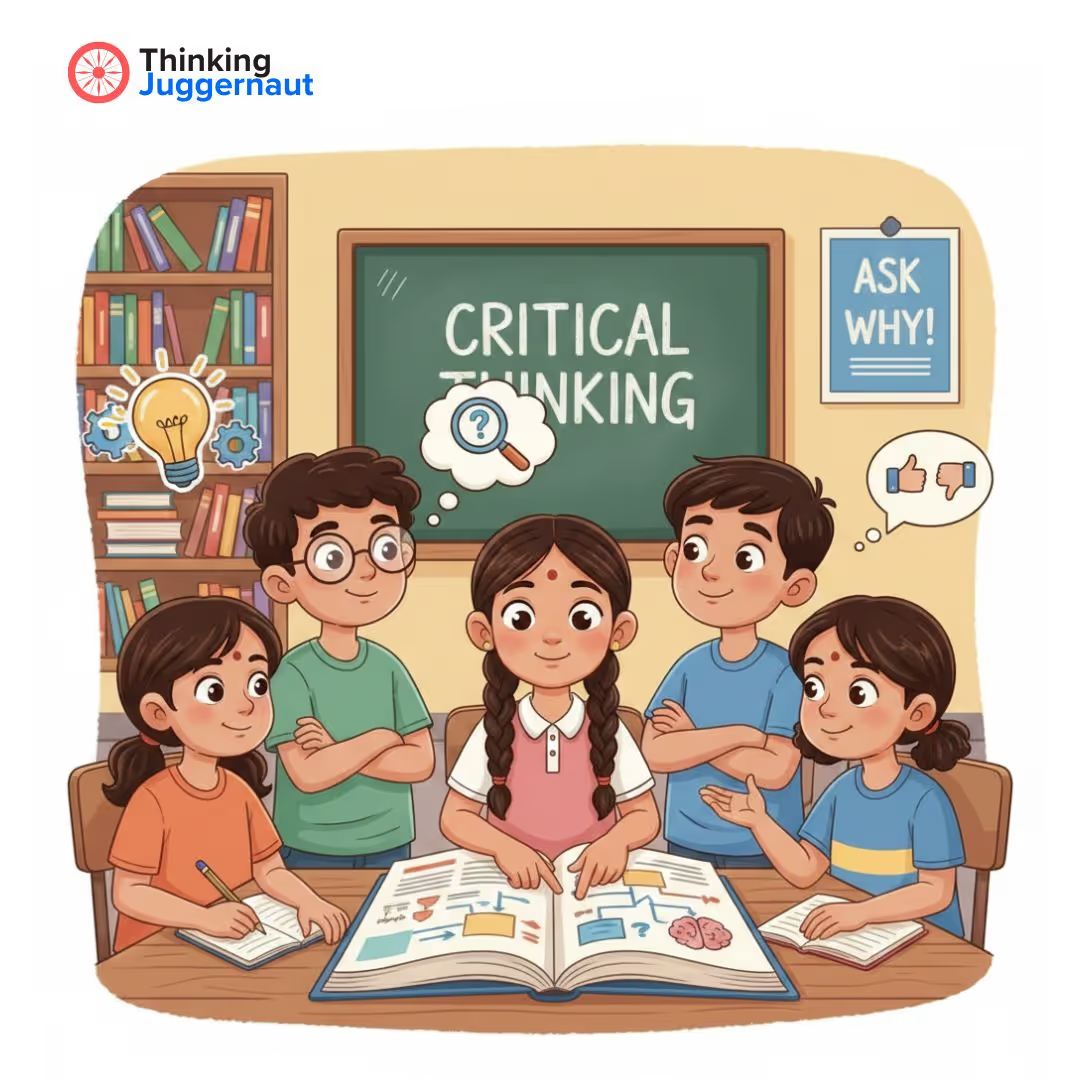
In a world full of information, children must learn to question, evaluate, and reason.
NEP 2020 emphasizes critical thinking and problem-solving as essential 21st-century skills. But how do you actually teach students to think critically? You can't just tell them "think harder."
Critical thinking develops through practice—the right kind of practice. This guide shares ready-to-use activities that build genuine thinking skills in Indian classrooms.
Critical thinking isn't just "thinking hard" or being negative about ideas.
It means:
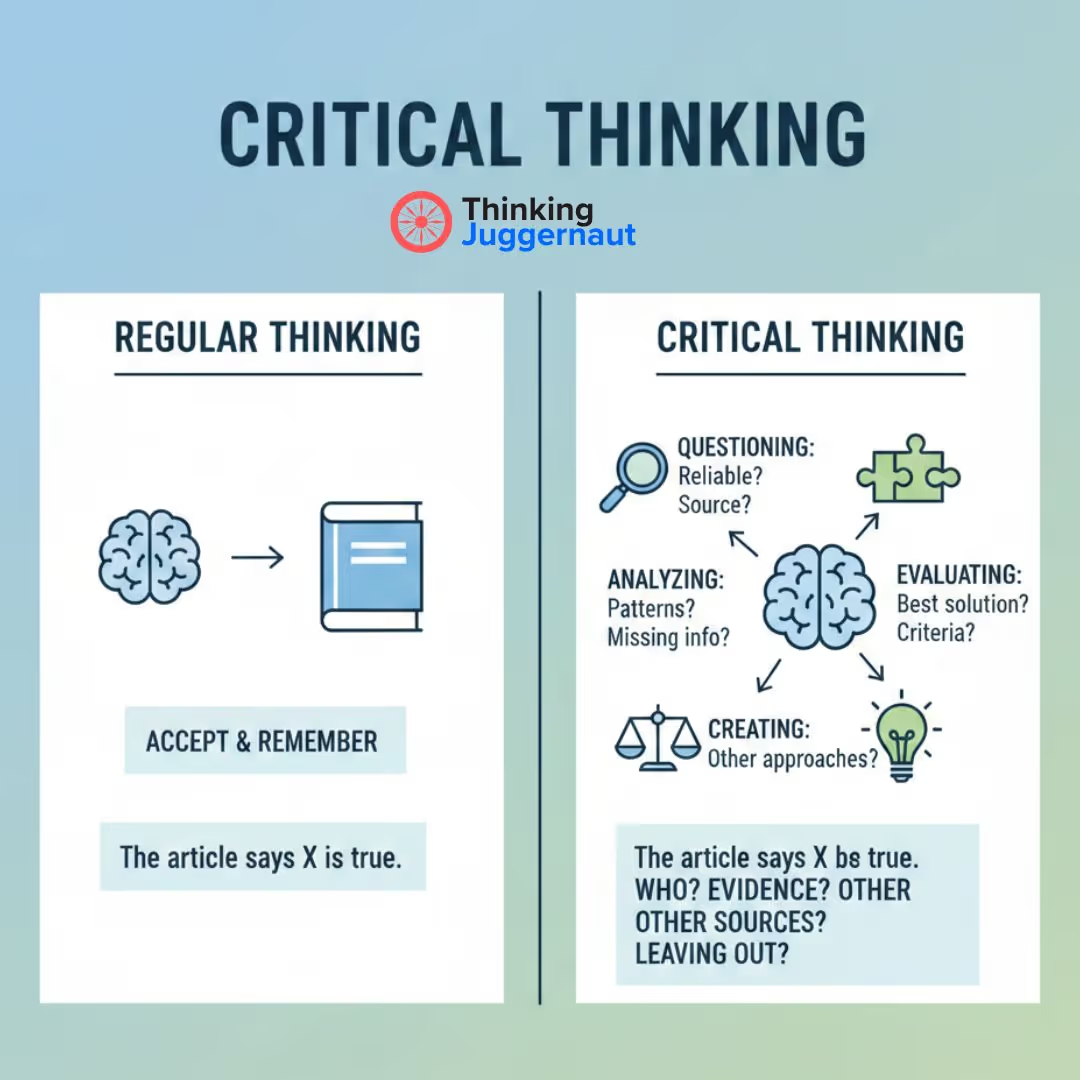
Example of regular thinking: "The article says X is true." (Accept and remember)
Example of critical thinking: "The article says X is true. But who wrote this? What evidence do they provide? What do other sources say? What might they be leaving out?" (Question and evaluate)
The difference? Active engagement with information, not passive acceptance.
Research from Edutopia shows critical thinking skills help students:
With AI tools that can generate instant answers, the ability to question, verify, and think independently becomes more important than memorization.
Teaching critical thinking isn't about content—it's about the questions you ask.
Instead of: "What is photosynthesis?"
Ask:
The magic questions (use these constantly):
These questions shift from recall to reasoning.
Here is an example, a general example that you can right away use for Class 6-7
If you need more examples, refer here for STEM Activities that build critical thinking and refer here for Real World Math Kit and Activities
Time: 30-40 minutes
What you need: Simple materials (paper, pencil) or real scenario
The Problem: "Pack a school bag for tomorrow. You can only carry 3 kg total weight. Each item has a 'usefulness score' and weight."
Items available:
Goal: Maximum usefulness under 3 kg.
What students do:
What they learn:
Real-world connection: This is how businesses manage budgets, how engineers design within material limits.
Contact us at Thinking Juggernaut, we help you with NEP-2020 aligned Project based Experiential Learning Kits for young minds designed to build 21st-century skills that connect subjects, creativity, and real-life applications
Activities alone won't work if the classroom culture doesn't support thinking.
Celebrate:
Avoid:
Teacher's role shifts: From answer-giver to thinking-facilitator. Guide students to discover, don't tell them everything.
According to research from the Buck Institute for Education, students who regularly engage in critical thinking activities show improved problem-solving abilities, better retention, and higher engagement.
Don't test if students remember the definition of critical thinking.
Test if they CAN think critically.
Traditional test: "Define Newton’s laws of motion"
Better assessment: Give students a new problem (not from class examples) and evaluate:
Assessment rubric elements:
Grade the thinking process, not just the final answer.
I agree this is hard, but even one question like this out of the 15 questions can make a difference.
Hands-On Learning: When critical thinking connects to real experimentation and problem-solving, it becomes more powerful. Thinking Juggernaut's kits provide hands-on experiences that require students to question assumptions, test ideas, and think through problems—not just follow instructions.
Want help bringing critical thinking to your classroom? Contact us to discuss how our experiential learning kits build thinking skills through real investigation.
Critical thinking isn't an add-on subject. It's how we teach every subject.
When students learn to question, analyze, and evaluate—not just remember—they become thinkers, not just test-takers.
.avif)
Even primary students can think critically at age-appropriate levels. Start with simple comparisons ("Which is heavier?"), categorization ("How are these alike?"), and prediction ("What will happen if...?"). Build complexity as they grow.
Critical thinking doesn't replace content—it deepens understanding, which actually speeds learning and retention. One well-designed critical thinking activity can cover multiple syllabus points while building lasting skills.
Perfect! That's the learning moment. Ask: "How did you reach that conclusion? What evidence did you use? Let's test that thinking." Guide them to discover flaws in their reasoning—don't just tell them they're wrong.
![[background image] electronics workbench](https://cdn.prod.website-files.com/6867e17b7728d4dad1984de4/6972eedd9a524edd5b252ce3_13.avif)
![[digital project] image of past client project on a magazine page](https://cdn.prod.website-files.com/6867e17b7728d4dad1984de4/6971eafd03d0ae4c60176f11_NEP%202020%20Experiential%20Learning.avif)
![[digital project] image of past client project on a magazine page](https://cdn.prod.website-files.com/6867e17b7728d4dad1984de4/690d8e0a3c1ff9e8e49f74f5_cit%20planning.avif)
Almost there!
We will confirm your order on WhatsApp
Order placed!
Thank you! You will receive a WhatsApp confirmation shortly.