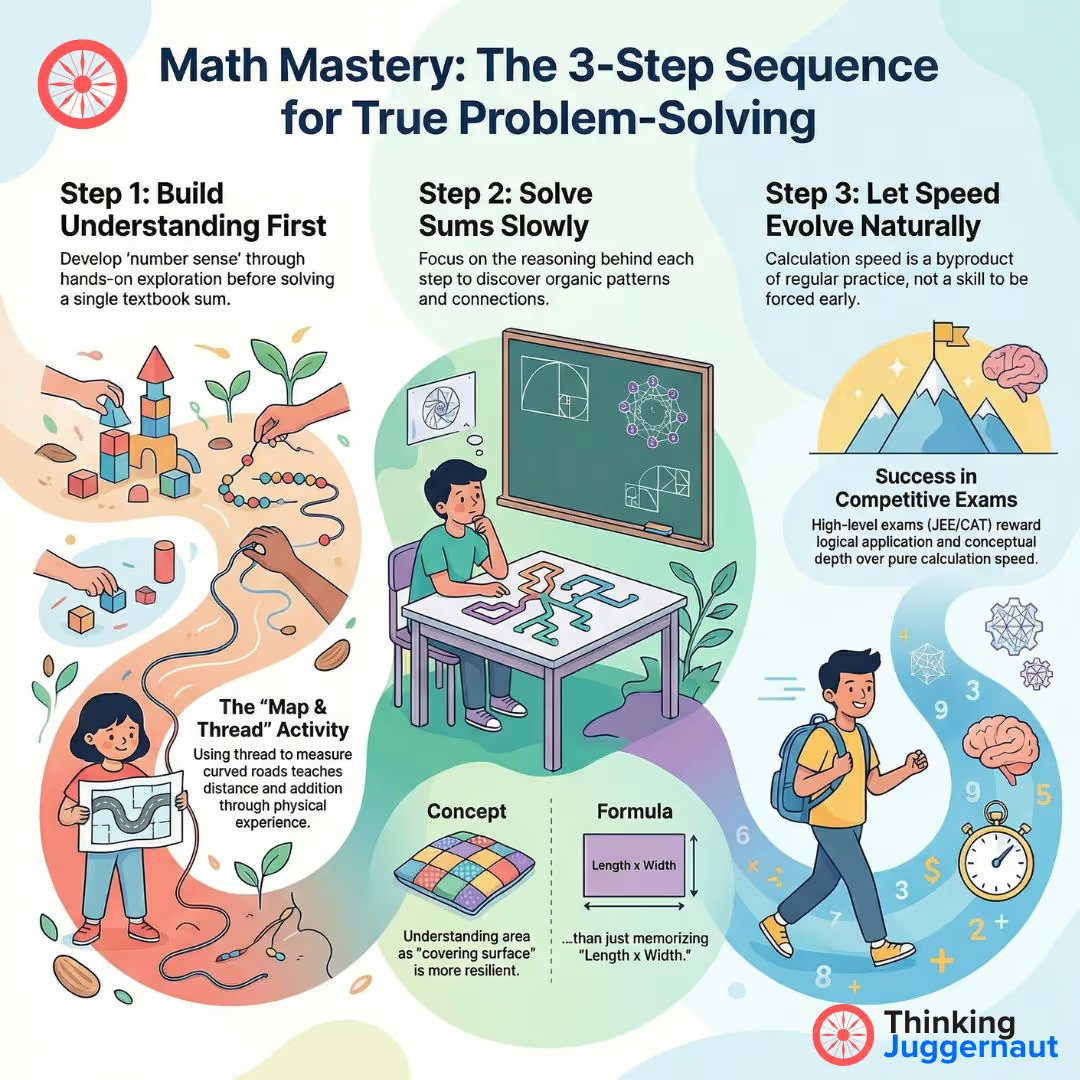
Let's be clear about what actually matters for your child's math learning:
Here's something we've seen time and again: Once children understand the concept, solving the sums becomes much easier. They're not struggling to remember which formula to use or which trick applies. They just... understand what to do.
These outcomes don't come from drilling through worksheets or memorizing formulas. They come from a different approach entirely.
From our experience working with hundreds of parents and students, here's the sequence that actually works:
Understanding → Solving Sums → Speed
Let me be clear: you need to follow this order. Not speed first, not solving without understanding. This sequence is critical.
Before your child solves a single problem, they need to develop number sense — an intuitive understanding of how numbers work and relate to each other.
We've seen this work repeatedly: children who start with conceptual understanding and hands-on exploration develop a natural curiosity about math. They don't see it as a subject to "get through" — they see it as something interesting to explore.
How do you build number sense? Through hands-on, experiential learning that connects math to real life.
Let me give you a real example from our Applied Math Kit:
Activity: "Explore Your Town – Near & Far"
Children get a town map showing a home, school, park, ice cream shop, and other places. Here's what they do:
Step 1: Observation and Estimation
Step 2: Measuring with Thread
Step 3: The Crow Flies – Straight Line vs Road
Step 4: Real Problem-Solving
What's happening here? Children are learning:
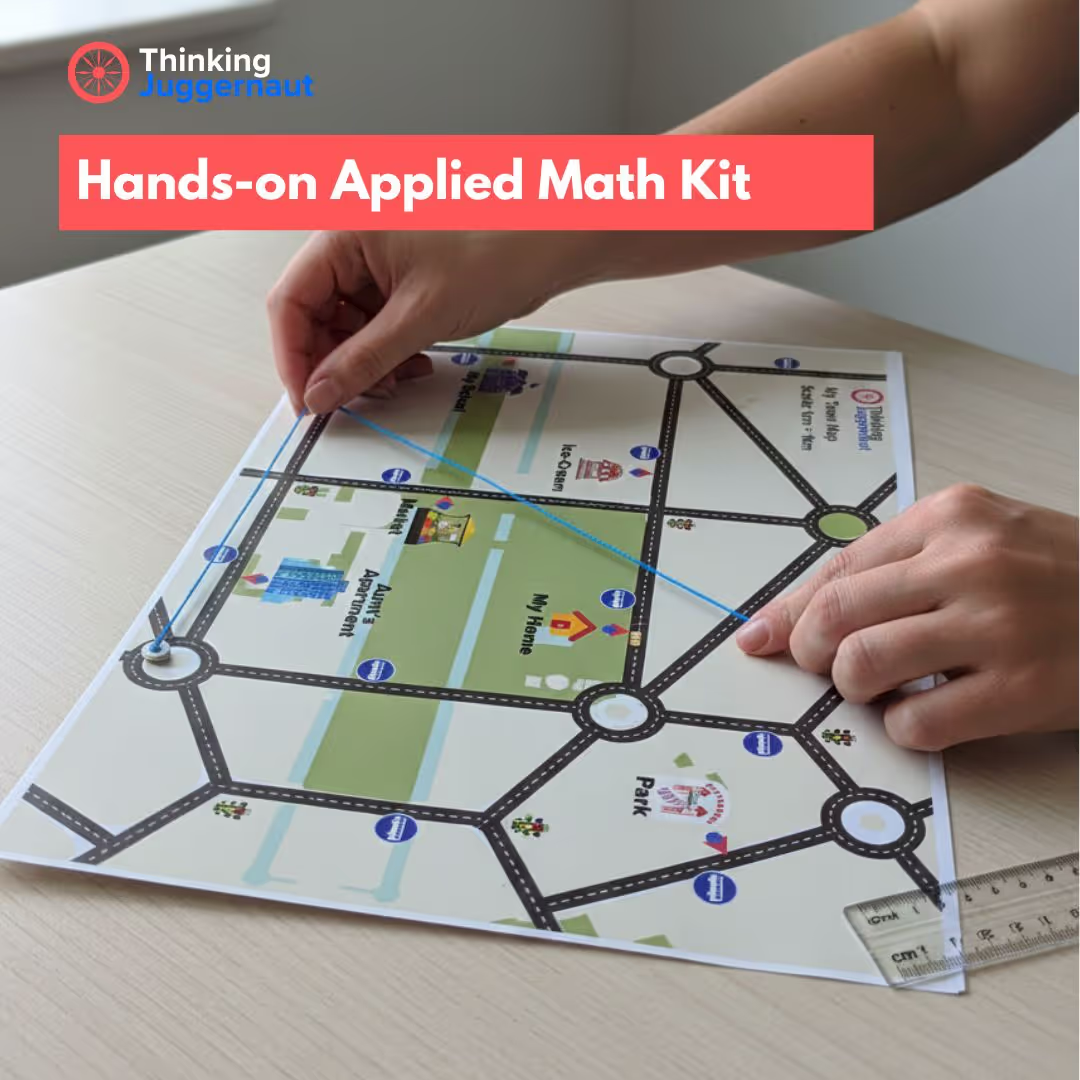
And here's the magic: When they later see a math problem saying "If the distance from A to B is 5 km and B to C is 3 km, find the total distance," they already understand what that means. They've physically measured distances. They've added them up. Solving the sum becomes easy because the concept is clear.
Our Applied Math Project Kits contain 30 such activities that build mathematical concepts through real, hands-on experiences.
For younger children (age 7+): Applied Math Kit for Age 7+
For older children (age 10+): Applied Math Kit for Age 10+
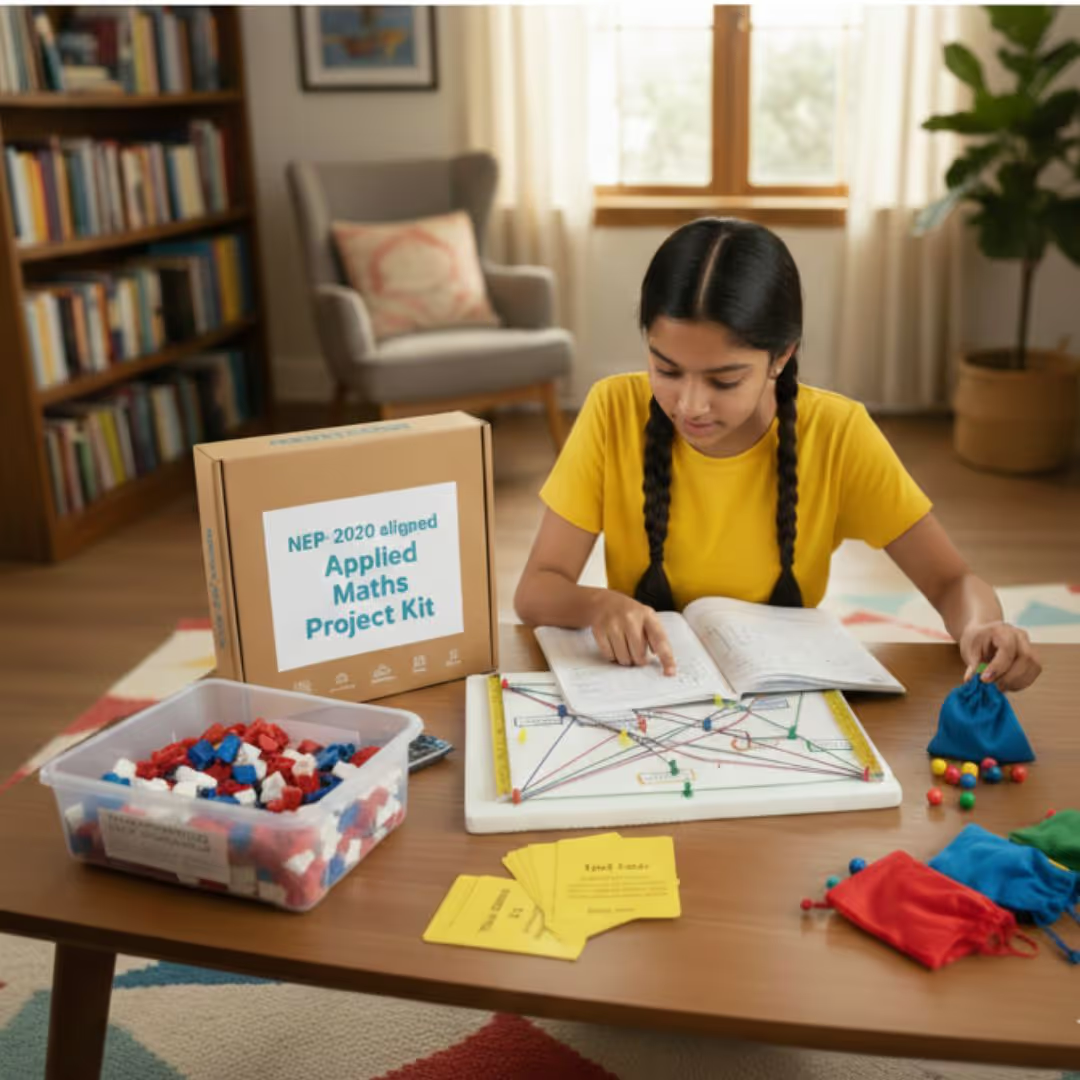
Once your child has number sense and genuine understanding, they're ready to solve sums.
The key? Do it slowly with focus on understanding.
When children solve problems slowly and discuss the reasoning behind each step, something magical happens: they start seeing patterns and connections — without being forced.
For example:
This organic development of mathematical thinking is far more powerful than speed drills.
We've designed our kits based on this principle. Children work through real-world math problems at their own pace, understanding the "why" behind each concept.
Here's what we've learned: after understanding comes, then solving sums becomes easier, and finally speed automatically develops through regular practice.
Children who understand concepts deeply naturally get faster. They don't need special speed training.
But more importantly, solving problems becomes easier when understanding is strong.
Think about it:
This is the difference between:
And here's the important part: in today's world, pure calculation speed matters less than ever. What matters is:
These are critical thinking skills that serve children for life.
I experienced this firsthand. When my friends decided to write the CAT exam, I wrote it with them just for fun — without any preparation. I scored 98 percentile. It wasn't because I practiced speed drills or memorized formulas. It was because of this kind of learning: deep understanding built over years.
Here's how concept-first learning actually works in practice:
A parent was helping her 7-year-old daughter learn multiplication tables. Instead of drilling "2 times 3 is 6, 2 times 4 is 8," she started with the concept.
She asked: "What does 2 times 3 actually mean?"
Together, they figured out: it means "2 groups of 3" or "3 + 3."
They used physical objects — first buttons, then drawings — to build different multiplication problems. Her daughter could see what multiplication meant.
Once the concept was clear, they explored patterns:
Only after understanding these concepts did they practice for recall. And because her daughter understood what she was doing, the practice made sense. She wasn't just memorizing — she was reinforcing understanding.
Result? A child who:
This is the key insight: When the concept is clear, solving the sum becomes easier. The child isn't struggling with "how do I do this?" — they just solve it because they understand it.
Many parents worry: "But won't my child need speed for competitive exams?"
Here's what we've learned from working with students who've succeeded in competitive exams: understanding and problem-solving matter far more than calculation speed.
In JEE, NEET, or any serious competitive exam, the questions test whether you:
Students who've built strong conceptual foundations naturally develop adequate speed through practice. More importantly, they can tackle the difficult conceptual questions that actually determine selection.
In fact, students who rely too heavily on memorized tricks sometimes struggle when they hit problems where understanding the underlying principles becomes non-negotiable.
Start with hands-on activities:
Use project-based learning to make math tangible.
For example, in our Applied Math Kit for Age 7+, children:
Each activity is designed so that when children later see textbook problems about distance, addition, or measurement, they already understand what those problems mean.
For older children (age 10+), our Applied Math Kit for Age 10+ includes more complex applications like area, volume, percentages, and data analysis — all through hands-on projects.
The pattern is always the same: Experience it physically first. Understand the concept. Then solving problems becomes natural.
Ask "why" and "how":
Instead of just checking if the answer is correct, ask:
These questions develop critical thinking and deeper understanding.
Use our free resources:
We've created printable math worksheets that focus on progressive concept building — not just drill practice.
Connect math to real life:
Show your child how math appears everywhere. The best real-world math problems aren't in textbooks — they're in daily life.
At Thinking Juggernaut, we've designed our materials based on years of working with students and understanding what actually works.
Our NEP-aligned experiential learning kits are created by IIT and NIT alumni based on one core philosophy:
Build genuine understanding first. Everything else follows.
Our Applied Math Kits don't just give children problems to solve. They give them:
Because the goal isn't to produce children who can quickly calculate. The goal is to raise thinking humans who understand, apply, and enjoy mathematics.
If you want your child to:
Then follow the right sequence: Understanding → Solving Sums → Speed
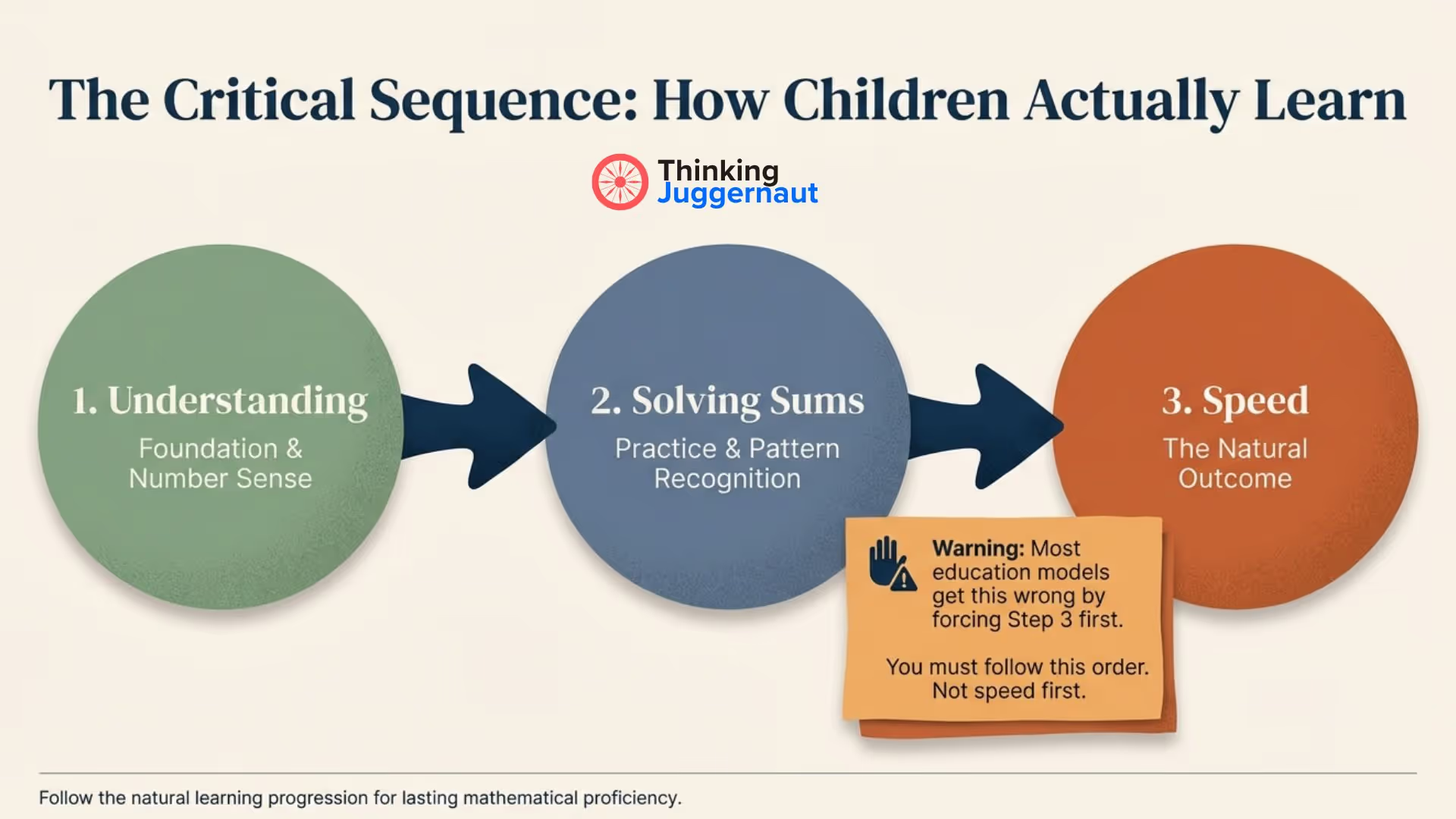
Start with hands-on learning. Build number sense. Solve problems slowly with understanding. Let speed come naturally.
From years of working with parents and students, we've seen this pattern repeatedly: children who start with concepts develop not just better math skills, but a genuine love for the subject. They become problem-solvers, not just answer-producers.
And that's what will serve them throughout their lives — in exams, in careers, and in life.
Ready to build real mathematical thinking? Explore our Applied Math Project Kits — 30 hands-on experiments that develop number sense, spatial thinking, and genuine problem-solving skills.
Need more resources? Check out our free printable math worksheets and NEP-aligned learning activities.
Almost there!
We will confirm your order on WhatsApp
Order placed!
Thank you! You will receive a WhatsApp confirmation shortly.



![[background image] electronics workbench](https://cdn.prod.website-files.com/6867e17b7728d4dad1984de4/69745f6b1124efa839d7958e_Class%203%20Multiplication%20Worksheet%20with%20Answers%20PDF%20-%20Free%20Download_page-0006.avif)
![[digital project] image of past client project on a magazine page](https://cdn.prod.website-files.com/6867e17b7728d4dad1984de4/6972ee0bf80a40e0e1fc016a_15.avif)
![[digital project] image of past client project on a magazine page](https://cdn.prod.website-files.com/6867e17b7728d4dad1984de4/698b15f8098e2338b8bc04a1_Thinking%20Juggernaut%20Homeschool%20Readiness%20Calculator.avif)